

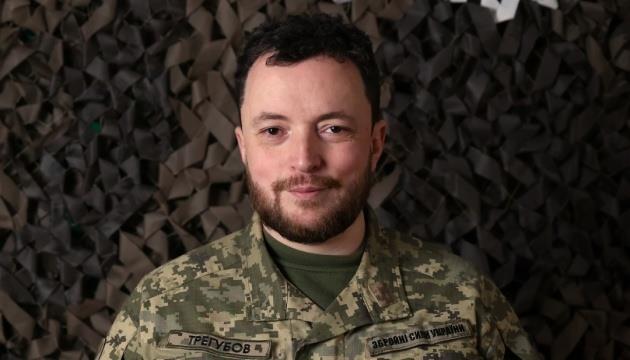
Russia's Foothold On Right Bank Of Oskil River Is Shrinking - Trehubov


“The situation in the Borova area is fairly stable. As for Dvorichna, the Russians are gradually losing ground there; they are under quite effective pressure. Unfortunately, we are not yet talking about the liberation of Dvorichna itself, but rather about the reduction of the Russian foothold on the right bank of the Oskil River,” he said.
Trehubov explained that this push of the Russians toward the river in and of itself prevents them from carrying out any active operations in the direction of Kupiansk, which is a major positive.
“As for Kupiansk, we divide it into two parts-the right and left banks. On the right bank, it is precisely this pressure-exerted by Ukrainian troops toward Dvorichna-that is squeezing the bottleneck through which the Russians are trying to move their forces into Kupiansk. So far, [Ukrainian troops-ed.] haven't completely sealed it off; there's still a portion of the area controlled by the Russians and a 'gray zone'... And in the very north of the city, these small infantry groups are still present,” the spokesperson noted.
He reported that [these groups] are not advancing, but that the Ukrainian Armed Forces will need more time and effort to“flush them out” of that area.
“However, if we look at the left bank of the Oskil River, the situation there is not the same, but less favorable for Ukrainian troops, because there the Russians are putting pressure on the Ukrainian bridgehead on the left bank and are actively trying to advance through the occupied town of Pishchane toward Kupiansk-Vuzlovyi, pushing right through the center of this bridgehead,” Trehubov stated.
The spokesperson reported that the main efforts of Ukrainian forces are focused on preventing the Russians from doing so and on destroying the troops attempting to advance there.
Read also: Russian forces strike Kharkiv, one killed, at least two injuredWhen asked whether anything had changed in the frequency of the enemy's use of drones-particularly along fiber-optic cables-in light of strikes on businesses and warehouses such as Ozon and Wildberries, or whether the situation in his area of responsibility remained unchanged, Trehubov said that fiber-optic cables are becoming scarcer, but that“there are still enough for now.”
“Yes, indeed, we've managed to create some problems for the Russians with fiber-optic cable production and, consequently, with the production of drones using fiber-optic cables. That's a fact. There are definite effects. In our sectors, we even observed a certain effect due to the“shutdown” of Russian oil refineries. Some units of the Russian armed forces also experienced certain problems with the supply of fuel and lubricants. But let's see if this will have any strategic significance at all, say, over the next few months,” the spokesperson noted.
As reported by Ukrinform, in the Kupiansk sector, Russia is attempting to move units through Holubivka along the Oskol River.
Photo: Facebook / Victor Trehubov

Legal Disclaimer:
MENAFN provides the
information “as is” without warranty of any kind. We do not accept any
responsibility or liability for the accuracy, content, images, videos,
licenses, completeness, legality, or reliability of the information
contained in this article. If you have any complaints or copyright issues
related to this article, kindly contact the provider above.
Comments
No comment