

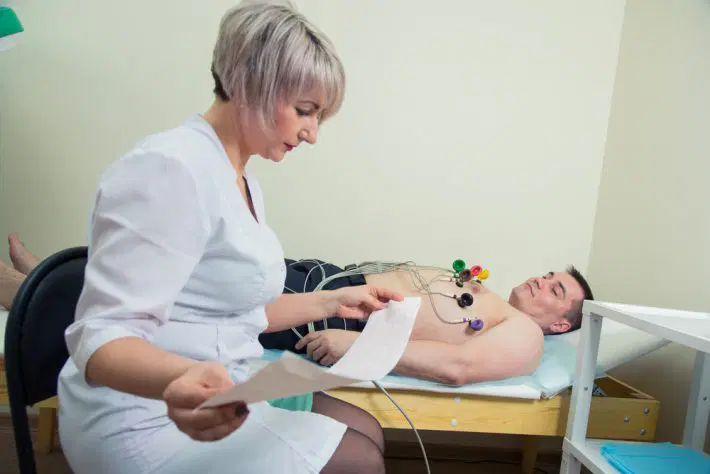
FDA Sets New Rules For AI Software That Flags Possible Heart Conditions


The FDA issued a final order classifying“cardiovascular machine learning-based notification software” as a Class II medical device subject to special controls. The order took effect September 11, 2026, although the underlying classification has applied since August 3, 2023.
The regulatory action began with Viz Inc.'s Viz HCM software, but its significance extends beyond a single product. By creating a defined Class II category, FDA has also established a regulatory pathway that other manufacturers of substantially equivalent cardiovascular machine-learning software may potentially use.
For patients, however, there is an important distinction: this type of AI software can flag the likelihood of a cardiovascular condition for further evaluation, but it isn't designed to make the final diagnosis itself.
What This Type of Heart AI Actually DoesThe FDA defines cardiovascular machine learning-based notification software as technology that uses machine-learning techniques to suggest the likelihood that a patient has a cardiovascular disease or condition.
The software analyzes one or more non-invasive physiological inputs obtained during routine medical care and identifies a single condition that may warrant additional referral or diagnostic follow-up.
The agency specifically says the technology is not intended to provide diagnostic-quality output and isn't intended to identify or detect heart arrhythmias.
That distinction matters for patients who increasingly hear about artificial intelligence being incorporated into medical care.
An AI alert can potentially give a health-care professional another reason to investigate a possible condition, but the alert isn't equivalent to receiving a confirmed diagnosis from a physician.
The First Device Focused on Hypertrophic CardiomyopathyThe FDA action stems from a De Novo classification request submitted by Viz on January 10, 2023, for a product called Viz HCM.
The software is designed to identify patients with electrocardiogram findings that could suggest hypertrophic cardiomyopathy, or HCM, a condition in which the heart muscle becomes abnormally thick.
FDA granted the De Novo request on August 3, 2023.
Clinical evidence used in the agency's evaluation included a retrospective validation study involving 3,196 patients from three U.S. hospitals. Of those cases, 291 were HCM-positive, and 2,905 were HCM-negative.
Cardiologists reviewed medical charts and available imaging to establish patients' HCM status, and researchers compared those findings with the software's ECG-based output.
Why FDA Put the Software in Class IINew types of medical devices without an existing classification can initially fall into Class III, the category associated with the most stringent regulatory controls.
The De Novo pathway gives manufacturers of certain novel devices another route when FDA determines that general controls alone-or general controls combined with special controls-can reasonably assure safety and effectiveness.
After reviewing Viz HCM, FDA determined that cardiovascular machine learning-based notification software could be placed in Class II when appropriate special controls are applied.
Those controls address risks such as a false-positive or false-negative result that could potentially contribute to an incorrect diagnosis or treatment decision.
Among the safeguards FDA identified are clinical performance testing, non-clinical performance testing and appropriate labeling.
The Decision Could Affect Future Heart AI ProductsThe broader significance of the FDA decision involves what happens when another company develops similar technology.
Once FDA creates a Class I or Class II device category through the De Novo process, the newly classified device can potentially serve as a predicate for future devices that manufacturers contend are substantially equivalent.
That means another manufacturer may be able to pursue the 510(k) premarket notification pathway rather than submitting another De Novo request or going through the more demanding premarket approval process.
FDA says this approach can reduce regulatory burdens and enhance patient access to beneficial medical-device innovation while maintaining appropriate safety and effectiveness requirements.
The agency's database already lists the generic device category under regulation number 21 CFR 870.2380 and product code QXO.
An AI Alert Is a Starting Point, Not a DiagnosisFor patients who encounter artificial intelligence during heart testing, the FDA's definition provides an important reality check about what these tools are-and aren't-supposed to do.
Cardiovascular machine-learning notification software can help identify a patient who may warrant further evaluation, but its output should serve as a basis for additional testing rather than a standalone diagnosis.
False-positive and false-negative results are among the risks FDA specifically considered when establishing the special controls for this technology.
Patients shouldn't assume an AI-generated notification means they definitely have a heart condition, nor should they rely on software to rule one out without appropriate medical evaluation.
Anyone with questions about an AI-assisted result appearing in their medical care should ask the health-care professional who ordered or reviewed the test what the result means and whether additional evaluation is recommended.
The FDA's new regulatory category shows how quickly artificial intelligence is becoming part of ordinary medical-device oversight-and how regulators are attempting to balance faster innovation with safeguards designed to keep software from becoming a substitute for clinical diagnosis.

Legal Disclaimer:
MENAFN provides the
information “as is” without warranty of any kind. We do not accept any
responsibility or liability for the accuracy, content, images, videos,
licenses, completeness, legality, or reliability of the information
contained in this article. If you have any complaints or copyright issues
related to this article, kindly contact the provider above.
Comments
No comment