

Brazil Fossil Lost For 20 Years Helps Identify New Reptile Species From 240 Million Years Ago


The species, named Silescelida acristata, lived during the Middle Triassic period and was discovered in what is now southern Brazil, according to a recent study published in the journal Scientific Reports.
Recommended For YouBut the story behind its identification is unusual. Part of the fossil carrying important information about where the specimen had originally been collected went missing, leaving researchers unable to confidently establish its origin. It remained lost for around 20 years.
Stay up to date with the latest news. Follow KT on WhatsApp Channels.
Then, in 2022, researchers visiting a scientific collection at the Pontifical Catholic University of Rio Grande do Sul found the missing fragment.
Its rediscovery allowed scientists to reconnect the fossil with its original collection site and eventually describe the remains as a new species.
Why did one missing piece matter so much?The fossil was originally collected from the Dona Francisca municipality in Rio Grande do Sul, Brazil, from rocks dating to the Middle Triassic.
The specimen includes a scapula, or shoulder blade, an ilium from the pelvis and a femur.
The missing part of the femur carried the specimen's collection code. Without it, researchers could not reliably establish where the fossil had come from an important piece of information when identifying and studying an ancient species.
Finding the fragment again helped researchers confirm the fossil's provenance and conduct a detailed analysis of the animal.
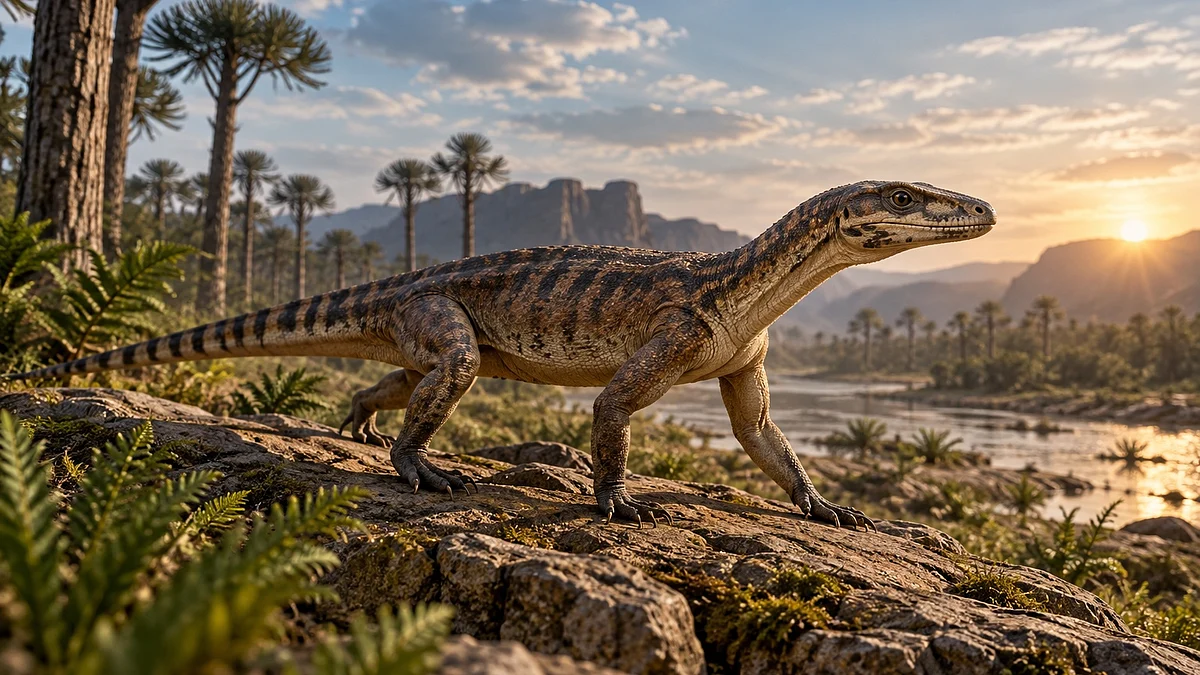
What was Silescelida acristata?Despite its connection to the evolutionary story of dinosaurs and crocodiles, Silescelida acristata was neither a dinosaur nor a crocodile.
It belonged to an ancient group known as archosauriforms, which includes early relatives of the lineage that eventually gave rise to archosaurs the group that includes dinosaurs, birds and crocodilians.
The animal was relatively small and slender, roughly comparable in size to a small alligator, and moved on four limbs. Researchers believe its anatomy provides clues about how the bodies and movement of these early reptiles were changing millions of years before dinosaurs became dominant.
Even its name tells the storyScientists incorporated the fossil's unusual history into its new name.
The genus name Silescelida combines words referring to "silence" and "hind leg", a reference to the missing part of the femur that left the specimen's origins uncertain for years.
The species name acristata, meaning "without a crest", refers to a distinctive feature of its femur the absence of a particular raised structure found in many related reptiles.
Why is the discovery important?The new species gives scientists another glimpse into a period when Earth's ecosystems were undergoing major change.
Silescelida lived around 240 million years ago, when life was still recovering and diversifying following the Permian Triassic mass extinction about 252 million years ago.
Researchers say the species helps expand what is known about the early evolution and geographic distribution of eucrocopodan archosauriforms, ancient reptiles whose anatomy was becoming increasingly similar to the body plan later seen in archosaurs. The study also describes it as the first record of this archosauriform grade from the Triassic of Brazil.
And in this case, a fossil fragment forgotten for two decades ended up providing a missing piece in a much older story one that began millions of years before the age of dinosaurs.
ALSO READ- No mouth or organ: 560-million-year-old animal fossil found in Norwegian sheep field Look: How extinct animals like dodo, woolly mammoth are 'resurrecting' in Dubai 'We will preserve them': Saving Cambodia's crocodiles

Legal Disclaimer:
MENAFN provides the
information “as is” without warranty of any kind. We do not accept any
responsibility or liability for the accuracy, content, images, videos,
licenses, completeness, legality, or reliability of the information
contained in this article. If you have any complaints or copyright issues
related to this article, kindly contact the provider above.
Comments
No comment