

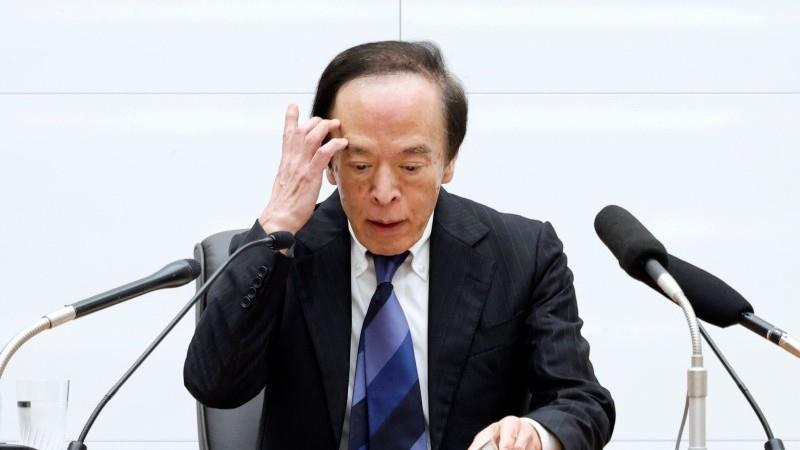
Bank Of Japan Preview: 25Bp Hike Incoming


The market's previous view on the BoJ tightening cycle had been that one 25bp hike would be delivered every six months. The terminal policy rate was always seen to be around 2.00%, but until recently investors expected the BoJ to take two years to get there.
Since June, however, that pricing has shifted aggressively. One-month JPY OIS rates priced one year forward have risen a staggering 50bp since the start of July. What's changed?
It is hard to blame the renewed rise in energy prices for the re-pricing in money markets, since there was not a big re-pricing during the first surge in crude oil in March. Instead, it looks like the US Treasury's FX intervention in late July has played a significant role. Here, US Treasury Secretary Scott Bessent has signalled that he expects the BoJ to raise rates at a quicker pace to provide macro support to the yen buying intervention.
Also helping the repricing has been local Japanese data. Real cash earnings rose by 2.4% year-on-year in July, reinforcing the narrative that producers will be able to pass on higher input costs.
Sharp repricing in short-dated rates weighs on USD/JPY Source: Refinitiv, ING"> The BoJ's perspective
Formal communication from the BoJ this year has acknowledged that the real policy rate is negative and needs to be raised. Various BoJ speeches have discussed the concept of a neutral rate, which most see in the 1.1-2.5% range in nominal terms.
The diagram below has appeared in a few BoJ presentations recently and serves as a reminder that monetary conditions are too loose now that inflation is seen sustainably above 2.00% into FY2028. Among many of the positive charts in these presentations, one that stood out was the 10% year-on-year loan growth from 'Major Banks' – matching the peak from early 2020. Clearly, financial conditions are far from tight.
BoJ's views on neutral rates and loan growth Source: Bank of Japan">When it comes to prices, the BoJ narrative has firmly shifted towards inflation moving onto a sustainable path. One central theme now is that higher input/producer prices are more likely to feed through into broader CPI. The most recent Tankan business survey showed output price expectations rising sharply and the BoJ is focusing heavily on the 7% year-on-year growth in corporate goods prices.
Japan's measures of inflation (%, year-on-year) Source: Refinitiv, ING"> The decisionWe doubt the BoJ would want to shock investors and Scott Bessent by leaving the policy rate unchanged at 1.00%. A 25bp rate hike to 1.25% looks likely. The marginally bigger risk than unchanged rates is a 50bp rate hike, perhaps as part of a broader understanding with Washington designed to sustainably push USD/JPY lower, reduce the need for large-scale dollar selling intervention from the BoJ and help stabilise JGBs.
However, the Japanese government has an aggressive pro-growth strategy and will no doubt express its views against a more aggressive tightening cycle. Maybe we are underestimating a shift here, but it is hard to see government officials backing a much faster tightening cycle of either a 50bp hike in September or back-to-back hikes in September and October. Instead, our house view is for two further 25bp rate hikes next January and April, which would take the policy rate to 1.75%.
A near-neutral 1.75% policy rate next April seems an appropriate target before the consumption tax on food and non-alcoholic beverages is cut from 8% to 1% that month for two years. That will sharply depress headline inflation – perhaps for the next two years – and would create a difficult environment in which to deliver further tightening.
FX: Yen bulls risk some disappointmentUSD/JPY has already fallen sharply on expectations of faster BoJ tightening and speculation over major shifts in GPIF investment allocations, perhaps in late October. Before the BoJ meeting, USD/JPY will have had to contend with (ING's forecast) a Fed hike two days earlier and higher energy prices.
In FX, we see a greater risk that the BoJ fails to match heightened speculation over a follow-up rate hike in December, while October looks far too early. Equally, some may be disappointed if there is no news from the GPIF on the same day. If so, USD/JPY could be due a correction to the 157/158 area, where presumably more supply awaits ahead of potential policy announcements in late October.
For reference, the FX options market is pricing around a 200 yen pip range for USD/JPY on BoJ decision day.
Rates: The back-end to get more protectionThe big theme going into this Bank of Japan meeting has been the marked widening of the carry spread (BoJ spread to the 2yr), which is out to the 80s bp area. That's the widest it's been during the current rate-hiking cycle. Typically, the widest carry spread would be at the initiation of the rate-hiking cycle. The fact that it's widest now points to a market discount for a degree of acceleration in the rate-hiking process. The absolute level of the carry spread points to the delivery of at least 50bp on top of the 25bp that we expect to be delivered at the upcoming meeting.
The 2/10yr curve in the meantime has flattened from the front end, broadly in tandem with the upside pressure that widened the carry spread. Indeed, longer tenor rates have managed to come off prior highs. This is particularly marked in the 30yr Japanese Government Bond benchmark yield. It had touched 4.2%, before gapping back down to just under 4% in the past couple of weeks. Much of this move gelled with the notion that the BoJ would inevitably hike at the upcoming meeting, and for it to be a hawkish hike, one that was more cognisant of the inflation risks that had been compromising long-dated yields.
Delivery of a 25bp hike plus a hawkish tone should help consolidate, or at the very least, validate these moves. The 4+% area of the long end of the JGB curve remains a level that we would identify as offering structural value. Deep discount off-the-run low-coupon lines continue to offer generous absolute yields in the 5%+ region. These are remarkable valuations given where JGB yields have come from (practically from zero in 2019).

Legal Disclaimer:
MENAFN provides the
information “as is” without warranty of any kind. We do not accept any
responsibility or liability for the accuracy, content, images, videos,
licenses, completeness, legality, or reliability of the information
contained in this article. If you have any complaints or copyright issues
related to this article, kindly contact the provider above.
Comments
No comment