

From Digital Art To Collectible Cards: Guide For Independent Artists


A collectible card gives digital artwork a different kind of life. It is small enough to trade, display, or collect as part of a series. For independent artists, that makes cards more interesting than simply shrinking an illustration and sending it to print.
The trick is designing for the card from the beginning.
First, Decide What Kind of Collectible You Are MakingBefore opening a template, decide what you want someone to feel when they pick up the card.
A showcase card can make one illustration feel special. A character series can encourage people to complete the set. If you are developing an original game, the card may also need room for stats or rules.
If you plan to sell the cards, use original artwork or designs you have the commercial rights to. Do not call something“limited” unless the way you sell it actually matches that claim.
Design for Card Size, Not Screen SizeA digital painting can look spectacular on a large monitor and turn into visual soup when reduced to card size.
Identify the one thing the viewer should notice first: the face, character silhouette, key object, or central action. Keep important details away from the trim area and leave breathing room around text.
Then zoom the design out until it is roughly card-sized on screen. Can you still read the name? Does the focal point stand out?
If you have to squint, your future buyer probably will too.
Turn a Few Illustrations into a Real SeriesYou do not need 30 finished pieces before trying cards.
Start with three to six designs built around one idea: magical desserts, original RPG classes, celestial animals, café mascots, or different outfits for the same original character.
Give the collection a visual rule. Maybe every card uses the same border and icon placement. Maybe each design gets its own accent motif. Repetition gives collectors something to recognize while each illustration keeps its personality.
Prepare the Artwork for PrintingOnce the layout works at card size, prepare the file for production.
If you want to turn your artwork into Custom TCG cards, Vograce currently offers 63 × 88 mm and 59 × 86 mm trading-card sizes.
You do not need to commit to a huge batch right away. Vograce allows you to start from one piece per design, while its file setup keeps things straightforward: CMYK artwork, a 3 mm bleed, and 360+ dpi or an image over 1,000 pixels, with PSD recommended for the source file.
Before uploading, check:
-
Final card dimensions
Backgrounds extended through the bleed
Important text and faces away from the cut edge
Color mode and resolution
Small text at actual size
It is always smart to test a design before committing to a larger run. Your screen cannot show you exactly how the size, colors, readability, or finish will feel once the card is in your hands.
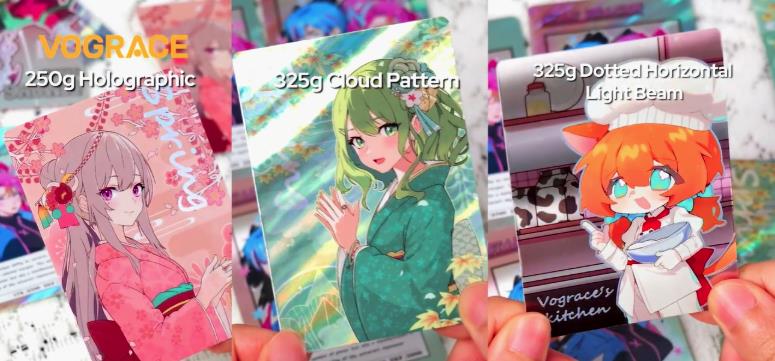
Make the Finish Part of the ArtHolographic does not automatically mean“better.” It works best when the shine has a reason to be there.
Cosmic characters, magical effects, metallic armor, water, or neon details can pair naturally with reflective effects. A softer illustration may benefit from something more restrained.
Think of the finish as part of the composition. Ask,“Where do I want the eye to go when this catches the light?”
Vograce's holographic trading cards currently offer several holographic base-paper effects along with glossy or matte lamination options, giving you room to match the finish to your artwork.
Test What Collectors Actually Respond toYour first card set is also research.
Bring a small batch to an artist alley, show samples to followers, or photograph the cards beside your other merchandise. Notice which character people reach for first and whether anyone asks,“Are there more of these?”
If one design keeps winning attention, it may deserve a follow-up.
Collectibility does not come from making a huge catalog on day one. It comes from artwork people connect with, consistent presentation, and a reason to look forward to the next card.
Final ThoughtsA collectible card is not just a smaller print.
Done well, it turns digital artwork into something people can hold, trade, organize, display, and return to for the next design. Start with a clear concept, design at real card scale, build a consistent visual system, prepare the file properly, and test before expanding.
That first three-card set may look small on your desk. For an independent artist, it can be the beginning of an entire collectible world.

Legal Disclaimer:
MENAFN provides the
information “as is” without warranty of any kind. We do not accept any
responsibility or liability for the accuracy, content, images, videos,
licenses, completeness, legality, or reliability of the information
contained in this article. If you have any complaints or copyright issues
related to this article, kindly contact the provider above.
Comments
No comment