

Retail Media Networks: How Supermarkets Turned Grocery Aisles Into Digital Billboards


For generations, walking down the grocery store aisle was a relatively analog experience. Shoppers pushed carts past static cardboard endcaps, paper promotional banners, and printed shelf tags that remained unchanged for weeks at a time. The walls and floors of the supermarket were physical spaces dedicated exclusively to wayfinding and product display.
Today, that traditional architectural landscape has undergone a radical, high-tech metamorphosis. Supermarkets are no longer just physical warehouses for food and household goods; they have rapidly evolved into media powerhouses. Driven by the explosion of retail media networks, every surface of the modern grocery store-from electronic shelf labels to smart shopping cart screens and digital endcap displays-has been converted into a dynamic digital billboard. This seismic shift merges the hyper-targeted data tracking of online advertising with the physical reality of the weekly grocery run.
The Rise of Retail Media Networks and First-Party DataTo understand how grocery aisles transformed into digital billboards, one must look at the economics driving modern retail. Operating margins on fresh produce, dairy, and center-store packaged goods are notoriously thin, leaving grocers searching for alternative revenue streams. Enter the retail media network (RMN). By leveraging loyalty programs, mobile scanning apps, and digital checkout profiles, major supermarket chains accumulate massive troves of first-party customer data. They know precisely what local shoppers purchase, which brands they prefer, how often they visit, and how they respond to price fluctuations.
Consumer packaged goods brands quickly realized that traditional television and generic social media ads could not match the precision of retail media. Instead of casting a wide, expensive net, brands can now pay grocery operators to place targeted digital advertisements directly in front of shoppers who are actively walking down the relevant aisle with a cart in hand. This capability has turned grocery storefronts into multi-billion-dollar advertising ecosystems.
Electronic Shelf Labels and Dynamic Pricing ScreensThe most ubiquitous hardware driving this physical transformation is the electronic shelf label (ESL). Traditional paper price tags that required night-shift workers to manually swap out tags are rapidly vanishing. In their place are sleek, networked ePaper displays running on low-energy Bluetooth and near-field communication technologies. These digital tags do more than display prices; they serve as active communication channels that can be updated across many store locations simultaneously with a single keystroke.
When a brand purchases digital real estate on a supermarket's network, electronic shelf edges can transition from simple pricing indicators into animated promotional banners. If a beverage brand runs a flash promotion on a Thursday afternoon, the digital price tags for that soda can instantly display flashing loyalty discounts, QR codes for digital coupons, or targeted cross-promotional suggestions for chips and dips. This real-time flexibility allows supermarkets to optimize pricing dynamics and ad placements dynamically throughout the day.
Smart Carts and Digital EndcapsBeyond the static shelf edge, active digital hardware has colonized the center of the supermarket floor. Modern smart shopping carts feature integrated touchscreens and barcode scanners mounted directly onto the handle. As shoppers drop items into the basket, the screen tracks the running total, maps store navigation, and flashes personalized video advertisements based on real-time buying behavior. If a shopper places a box of pasta into a smart cart, the screen might instantly display a targeted video ad for a premium marinara sauce currently on promotion two aisles over.
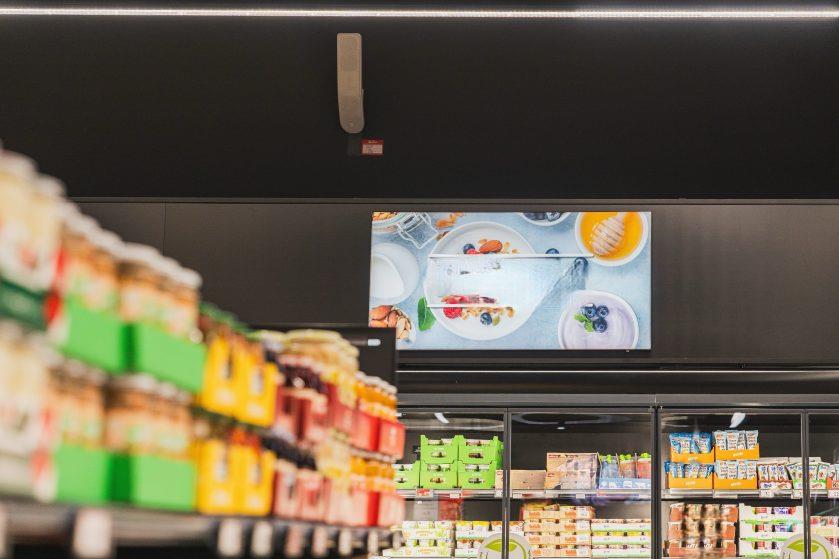
Similarly, traditional cardboard endcaps have been replaced by high-definition LCD screens ranging from fifteen to fifty-five inches. These digital endcaps leverage sight, sound, and motion to capture attention in high-traffic zones like the main cross-aisles and checkout queues. Featuring vibrant loops of recipe ideas, sizzling product demonstrations, and brand partnerships, these displays command a level of visual engagement that static merchandising can never replicate.
Closed-Loop Attribution and the Holy Grail of AdvertisingWhat makes the digitization of grocery aisles so lucrative for advertisers is a concept known as closed-loop attribution. In traditional advertising mediums like billboard campaigns or television commercials, marketers struggle to prove a direct causal link between seeing an ad and making a purchase. Retail media eliminates that guesswork.
Because supermarkets track purchases through loyalty cards and digital accounts, they can directly trace a consumer's journey from seeing a digital ad on an in-store screen or mobile app to scanning the item at the checkout register. A snack food manufacturer can measure exact return on investment down to the penny, knowing precisely how many units of a new chip flavor sold during the same hour a video ad played on endcap displays. This undeniable accountability explains why global retail media spending continues to scale upward at an unprecedented pace.
Navigating Ad Saturation and the Shopper ExperienceWhile retail media networks generate massive profits for grocery operators and provide valuable data for brands, this sudden proliferation of digital billboards introduces new challenges for the everyday consumer. Walking down a supermarket aisle can increasingly feel like navigating a digital website. Consumers' attention is constantly pulled toward flashing screens, dynamic promotional tags, and targeted video suggestions.
Shoppers are becoming more conscious of how retail environments are engineered to trigger impulse purchases and shape buying behavior. Balancing the financial benefits of targeted promotions with a calm, friction-free shopping environment is the ultimate test. Ensuring that digital displays are genuinely useful rather than visually overwhelming protects the core integrity of the physical shopping experience.
The Future of the Digital SupermarketThe evolution of grocery aisles into digital billboards represents a permanent restructuring of the retail landscape. Supermarkets are no longer places to acquire food. They are immersive, data-driven media channels where the physical and digital worlds seamlessly intersect. As artificial intelligence, programmatic advertising, and in-store sensor technologies continue to mature, the level of personalization within the grocery store deepens.
Recognizing how these invisible data networks operate helps shoppers maintain intentional control over their purchasing decisions. It also ensures that the items landing in the cart reflect genuine personal choices rather than algorithmic persuasion.
How do you feel about the growing presence of digital video screens and dynamic advertising while you shop for groceries?
What To Read NextThe Restaurant“Value Meal” Is Back Everywhere. Is It Actually a Good Deal?
The Supermarket Merch Boom Why Grocery Store Apparel Is the New Status Symbol
8 Grocery Staples Stores Are Shrinking Without Lowering Prices
The End Cap Illusion Why Big Displays Are Not Always the Best Deal
How Augmented Reality Apps Are Driving Impulse Grocery Purchases

Legal Disclaimer:
MENAFN provides the
information “as is” without warranty of any kind. We do not accept any
responsibility or liability for the accuracy, content, images, videos,
licenses, completeness, legality, or reliability of the information
contained in this article. If you have any complaints or copyright issues
related to this article, kindly contact the provider above.
Comments
No comment