

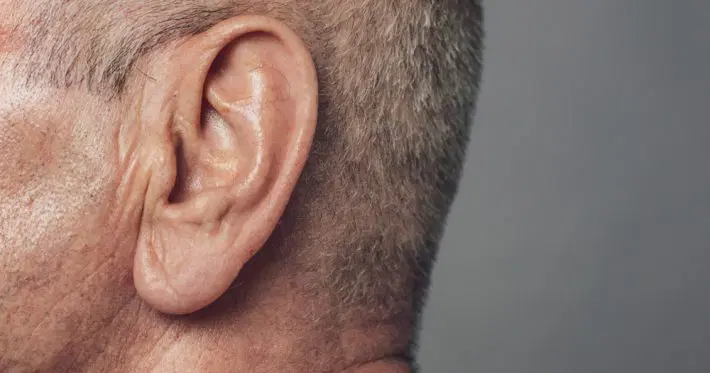
Check Your Earlobes: This Tiny Crease Has Been Linked To Heart Disease


Frank's sign is a diagonal crease extending across the earlobe, generally running backward at roughly a 45-degree angle from near the ear canal toward the outer edge of the lobe. The sign is named for Dr. Sanders T. Frank, who described an apparent relationship between the crease and coronary artery disease in 1973. Researchers have been investigating that possible connection ever since, with studies examining everything from patients undergoing coronary angiography to findings during autopsies.
A review in the Cleveland Clinic Journal of Medicine notes that some research has associated diagonal earlobe creases with the prevalence, extent, and severity of coronary artery disease. In other words, Frank's sign and heart disease isn't simply an internet health rumor. It is a legitimate medical research question that has been studied for more than 50 years.
Some Research Has Found a Surprisingly Strong AssociationOne of the most interesting analyses pooled data from 12 studies involving 2,415 coronary artery disease cases and 2,545 controls. The systematic review and meta-analysis indexed by the National Library of Medicine found that people with a diagonal earlobe crease had approximately four times the likelihood of having coronary artery disease. Researchers also examined a common criticism of the association: both wrinkles and heart disease become more common as people get older, so perhaps age explains the connection.
However, all 10 studies included in that analysis that investigated the issue found an association independent of age and other established cardiovascular risk factors. The researchers also suggested the association may be stronger when the crease appears on both earlobes.
But Your Earlobe Cannot Diagnose Heart DiseaseAnother systematic review of 13 studies involving 3,951 patients looked specifically at how accurately the diagonal earlobe crease could identify coronary artery disease. Sensitivity (the ability to identify people who actually had disease) varied dramatically from 26% to 90%, while specificity ranged from 32% to 96% across studies. Researchers ultimately concluded that the crease's diagnostic accuracy was insufficient and that its presence or absence should not change a patient's clinical management by itself. That means you shouldn't assume you have clogged arteries because you see a crease, and you definitely shouldn't assume your heart is healthy because your earlobes are smooth.
Scientists Still Don't Know Exactly Why the Association ExistsIf the association is genuine, researchers still haven't settled on precisely why a crease in the ear might accompany disease in the coronary arteries. A review of the medical literature discusses several proposed explanations, including aging, changes involving collagen, and processes related to vascular disease. Another possibility researchers have explored involves shortened telomeres, structures at the ends of chromosomes that are associated with biological aging. The problem is that an observational association doesn't establish that one condition causes the other, and a crease certainly isn't causing plaque to accumulate inside someone's arteries. Think of Frank's sign and heart disease as a possible visible association researchers are trying to understand rather than a cause-and-effect relationship.
Age Makes Interpreting the Crease More ComplicatedOne obvious challenge is that diagonal earlobe creases become more common as people age, which is the same period when cardiovascular disease becomes increasingly common. Some older research has even concluded that age may account for much of the apparent connection between the two.
For example, a prospective study of 261 men undergoing coronary arteriography found coronary artery disease in 85% of men with an earlobe crease and 85% of those without one after researchers examined the relationship more closely. Other studies, however, have continued to find an independent association after adjusting for age and cardiovascular risk factors. The conflicting results are another reason doctors cannot look at someone's ear and reliably determine what's happening inside their coronary arteries.
Your Established Heart Risk Factors Matter Much MoreSpotting Frank's sign is much less useful than knowing the cardiovascular risk factors medicine already understands well. Blood pressure, cholesterol, smoking, diabetes, family history, physical activity, age, and other established factors provide substantially more meaningful information when assessing someone's cardiovascular risk. Someone with smooth earlobes who smokes, has uncontrolled hypertension, and has very high LDL cholesterol shouldn't feel reassured by the absence of a crease.
Likewise, a healthy 70-year-old with a diagonal earlobe crease shouldn't assume the mark means a heart attack is around the corner. If Frank's sign and heart disease makes you curious about your own risk, use that curiosity as motivation to discuss your overall cardiovascular picture with a health professional rather than attempting to diagnose yourself in the mirror.
Doctors have much better tools than an earlobe crease for estimating cardiovascular risk. For example, established risk calculations incorporate factors such as age, cholesterol levels, systolic blood pressure, treatment for high blood pressure, diabetes, and smoking status to estimate a person's likelihood of experiencing a cardiovascular event.
The U.S. Preventive Services Task Force specifically recommends considering both established cardiovascular risk factors and estimated 10-year cardiovascular risk when making certain preventive-treatment decisions. That is a fundamentally different type of evidence than noticing a physical characteristic associated with disease in observational studies. If you're worried after discovering an earlobe crease, asking about your actual cardiovascular risk is much more useful than asking whether the crease itself needs to be tested.
A Crease Should Never Distract From Actual Heart SymptomsThere is one situation in which studying your earlobes is definitely the wrong priority: when you're experiencing possible symptoms of a heart attack. Chest pressure or discomfort, shortness of breath, discomfort in the arms, back, neck, jaw, or stomach, cold sweat, nausea, lightheadedness, or other concerning symptoms require prompt medical attention regardless of what your ears look like. Frank's sign isn't an emergency screening test, and its absence cannot safely rule out coronary artery disease or a heart attack.
Conversely, discovering a longstanding earlobe crease when you feel perfectly well isn't by itself evidence of a medical emergency. The safest interpretation is simple: symptoms and established cardiovascular risk factors matter far more than this intriguing physical sign.
Heart Prevention Can Be a Financial Issue, TooThere's a financial reason not to let an unusual earlobe crease send you straight into expensive testing that a doctor hasn't recommended. Cardiovascular disease already carries an enormous economic burden, and the American Heart Association projects direct U.S. cardiovascular health-care costs could climb from $393 billion in 2020 to roughly $1.49 trillion by 2050.
For people on Medicare, the better first step may be surprisingly inexpensive: Medicare Part B covers cardiovascular screening blood tests for cholesterol, lipid, and triglyceride levels once every five years, with no out-of-pocket cost when the provider accepts assignment. Medicare may also cover a more comprehensive cardiovascular risk assessment for eligible beneficiaries, although the Part B deductible and 20% coinsurance generally apply to that service. Rather than spending money chasing an uncertain physical sign, ask your doctor which evidence-based screenings make sense for you and what Medicare or your insurance will cover before scheduling additional tests.
Your Earlobes May Be a Conversation Starter, Not a DiagnosisThe research surrounding Frank's sign and heart disease is fascinating precisely because such an ordinary physical feature has repeatedly been associated with something happening much deeper inside the body. At the same time, decades of research haven't turned a diagonal earlobe crease into a reliable standalone cardiovascular test. If you notice one (especially on both ears), consider it a reminder to ask whether you're up to date on evidence-based checks such as blood pressure, cholesterol, and diabetes screening rather than a reason to pay for tests you may not need. Medicare beneficiaries should also check which preventive cardiovascular services Part B already covers before paying out of pocket for additional screening.
Have you ever noticed a diagonal crease on your own earlobes, and did you know some routine heart-risk screenings may already be covered by Medicare?

Legal Disclaimer:
MENAFN provides the
information “as is” without warranty of any kind. We do not accept any
responsibility or liability for the accuracy, content, images, videos,
licenses, completeness, legality, or reliability of the information
contained in this article. If you have any complaints or copyright issues
related to this article, kindly contact the provider above.
Comments
No comment