

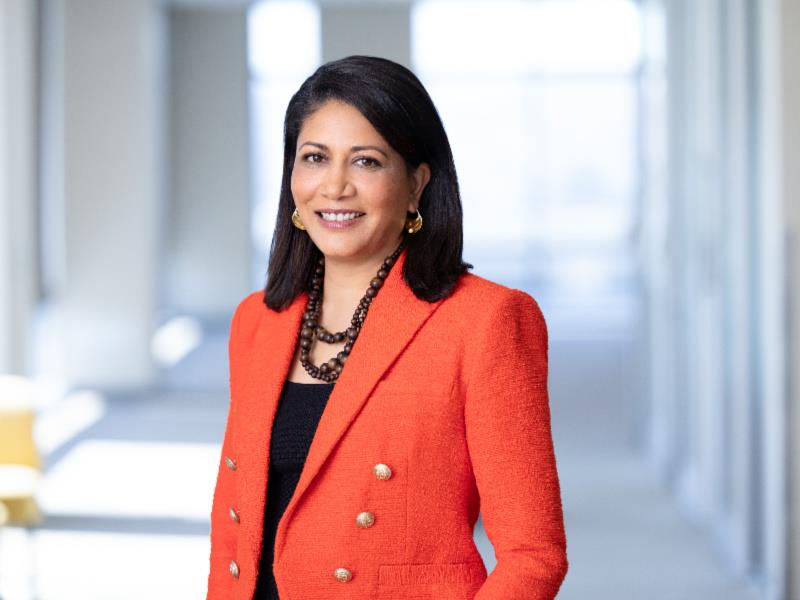
Gilead's Shreya Jani On Public Affairs' Expanding Role


Public affairs has traditionally been seen largely as a support function. What's changed? How is the function becoming more involved in shaping business strategy and decisions?
The operating environment has always been dynamic. But today's shifts in policy, technology and stakeholder expectations move faster and require teams to synthesize a range of information quickly. In this setting, public affairs needs to be part of the conversation from the beginning to help capture necessary insights, shape decision-making and ensure stakeholder perspectives are fully considered.
In my experience, our function plays a critical role on leadership teams, where we advise on signals, problem-solve and help develop business communication strategies. There are so many ways this takes shape. For example, something as simple as holding the pen on messages or talking points is a critical part of the strategic work that shouldn't be undervalued, particularly when it aligns teams on shared goals and represents who we are in multiple rooms.
That is the shift: Our value is not simply in what we communicate, but in the outcomes we help make possible.
What does that shift require from public affairs professionals themselves? Are you looking for different skills and experience than you would have 10 years ago?
Absolutely. The role requires much more range today, and that comes from the full team, not any one individual. My own background is in public affairs and public health, but no single background can provide all the capabilities the function needs today.
What makes the function strong is the range of perspectives around the table. Many colleagues began in journalism or government, while others bring experience from commercial, community advocacy, legal or even clinical practice. That mix changes how we see problems and the solutions we bring forward.
Last year, we developed a common training curriculum to provide scaffolding for the function: shared capabilities, tools and language that allow people with very different backgrounds to operate as one team. We identified a set of core competencies that are most critical to our success. Our curriculum included eight training sessions, with programs on strategic thinking and decision-making, collaboration and influence, persuasive communication, and leading through complexity. We're both doing the work and growing our teams to connect their expertise to the needs of the business.
The issue of trust is a complex one for pharma, particularly because you're dealing with so many different audiences. How do you build credibility across all of them? What role can communications play?
Trust can be difficult to measure precisely, but you know very quickly when you have lost it. It also means different things to different people. The only way to know how to engage authentically is to understand their perspective, be honest about the choices you make and align what you say with how you behave.
Communications is the connector. We see across audiences and bring different perspectives into business decisions, helping the organization act and communicate in a way that is authentic, strategic and transparent. An employee, patient, healthcare provider or policymaker may judge the same decision very differently. Our role is to understand those differences and help the organization show up consistently across each relationship.
Looking back at the AIDS crisis, fear, misinformation and distrust were enormous communications challenges. Decades later, we saw some of those same dynamics during Covid. Why do you think those patterns recur? What lessons from HIV could have better informed how we communicated during Covid and after?
Fear and uncertainty change not only how people process information, but whom they are willing to believe. When people face something unfamiliar or frightening, they rarely make decisions based on facts alone. They turn to people who understand their experiences and to information that feels relevant to their lives.
One of the clearest lessons from HIV is that information alone does not change behavior. We need to understand where people go with questions, whom they listen to and what ultimately moves them to act. In HIV, some of the most effective programs relied on trusted community voices and partnerships rather than traditional top-down communication.
During Covid, we saw many of the same dynamics unfold at a fast pace. Public health information was competing with fear, personal experience and a fragmented information environment. The lesson is to work through communities, not simply communicate at them. Trusted local voices need to be part of the strategy from the beginning, along with honesty about what is known, what is not yet known and how the evidence is evolving.
There's obviously a lot of discussion about AI and data in communications. Where are you seeing them actually make public affairs better? And where is human judgment still essential?
100% of my team is using AI. The differentiator is no longer if someone uses it, but if they use it well.
The opportunity is to use AI to solve real problems: accelerate research, analyze stakeholder perspectives at greater scale and create more space for strategic and creative problem-solving. But technology does not replace human judgment. It can surface a pattern, but it cannot decide what the business should do about it. That still requires strategy, creativity, context and an understanding of what moves people's hearts and minds.
Anyone can use AI to draft a memo. The real value is using it without losing the judgment, creativity and human voice that make communication effective.
Looking ahead five or 10 years, how do you think the public affairs function will change? What should communicators be preparing for now?
The biggest change will be the continued fragmentation of how people receive information and form opinions. When BlackBerrys were introduced, they changed when and where people worked. The shift happening now is changing not only when people receive information, but how that information is personalized, consumed and interpreted.
Reputation is no longer shaped through a small number of central channels. It is formed continuously across digital platforms, workplaces, communities and individual interactions. Public affairs will need to understand where those conversations are happening, how different audiences consume information and how the organization can meet them in ways that are transparent and authentic.
New tools will give us a faster, more complete view of public opinion and stakeholder perspectives. Historically, we relied heavily on polling and focus groups. Increasingly, we will be able to understand multiple audiences and conversations at the same time.
What will not change is our responsibility to understand the intersection of those audiences and apply human judgment. Technology will make the analysis faster. Human judgment will determine what we do with it.

Legal Disclaimer:
MENAFN provides the
information “as is” without warranty of any kind. We do not accept any
responsibility or liability for the accuracy, content, images, videos,
licenses, completeness, legality, or reliability of the information
contained in this article. If you have any complaints or copyright issues
related to this article, kindly contact the provider above.
Comments
No comment