

403
Sorry!!
Error! We're sorry, but the page you were looking for doesn't exist.
Uzbekistan–Serbia Strategic Partnership on Europe’s New Geoeconomic Map


(MENAFN- National News Agency of Uzbekistan) President Shavkat Mirziyoyev’s first official visit to Serbia goes far beyond the bilateral agenda. The signing of a declaration on strategic partnership and 20 bilateral agreements in Belgrade signals a broader process reshaping trade, transport, technology and investment ties between Central Asia and Europe.
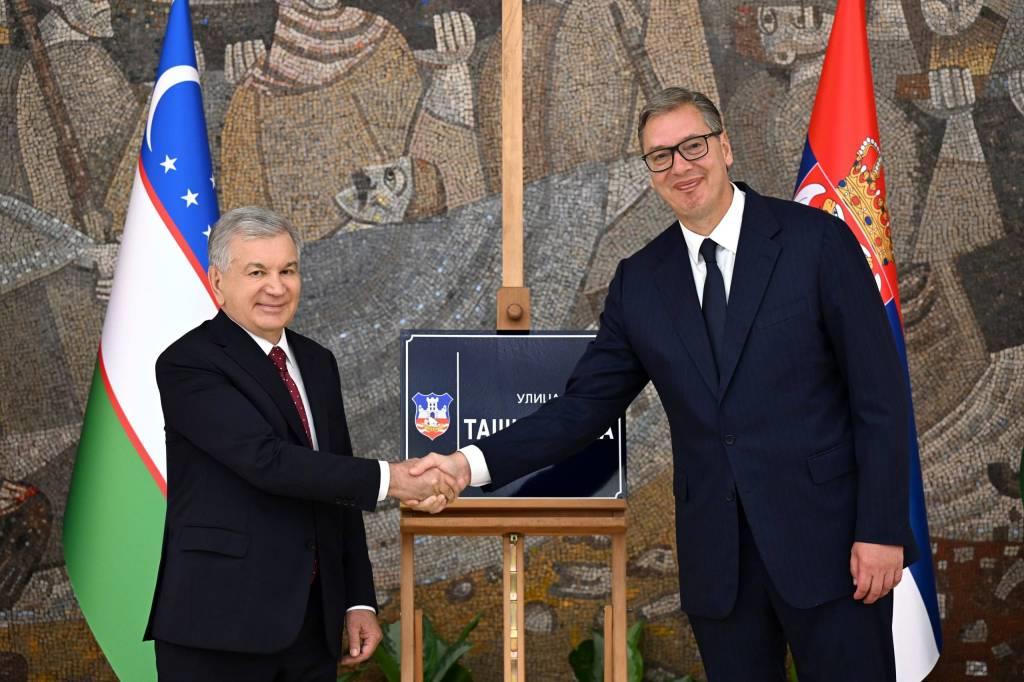
On 7–8 September 2026, Uzbek President Shavkat Mirziyoyev made his first official visit to Serbia, producing a number of significant political and economic outcomes. In Belgrade, Uzbekistan and Serbia signed a Joint Declaration on the Establishment of Strategic Partnership Relations. The two sides also exchanged 20 bilateral documents covering transport, labour mobility, digitalisation, renewable energy, pharmaceuticals, agriculture, tourism, culture and other areas.
These results should not be viewed solely as a new chapter in relations between Tashkent and Belgrade. The visit is also closely connected to three broader developments of importance to Europe: Central Asia’s growing economic openness, the rising strategic importance of new transport corridors, and Europe’s search for new markets and investment opportunities.
The Economic Substance of the Strategic Partnership
Trade between Uzbekistan and Serbia remains relatively modest. Yet this is precisely what highlights the untapped potential of their economic relationship.
In 2025, bilateral trade reached $41.9 million, up 27% from $32.9 million in 2024. In the first seven months of 2026, Serbia’s exports of agricultural and food products to Uzbekistan also increased significantly.
The two countries have agreed to establish a working group to launch negotiations on a free trade agreement. This is more than a symbolic step. If successfully concluded, such an agreement could substantially improve market access for businesses in both countries and create new incentives for investment and industrial cooperation.
Tashkent is seeking to move beyond conventional trade relations towards joint production, localisation and technology transfer. Priority areas include automotive and industrial components, electrical engineering, textiles, pharmaceuticals, deep processing of agricultural products, software development and artificial intelligence.
This approach reflects a broader shift in Uzbekistan’s economic strategy. Rather than viewing foreign economic cooperation primarily as a means of importing finished goods, the country increasingly seeks to use international partnerships to build domestic production capacity, expand exports and integrate into regional and global value chains.
The Middle Corridor: The Key European Signal
One of the most strategically important aspects of the visit was the focus on the Trans-Caspian International Transport Route, commonly known as the Middle Corridor.
Uzbekistan and Serbia agreed to support the development of the corridor and to deepen cooperation in railway infrastructure and road transport.
The Middle Corridor connects Central Asia with European markets through the Caspian Sea, Azerbaijan, Georgia and Türkiye. Its strategic importance has increased considerably since Russia’s war against Ukraine exposed the geopolitical and logistical risks associated with traditional northern routes.
From this perspective, Serbia is not simply another European partner for Uzbekistan. It can potentially serve as one of the gateways linking Central Asian producers and businesses with the Balkans and wider European markets.
Serbian President Aleksandar Vučić has also raised the possibility of launching a direct air connection between Belgrade and Tashkent in the coming months.
If implemented, such a route could significantly facilitate business travel, tourism and people-to-people contacts, while also strengthening the practical foundations of bilateral economic relations.
What Does Uzbekistan Mean for Serbia?
From Belgrade’s perspective, Uzbekistan represents one of Central Asia’s largest and most economically dynamic markets.
Serbia is continuing its process of European Union integration while simultaneously seeking to diversify its economic partnerships beyond the EU. Uzbekistan, meanwhile, is expanding its international economic ties and seeking to strengthen its position in the transport, production and trade networks connecting Europe and Asia.
This creates a clear convergence of interests: the development of new economic links between Europe and Asia.
Serbia’s distinctive geopolitical position also matters. The country is simultaneously pursuing closer integration with the European Union while maintaining significant economic and political relations with Russia and China.
For Tashkent, cooperation with Serbia therefore offers another channel into the broader European economic space. For Belgrade, closer ties with Uzbekistan provide an opportunity to strengthen its presence in a rapidly developing Central Asian market.
The relationship is thus part of a wider trend: Central Asian states are deepening their engagement with Europe not only through EU–Central Asia mechanisms, but also through direct bilateral partnerships with individual European countries.
Digitalisation and the Green Economy
The agreements signed during the visit on digitalisation, e-government, information and communications technologies, renewable energy and green technologies are particularly noteworthy.
They have the potential to move Uzbekistan–Serbia relations beyond traditional trade and diplomacy towards cooperation in higher-value sectors.
Uzbekistan’s rapidly expanding digital economy, combined with Serbia’s growing integration into Europe’s technology ecosystem, creates opportunities for joint projects in software development, digital services and emerging technologies.
Cooperation in pharmaceuticals and biotechnology, renewable energy and environmental technologies could also generate investment platforms attractive not only to companies from the two countries, but potentially to wider European business.
Labour Mobility: An Overlooked but Important Dimension
Another significant outcome of the visit was the signing of agreements related to labour mobility.
For Europe, this is an increasingly relevant issue. Demographic change and labour shortages are increasing the importance of regulated migration and international labour mobility across European economies.
Uzbekistan, for its part, has a strong interest in ensuring that labour migration takes place through legal, safe and transparent mechanisms.
Cooperation with Serbia in this field could provide a foundation for more systematic links between the two labour markets. The agreements reportedly cover not only labour mobility, but also occupational safety and health protection.
In the longer term, such mechanisms could become an important component of the broader economic relationship.
Belgrade’s Changing View of Tashkent
The political symbolism surrounding the visit also deserves attention.
President Aleksandar Vučić awarded President Shavkat Mirziyoyev Serbia’s highest state decoration, the Order of the Republic on a Grand Chain. A street in Belgrade was also named “Tashkent”, providing a visible symbol of the growing political closeness between the two countries.
At the same time, Serbia has indicated that it is taking final steps towards opening an embassy in Tashkent.
These developments point to the strengthening of diplomatic infrastructure and institutional ties. Elevating the relationship to the level of a strategic partnership provides an additional framework for consolidating this process.
The Key Question for Europe: How Practical Will the Partnership Become?
The declaration on strategic partnership, however, is not an outcome in itself. It is a framework for delivering concrete results.
The most important test will be whether the 20 agreements signed during the visit translate into actual investment, infrastructure and industrial projects.
Three areas deserve particular attention.
First, how quickly and effectively will negotiations on a free trade agreement progress?
Second, will cooperation on the Middle Corridor translate into real logistics volumes and new flows of goods reaching European markets?
Third, to what extent will Serbian companies enter Uzbekistan through manufacturing, technology and investment projects?
If tangible progress is made in these three areas, the September 2026 visit could ultimately be remembered not simply as a symbolic milestone in bilateral diplomacy, but as the starting point for a new economic architecture between the two countries.
A New Europe–Central Asia Geography
President Mirziyoyev’s visit to Belgrade highlights a broader transformation: Central Asia is no longer viewed by Europe solely through the prism of natural resources or geopolitical competition.
The region is increasingly emerging as a space for new transport corridors, industrial cooperation, digital development, energy partnerships and expanding consumer markets.
Uzbekistan is seeking to position itself actively within this transformation. Its strategic partnership with Serbia represents an important step in strengthening that engagement with Southeast Europe.
For Belgrade, this is an opportunity to deepen its access to Central Asia.
For Tashkent, it offers another gateway into the European economic space.
For Europe, the most significant aspect is that these interests converge around the Middle Corridor, trade diversification and the emergence of new economic partnerships.
In this sense, the rapprochement between Tashkent and Belgrade in September 2026 is about more than relations between two capitals. It is part of a wider process in which the economic distance between Europe and Central Asia is narrowing, new transport routes are gaining strategic importance, and diversified international partnerships are becoming increasingly valuable.
The real significance of the Uzbekistan–Serbia strategic partnership lies precisely here: two geographically distant countries are beginning to see themselves as participants in an emerging Europe–Asia economic chain.
On 7–8 September 2026, Uzbek President Shavkat Mirziyoyev made his first official visit to Serbia, producing a number of significant political and economic outcomes. In Belgrade, Uzbekistan and Serbia signed a Joint Declaration on the Establishment of Strategic Partnership Relations. The two sides also exchanged 20 bilateral documents covering transport, labour mobility, digitalisation, renewable energy, pharmaceuticals, agriculture, tourism, culture and other areas.
These results should not be viewed solely as a new chapter in relations between Tashkent and Belgrade. The visit is also closely connected to three broader developments of importance to Europe: Central Asia’s growing economic openness, the rising strategic importance of new transport corridors, and Europe’s search for new markets and investment opportunities.
The Economic Substance of the Strategic Partnership
Trade between Uzbekistan and Serbia remains relatively modest. Yet this is precisely what highlights the untapped potential of their economic relationship.
In 2025, bilateral trade reached $41.9 million, up 27% from $32.9 million in 2024. In the first seven months of 2026, Serbia’s exports of agricultural and food products to Uzbekistan also increased significantly.
The two countries have agreed to establish a working group to launch negotiations on a free trade agreement. This is more than a symbolic step. If successfully concluded, such an agreement could substantially improve market access for businesses in both countries and create new incentives for investment and industrial cooperation.
Tashkent is seeking to move beyond conventional trade relations towards joint production, localisation and technology transfer. Priority areas include automotive and industrial components, electrical engineering, textiles, pharmaceuticals, deep processing of agricultural products, software development and artificial intelligence.
This approach reflects a broader shift in Uzbekistan’s economic strategy. Rather than viewing foreign economic cooperation primarily as a means of importing finished goods, the country increasingly seeks to use international partnerships to build domestic production capacity, expand exports and integrate into regional and global value chains.
The Middle Corridor: The Key European Signal
One of the most strategically important aspects of the visit was the focus on the Trans-Caspian International Transport Route, commonly known as the Middle Corridor.
Uzbekistan and Serbia agreed to support the development of the corridor and to deepen cooperation in railway infrastructure and road transport.
The Middle Corridor connects Central Asia with European markets through the Caspian Sea, Azerbaijan, Georgia and Türkiye. Its strategic importance has increased considerably since Russia’s war against Ukraine exposed the geopolitical and logistical risks associated with traditional northern routes.
From this perspective, Serbia is not simply another European partner for Uzbekistan. It can potentially serve as one of the gateways linking Central Asian producers and businesses with the Balkans and wider European markets.
Serbian President Aleksandar Vučić has also raised the possibility of launching a direct air connection between Belgrade and Tashkent in the coming months.
If implemented, such a route could significantly facilitate business travel, tourism and people-to-people contacts, while also strengthening the practical foundations of bilateral economic relations.
What Does Uzbekistan Mean for Serbia?
From Belgrade’s perspective, Uzbekistan represents one of Central Asia’s largest and most economically dynamic markets.
Serbia is continuing its process of European Union integration while simultaneously seeking to diversify its economic partnerships beyond the EU. Uzbekistan, meanwhile, is expanding its international economic ties and seeking to strengthen its position in the transport, production and trade networks connecting Europe and Asia.
This creates a clear convergence of interests: the development of new economic links between Europe and Asia.
Serbia’s distinctive geopolitical position also matters. The country is simultaneously pursuing closer integration with the European Union while maintaining significant economic and political relations with Russia and China.
For Tashkent, cooperation with Serbia therefore offers another channel into the broader European economic space. For Belgrade, closer ties with Uzbekistan provide an opportunity to strengthen its presence in a rapidly developing Central Asian market.
The relationship is thus part of a wider trend: Central Asian states are deepening their engagement with Europe not only through EU–Central Asia mechanisms, but also through direct bilateral partnerships with individual European countries.
Digitalisation and the Green Economy
The agreements signed during the visit on digitalisation, e-government, information and communications technologies, renewable energy and green technologies are particularly noteworthy.
They have the potential to move Uzbekistan–Serbia relations beyond traditional trade and diplomacy towards cooperation in higher-value sectors.
Uzbekistan’s rapidly expanding digital economy, combined with Serbia’s growing integration into Europe’s technology ecosystem, creates opportunities for joint projects in software development, digital services and emerging technologies.
Cooperation in pharmaceuticals and biotechnology, renewable energy and environmental technologies could also generate investment platforms attractive not only to companies from the two countries, but potentially to wider European business.
Labour Mobility: An Overlooked but Important Dimension
Another significant outcome of the visit was the signing of agreements related to labour mobility.
For Europe, this is an increasingly relevant issue. Demographic change and labour shortages are increasing the importance of regulated migration and international labour mobility across European economies.
Uzbekistan, for its part, has a strong interest in ensuring that labour migration takes place through legal, safe and transparent mechanisms.
Cooperation with Serbia in this field could provide a foundation for more systematic links between the two labour markets. The agreements reportedly cover not only labour mobility, but also occupational safety and health protection.
In the longer term, such mechanisms could become an important component of the broader economic relationship.
Belgrade’s Changing View of Tashkent
The political symbolism surrounding the visit also deserves attention.
President Aleksandar Vučić awarded President Shavkat Mirziyoyev Serbia’s highest state decoration, the Order of the Republic on a Grand Chain. A street in Belgrade was also named “Tashkent”, providing a visible symbol of the growing political closeness between the two countries.
At the same time, Serbia has indicated that it is taking final steps towards opening an embassy in Tashkent.
These developments point to the strengthening of diplomatic infrastructure and institutional ties. Elevating the relationship to the level of a strategic partnership provides an additional framework for consolidating this process.
The Key Question for Europe: How Practical Will the Partnership Become?
The declaration on strategic partnership, however, is not an outcome in itself. It is a framework for delivering concrete results.
The most important test will be whether the 20 agreements signed during the visit translate into actual investment, infrastructure and industrial projects.
Three areas deserve particular attention.
First, how quickly and effectively will negotiations on a free trade agreement progress?
Second, will cooperation on the Middle Corridor translate into real logistics volumes and new flows of goods reaching European markets?
Third, to what extent will Serbian companies enter Uzbekistan through manufacturing, technology and investment projects?
If tangible progress is made in these three areas, the September 2026 visit could ultimately be remembered not simply as a symbolic milestone in bilateral diplomacy, but as the starting point for a new economic architecture between the two countries.
A New Europe–Central Asia Geography
President Mirziyoyev’s visit to Belgrade highlights a broader transformation: Central Asia is no longer viewed by Europe solely through the prism of natural resources or geopolitical competition.
The region is increasingly emerging as a space for new transport corridors, industrial cooperation, digital development, energy partnerships and expanding consumer markets.
Uzbekistan is seeking to position itself actively within this transformation. Its strategic partnership with Serbia represents an important step in strengthening that engagement with Southeast Europe.
For Belgrade, this is an opportunity to deepen its access to Central Asia.
For Tashkent, it offers another gateway into the European economic space.
For Europe, the most significant aspect is that these interests converge around the Middle Corridor, trade diversification and the emergence of new economic partnerships.
In this sense, the rapprochement between Tashkent and Belgrade in September 2026 is about more than relations between two capitals. It is part of a wider process in which the economic distance between Europe and Central Asia is narrowing, new transport routes are gaining strategic importance, and diversified international partnerships are becoming increasingly valuable.
The real significance of the Uzbekistan–Serbia strategic partnership lies precisely here: two geographically distant countries are beginning to see themselves as participants in an emerging Europe–Asia economic chain.

Legal Disclaimer:
MENAFN provides the
information “as is” without warranty of any kind. We do not accept any
responsibility or liability for the accuracy, content, images, videos,
licenses, completeness, legality, or reliability of the information
contained in this article. If you have any complaints or copyright issues
related to this article, kindly contact the provider above.
Comments
No comment