

403
Sorry!!
Error! We're sorry, but the page you were looking for doesn't exist.
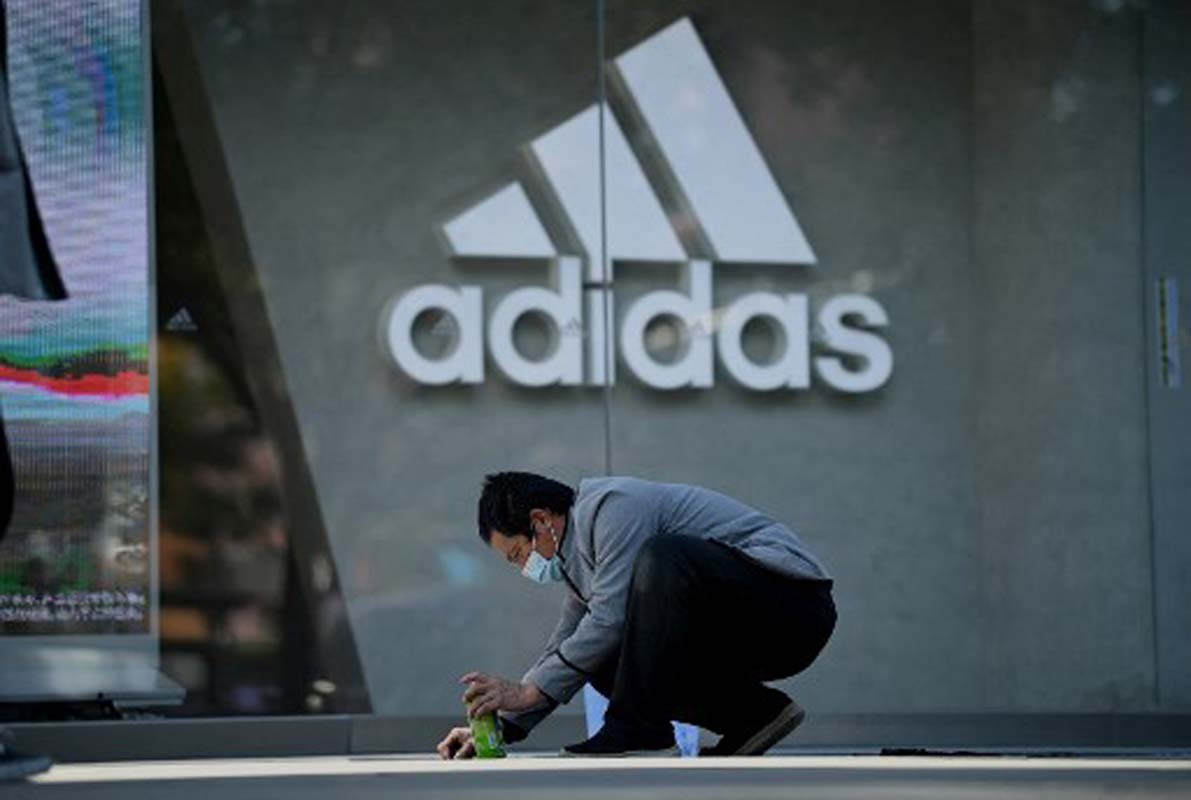
Adidas Faces Global Boycott Threat Over Amputee Soldier Ad


(MENAFN) German sportswear giant Adidas is confronting escalating boycott calls after tapping a retired Israeli soldier — who lost a leg during military operations in Gaza — to front its "single-shoe service" campaign, a controversy now threatening billions in global revenue.
The choice of former soldier Shalev Biton as the campaign's face has drawn sharp criticism and put the company's international image and market operations under scrutiny.
Adidas responded to the backlash by clarifying that the campaign originated with its local Israeli team and does not reflect the company's global advertising direction. Adidas Arabia went further, issuing a formal apology acknowledging the concerns the campaign had stirred and pledging to take regional sensitivities seriously.
The backlash has only intensified internationally, driven by the optics of using an Israeli military veteran to promote a service for amputees at a moment when countless Gaza civilians have themselves lost limbs.
Boycott math meets global sales map
The controversy has thrust Adidas's vast commercial footprint in pro-Palestinian markets into the spotlight. The company's official site lists 3,722 sales locations worldwide — and cross-referencing that network against the UN General Assembly's December 12, 2025 resolution backing the International Court of Justice's advisory opinion on Israel's obligations in the occupied Palestinian territories reveals a telling pattern.
That resolution passed with 139 countries in favor, 12 opposed, and 19 abstaining. Mapping Adidas's store locations onto those voting blocs shows that 3,378 locations — 90.8% of its entire physical retail network — sit in countries that backed the resolution. The 12 dissenting nations, by contrast, host just 287 Adidas locations combined, concentrated mainly in the US (179), Israel (62) and Argentina (41).
High-stakes exposure in key growth markets
The financial stakes are considerable. Adidas's 2025 annual report showed global net sales climbing 5% year-over-year to €24.81 billion ($28.8 billion), with operating profit jumping 54% to €2.06 billion — gains fueled heavily by markets that supported the UN resolution.
Türkiye stands out as a particular vulnerability, with 125 store locations and an estimated 22-25% share of the national sportswear market, making Adidas one of the sector's top two players there. Its footprint includes 40 stores in Istanbul and 10 in Ankara, backed by an extensive wholesale network.
China, which generated 15% of Adidas's global revenue last year, poses an even sharper risk. The company posted record 16% currency-neutral sales growth there in the first half of 2026 and holds an estimated 11-13% market share — a market where past consumer boycotts have cost global brands billions of euros.
Saudi Arabia, the Middle East's largest economy, hosts 101 official Adidas locations and commands an estimated 18-20% market share — a dynamic widely seen as driving Adidas Arabia's rapid apology. The company also holds meaningful ground in Pakistan (12-15% share among young urban consumers), Iraq (roughly 10% via distributors), and Nigeria (14-16% share as part of its African growth strategy).
Brand reputation under pressure
The financial exposure is amplified by Adidas's current momentum: first-half 2026 results show 14% currency-neutral global sales growth, among the strongest stretches in company history, with wholesale contributing 60% of revenue and direct-to-consumer sales the remaining 40%.
Latin America posted 27% currency-neutral growth, while emerging markets grew 11%.
While store counts don't translate directly into sales figures, Adidas's substantial market share across Türkiye, China, Saudi Arabia, Pakistan, Iraq and Nigeria suggests the fallout from this controversy could extend well beyond a regional dispute — potentially exposing the company to billions of euros in global revenue risk. With 2,022 company-operated concept and outlet stores worldwide, safeguarding brand perception and consumer trust has become an urgent priority for Adidas.
The choice of former soldier Shalev Biton as the campaign's face has drawn sharp criticism and put the company's international image and market operations under scrutiny.
Adidas responded to the backlash by clarifying that the campaign originated with its local Israeli team and does not reflect the company's global advertising direction. Adidas Arabia went further, issuing a formal apology acknowledging the concerns the campaign had stirred and pledging to take regional sensitivities seriously.
The backlash has only intensified internationally, driven by the optics of using an Israeli military veteran to promote a service for amputees at a moment when countless Gaza civilians have themselves lost limbs.
Boycott math meets global sales map
The controversy has thrust Adidas's vast commercial footprint in pro-Palestinian markets into the spotlight. The company's official site lists 3,722 sales locations worldwide — and cross-referencing that network against the UN General Assembly's December 12, 2025 resolution backing the International Court of Justice's advisory opinion on Israel's obligations in the occupied Palestinian territories reveals a telling pattern.
That resolution passed with 139 countries in favor, 12 opposed, and 19 abstaining. Mapping Adidas's store locations onto those voting blocs shows that 3,378 locations — 90.8% of its entire physical retail network — sit in countries that backed the resolution. The 12 dissenting nations, by contrast, host just 287 Adidas locations combined, concentrated mainly in the US (179), Israel (62) and Argentina (41).
High-stakes exposure in key growth markets
The financial stakes are considerable. Adidas's 2025 annual report showed global net sales climbing 5% year-over-year to €24.81 billion ($28.8 billion), with operating profit jumping 54% to €2.06 billion — gains fueled heavily by markets that supported the UN resolution.
Türkiye stands out as a particular vulnerability, with 125 store locations and an estimated 22-25% share of the national sportswear market, making Adidas one of the sector's top two players there. Its footprint includes 40 stores in Istanbul and 10 in Ankara, backed by an extensive wholesale network.
China, which generated 15% of Adidas's global revenue last year, poses an even sharper risk. The company posted record 16% currency-neutral sales growth there in the first half of 2026 and holds an estimated 11-13% market share — a market where past consumer boycotts have cost global brands billions of euros.
Saudi Arabia, the Middle East's largest economy, hosts 101 official Adidas locations and commands an estimated 18-20% market share — a dynamic widely seen as driving Adidas Arabia's rapid apology. The company also holds meaningful ground in Pakistan (12-15% share among young urban consumers), Iraq (roughly 10% via distributors), and Nigeria (14-16% share as part of its African growth strategy).
Brand reputation under pressure
The financial exposure is amplified by Adidas's current momentum: first-half 2026 results show 14% currency-neutral global sales growth, among the strongest stretches in company history, with wholesale contributing 60% of revenue and direct-to-consumer sales the remaining 40%.
Latin America posted 27% currency-neutral growth, while emerging markets grew 11%.
While store counts don't translate directly into sales figures, Adidas's substantial market share across Türkiye, China, Saudi Arabia, Pakistan, Iraq and Nigeria suggests the fallout from this controversy could extend well beyond a regional dispute — potentially exposing the company to billions of euros in global revenue risk. With 2,022 company-operated concept and outlet stores worldwide, safeguarding brand perception and consumer trust has become an urgent priority for Adidas.

Legal Disclaimer:
MENAFN provides the
information “as is” without warranty of any kind. We do not accept any
responsibility or liability for the accuracy, content, images, videos,
licenses, completeness, legality, or reliability of the information
contained in this article. If you have any complaints or copyright issues
related to this article, kindly contact the provider above.
Comments
No comment