

403
Sorry!!
Error! We're sorry, but the page you were looking for doesn't exist.
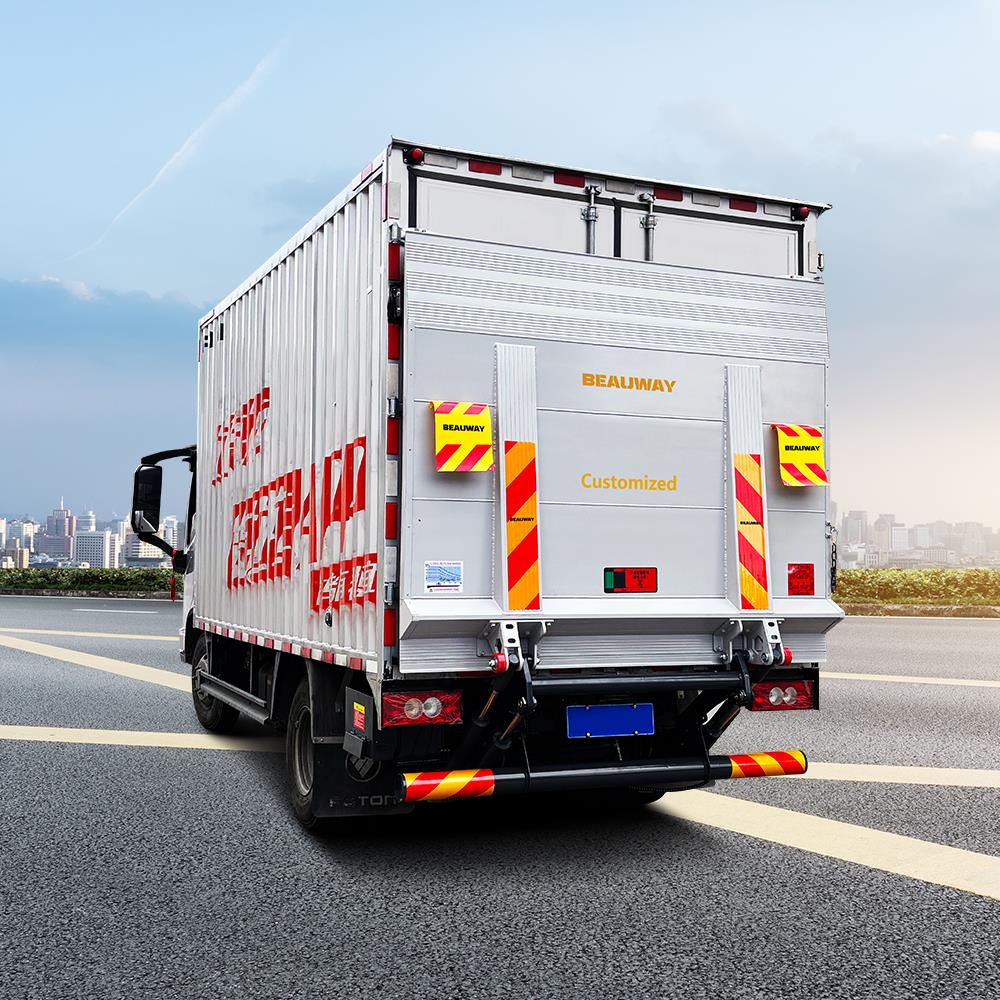
How Much Does a Day of Tail Lift Downtime Really Cost Your Fleet?


(MENAFN- Global Industrial Parts Inc.) Most fleet managers can tell you the purchase price of a tail lift down to the dollar. Far fewer can tell you what it costs when that same lift stops working on a Tuesday morning, halfway through the delivery run. That number is usually much bigger than anyone expects, and it rarely shows up as a single line item on any invoice — which is exactly why it gets underestimated year after year.
The Problem Is Rarely Discovered at the Right Time
A tail lift breakdown almost never happens in the workshop, where it would be convenient. It happens at the delivery point, with a loaded pallet on the platform and a customer standing at the door. By the time the driver realizes the tail lift is not working, the truck is already off its schedule, the next three stops are pushed back, and there is no clean way to recover the lost time that day.
This is the part that rarely gets modeled into a budget: a single failure in the field doesn't just cost the price of the repair. It costs the delivery window, the driver's remaining hours, and often a phone call to the customer explaining why their shipment is late. A tail lift not working is treated as a minor mechanical issue on paper, but in practice it behaves more like a full route disruption.
What a Day of Downtime Actually Adds Up To
When people ask how much does a tail lift cost, they're usually thinking about the unit price and the tail lift installation cost — both of which are easy to find in a supplier's quote. What almost never appears in that quote is the downtime side of the equation, and that side tends to be far larger over the life of the equipment.
A rough way to think about it: take the truck's average daily delivery revenue, add the driver's wage for a wasted shift, add any expedited freight or subcontracted delivery needed to cover the missed stops, and add whatever it costs to get a technician out for an emergency call instead of a scheduled one. Stack those together and a single bad day can easily run into several times the tail lift's original tail lift cost for that year — before the repair bill is even added in.
Multiply that across a fleet, and truck tail lift costs stop looking like a maintenance line and start looking like a real operational risk that deserves its own place in the budget conversation.
Why Tail Lift Problems Rarely Start on the Day They're Noticed
Tail lift breakdowns are almost never sudden in the mechanical sense, even though they feel sudden to the driver standing in the yard. Most tail lift faults build up quietly: a hydraulic seal weeping slowly for weeks before it fails outright, a hydraulic hose showing early wear that nobody flagged during a quick daily check, a platform that has been closing a little slower each month.
By the time tail lift problems become visible enough for a driver to notice mid-route, the underlying issue has usually been developing for a while. That gap between "first sign" and "full failure" is exactly the window where a planned repair is still possible — and it's the window most fleets miss, simply because nobody is tracking it systematically.
Reactive Repair Is Consistently More Expensive Than Planned Service
Across fleet maintenance operations generally, reactive repairs — the kind triggered by an actual breakdown — tend to run several times more expensive per event than the same fix handled as scheduled maintenance. Part of that gap is the emergency callout itself. Part of it is that a technician responding to "the lift stopped working in the middle of a route" has far less room to diagnose properly than one working through a routine inspection.
The tail lift service cost on a planned visit is predictable: a technician checks the known wear points, tops up fluid, tightens what needs tightening, and the truck goes back into service the same day. An unplanned visit carries all of that cost plus the downtime, plus whatever it takes to get a technician out faster than their normal schedule allows.
Building Downtime Into the Real Cost of Ownership
None of this means every fleet needs to overhaul its maintenance program overnight. It means the true cost comparison between two tail lift options was never just about the sticker price. A slightly higher upfront tail lift installation cost that comes with a more reliable platform, better sealing, and a supplier that responds quickly when tail lift breakdowns do happen will often come out ahead of a cheaper unit that fails more often and takes longer to get back on the road.
The fleets that manage this well tend to do three things consistently: they track which trucks generate repeat tail lift problems instead of treating each fault as a one-off, they build a basic daily visual check into the driver's routine so early warning signs don't go unnoticed, and they choose equipment and suppliers with downtime — not just price — in mind from the start.
A tail lift that never breaks down doesn't exist. But a tail lift that fails predictably, gets caught early, and gets fixed on a planned schedule instead of in a customer's driveway is the difference between a manageable maintenance line and a hidden cost that keeps eating into margin every quarter.
The math is worth doing once, properly, for your own fleet rather than relying on industry averages. Pull the numbers from your last two or three unplanned tail lift breakdowns: the missed stops, the overtime, the emergency callout fee, the rebooked delivery. Compare that total against what a scheduled inspection would have cost for the same trucks over the same period. For most fleets, that single comparison is enough to change how downtime gets treated in next year's maintenance budget — not as an occasional inconvenience, but as a cost that is already happening, whether or not it's being tracked.
Beauway has been specializing in the field of logistics loading and unloading equipment for many years, with a full product range covering tail lifts, dock levelers, and lifting platforms. For a customized solution tailored to your specific site conditions, you are welcome to schedule a technical consultation.
The Problem Is Rarely Discovered at the Right Time
A tail lift breakdown almost never happens in the workshop, where it would be convenient. It happens at the delivery point, with a loaded pallet on the platform and a customer standing at the door. By the time the driver realizes the tail lift is not working, the truck is already off its schedule, the next three stops are pushed back, and there is no clean way to recover the lost time that day.
This is the part that rarely gets modeled into a budget: a single failure in the field doesn't just cost the price of the repair. It costs the delivery window, the driver's remaining hours, and often a phone call to the customer explaining why their shipment is late. A tail lift not working is treated as a minor mechanical issue on paper, but in practice it behaves more like a full route disruption.
What a Day of Downtime Actually Adds Up To
When people ask how much does a tail lift cost, they're usually thinking about the unit price and the tail lift installation cost — both of which are easy to find in a supplier's quote. What almost never appears in that quote is the downtime side of the equation, and that side tends to be far larger over the life of the equipment.
A rough way to think about it: take the truck's average daily delivery revenue, add the driver's wage for a wasted shift, add any expedited freight or subcontracted delivery needed to cover the missed stops, and add whatever it costs to get a technician out for an emergency call instead of a scheduled one. Stack those together and a single bad day can easily run into several times the tail lift's original tail lift cost for that year — before the repair bill is even added in.
Multiply that across a fleet, and truck tail lift costs stop looking like a maintenance line and start looking like a real operational risk that deserves its own place in the budget conversation.
Why Tail Lift Problems Rarely Start on the Day They're Noticed
Tail lift breakdowns are almost never sudden in the mechanical sense, even though they feel sudden to the driver standing in the yard. Most tail lift faults build up quietly: a hydraulic seal weeping slowly for weeks before it fails outright, a hydraulic hose showing early wear that nobody flagged during a quick daily check, a platform that has been closing a little slower each month.
By the time tail lift problems become visible enough for a driver to notice mid-route, the underlying issue has usually been developing for a while. That gap between "first sign" and "full failure" is exactly the window where a planned repair is still possible — and it's the window most fleets miss, simply because nobody is tracking it systematically.
Reactive Repair Is Consistently More Expensive Than Planned Service
Across fleet maintenance operations generally, reactive repairs — the kind triggered by an actual breakdown — tend to run several times more expensive per event than the same fix handled as scheduled maintenance. Part of that gap is the emergency callout itself. Part of it is that a technician responding to "the lift stopped working in the middle of a route" has far less room to diagnose properly than one working through a routine inspection.
The tail lift service cost on a planned visit is predictable: a technician checks the known wear points, tops up fluid, tightens what needs tightening, and the truck goes back into service the same day. An unplanned visit carries all of that cost plus the downtime, plus whatever it takes to get a technician out faster than their normal schedule allows.
Building Downtime Into the Real Cost of Ownership
None of this means every fleet needs to overhaul its maintenance program overnight. It means the true cost comparison between two tail lift options was never just about the sticker price. A slightly higher upfront tail lift installation cost that comes with a more reliable platform, better sealing, and a supplier that responds quickly when tail lift breakdowns do happen will often come out ahead of a cheaper unit that fails more often and takes longer to get back on the road.
The fleets that manage this well tend to do three things consistently: they track which trucks generate repeat tail lift problems instead of treating each fault as a one-off, they build a basic daily visual check into the driver's routine so early warning signs don't go unnoticed, and they choose equipment and suppliers with downtime — not just price — in mind from the start.
A tail lift that never breaks down doesn't exist. But a tail lift that fails predictably, gets caught early, and gets fixed on a planned schedule instead of in a customer's driveway is the difference between a manageable maintenance line and a hidden cost that keeps eating into margin every quarter.
The math is worth doing once, properly, for your own fleet rather than relying on industry averages. Pull the numbers from your last two or three unplanned tail lift breakdowns: the missed stops, the overtime, the emergency callout fee, the rebooked delivery. Compare that total against what a scheduled inspection would have cost for the same trucks over the same period. For most fleets, that single comparison is enough to change how downtime gets treated in next year's maintenance budget — not as an occasional inconvenience, but as a cost that is already happening, whether or not it's being tracked.
Beauway has been specializing in the field of logistics loading and unloading equipment for many years, with a full product range covering tail lifts, dock levelers, and lifting platforms. For a customized solution tailored to your specific site conditions, you are welcome to schedule a technical consultation.
Global Industrial Parts Inc.
Legal Disclaimer:
MENAFN provides the
information “as is” without warranty of any kind. We do not accept any
responsibility or liability for the accuracy, content, images, videos,
licenses, completeness, legality, or reliability of the information
contained in this article. If you have any complaints or copyright issues
related to this article, kindly contact the provider above.
Comments
No comment