

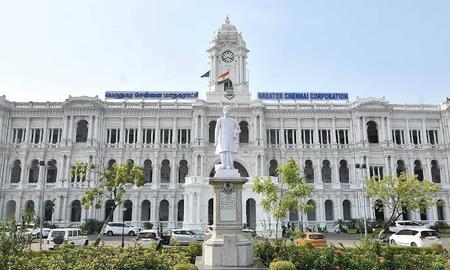
Chennai Corporation Intensifies Dengue Surveillance After Intermittent Rain


The civic body has directed health teams to closely monitor neighbourhoods where dengue infections have been reported and carry out stronger source-reduction measures.
The renewed drive is intended to identify fever cases early, eliminate mosquito-breeding habitats and prevent local clusters from spreading.
The instructions followed a district-level review meeting chaired by Director of Public Health and Preventive Medicine, Dr Somasundaram.
Zonal health officials were told to maintain heightened surveillance in affected localities and ensure that preventive work is carried out without delay.
Private hospitals have been asked to submit daily reports on patients being treated for fever. The reporting system is expected to give public health officials a more immediate picture of possible outbreaks, enabling field teams to respond quickly in areas showing an increase in cases.
Mosquito-control workers conducting door-to-door visits have also been instructed to gather information about residents suffering from fever.
Any such case must be brought immediately to the attention of the respective health inspector for verification, follow-up and further reporting.
Alongside surveillance, the Corporation has ordered an intensified campaign to remove discarded materials and other objects capable of collecting rainwater.
Special attention will be given to vacant plots, hospitals, schools, government offices, parks and construction sites, where unattended containers and debris can turn into mosquito-breeding grounds.
Officials are expected to inspect vulnerable premises and ensure that stagnant water is cleared regularly. The measures cover both public spaces and private properties, reflecting concern that even small collections of water can support mosquito breeding following spells of rain.
Residents have been asked to support the campaign by preventing waste from accumulating around their homes. They should keep overhead tanks, ground-level tanks and wells properly covered, and check their premises regularly for stagnant water.
The civic body has particularly advised households to empty water collected in flower-pot trays and other containers at least once every week.
Similar checks should be carried out on terraces, balconies and yards after rainfall. The Corporation said coordinated reporting by hospitals, field workers and residents would be crucial to detecting fever cases early and reducing dengue risk across Chennai during the wet spell.

Legal Disclaimer:
MENAFN provides the
information “as is” without warranty of any kind. We do not accept any
responsibility or liability for the accuracy, content, images, videos,
licenses, completeness, legality, or reliability of the information
contained in this article. If you have any complaints or copyright issues
related to this article, kindly contact the provider above.
Comments
No comment