

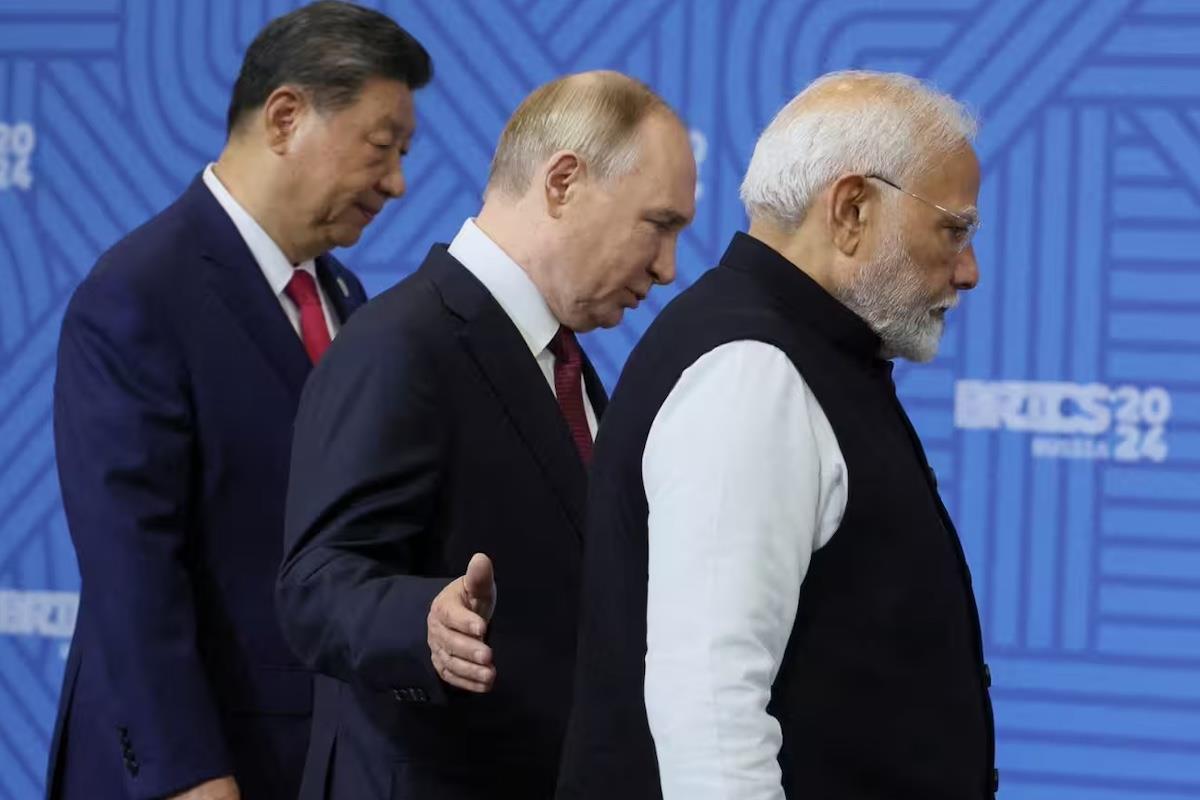
How Asia Is Redefining What BRICS Really Means


India has long argued for looking past BRICS'“anti-Western” rhetoric to see how the bloc's expansion has shifted its focus - toward what it now considers urgent, and the institutional alternatives it wants to offer.
Start with the numbers. Six of BRICS' 11 members - China, India, Indonesia, Iran, Saudi Arabia and the United Arab Emirates - are Asian. By purchasing power parity, they account for roughly 83% of BRICS' GDP, or 90% including transcontinental Russia, with China alone supplying 58%.
China and India together account for 71% of the bloc's population and 74% of its GDP. Together, BRICS represents about 40% of global GDP and nearly half of humanity.
Even those figures understate Asia's pull. These six members sit at the intersection of manufacturing, consumption, energy, shipping, finance and technology. China is the world's largest crude-oil importer; India is a close second and the fastest-growing major energy consumer.
Saudi Arabia and the UAE are pivotal oil exporters, Iran remains a major hydrocarbon producer, and Indonesia brings Southeast Asia's vast resource and consumer economy into the fold.
Energy changes everythingBRICS' expansion has created an extraordinary energy producer-consumer architecture.
Saudi Arabia, the UAE and Iran bring enormous hydrocarbon reserves that are lifelines for Asian members - China and India alone account for a 44% share of their exports. In 2025, the UAE exported about 3.2 million barrels a day of crude, with 99% going to Asia and Oceania; China imported a record 11.6 million barrels a day that year.
Gas sharpens the picture further. Qatar isn't a BRICS member, but the UAE is, and the two countries' combined LNG exports account for nearly 20% of the global LNG trade - almost 90% of it bound for Asian markets as of 2025. The implication is clear: energy security within BRICS is now inseparable from the safety of Gulf chokepoints and Indian Ocean sea lanes.
This is where India's 2026 chairmanship could prove decisive. New Delhi is attempting something subtler, and potentially more durable: making BRICS known for delivery rather than debate.

Legal Disclaimer:
MENAFN provides the
information “as is” without warranty of any kind. We do not accept any
responsibility or liability for the accuracy, content, images, videos,
licenses, completeness, legality, or reliability of the information
contained in this article. If you have any complaints or copyright issues
related to this article, kindly contact the provider above.
Comments
No comment