

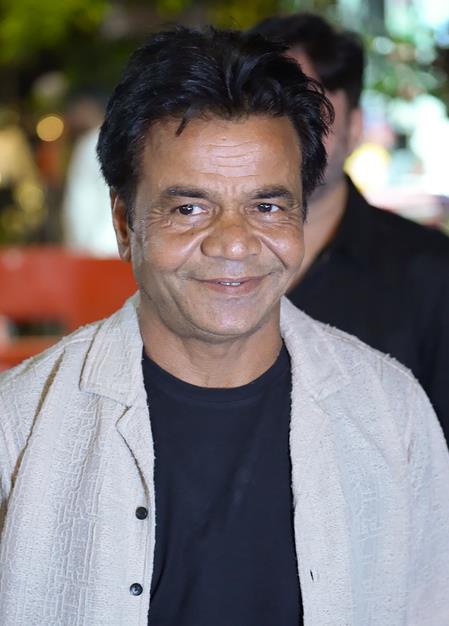
Cheque Bounce Cases: SC Grants Rajpal Yadav Relief From Surrender, Subject To Rs 5 Crore Deposit


A Bench of Chief Justice of India (CJI) Surya Kant and Justices Joymalya Bagchi and V. Mohana took the special leave petitions (SLPs) on board after they were mentioned before the apex court and issued notice conditionally, returnable on September 15.
"On the oral mentioning, the special leave petitions are taken on Board," the CJI Kant-led Bench said in its order.
The Supreme Court further directed that the petitioners would be exempted from surrendering, subject to depositing Rs 5 crore with the registry of the top court by Wednesday.
"Subject to deposit of Rs 5 crore by the petitioners with the Registry of this Court by tomorrow, they are granted exemption from surrendering," the SC ordered.
The SLPs have been filed by Rajpal Yadav and his wife challenging the Delhi High Court's judgment, which upheld their conviction in seven cheque dishonour cases under the Negotiable Instruments Act.
The Delhi High Court had on July 10 upheld Rajpal Yadav's conviction while reducing his sentence from six months to three months' simple imprisonment in each of the seven cases. It had also reduced the fine from Rs 1.60 crore to Rs 1.05 crore in each case, with all substantive sentences directed to run concurrently.
The High Court had taken into account the payments already made by the actor to the complainant M/s Murli Projects Pvt Ltd during the pendency of the proceedings. The petitions before the Supreme Court contended that the High Court failed to consider a subsequent consent agreement between the parties under which the earlier security cheques were allegedly to be returned, and fresh cheques were issued.
The petitioners have relied upon the apex court's judgment in M/s Gimpex Private Limited v. Manoj Goel, contending that the subsequent agreement between the parties ought to have brought an end to the original complaint proceedings and that the cheques in question were no longer valid.
According to the petition, the parties had entered into four agreements in connection with a film being produced by Rajpal Yadav, after the earlier agreements could not be fulfilled within the stipulated timelines.
The petitioners have claimed that under the fourth agreement, also described as a consent agreement dated April 21, 2013, the eight security cheques issued under the previous agreement were to be returned, and four fresh cheques of Rs 10 crore were issued. The petitioners have claimed that the respondent did not return the eight security cheques and instead proceeded with the prosecution after seven of those cheques were dishonoured.
They have also argued that the trial court and appellate courts failed to consider the effect of the subsequent consent agreement and the contention that the cheques forming the basis of the complaints were no longer enforceable.
Earlier, the Delhi High Court had dismissed the revision petitions filed by the actor and his wife, holding that the challenges to the conviction were barred by an extraordinary delay of 1,894 days and refusing to interfere with the findings of the courts below. The High Court had also observed that despite repeated opportunities and indulgence to facilitate an amicable settlement, Rajpal Yadav had failed to honour undertakings given before the court.
"Needless to state that in case a litigant wishes to choose the path of imprisonment rather than abiding by multiple undertakings given by him in the Court, it is entirely his choice. Law is not a script that can be rewritten at the will of an actor, nor can legal positions be altered with every change of strategy, whosoever the litigant may be. Courts adjudicate on the basis of settled legal principles and the record before them," Justice Swarana Kanta Sharma had observed.
The High Court had reduced the fine to Rs 1.05 crore in each of the seven cases, totalling Rs 7.35 crore. Out of the fine amount in each case, Rs 1,04,75,000 was directed to be paid to M/s Murli Projects Pvt Ltd, while Rs 25,000 was to be credited to the State.
The High Court had also suspended the modified sentence for two months to enable the petitioners to avail themselves of remedies available in law.

Legal Disclaimer:
MENAFN provides the
information “as is” without warranty of any kind. We do not accept any
responsibility or liability for the accuracy, content, images, videos,
licenses, completeness, legality, or reliability of the information
contained in this article. If you have any complaints or copyright issues
related to this article, kindly contact the provider above.
Comments
No comment