

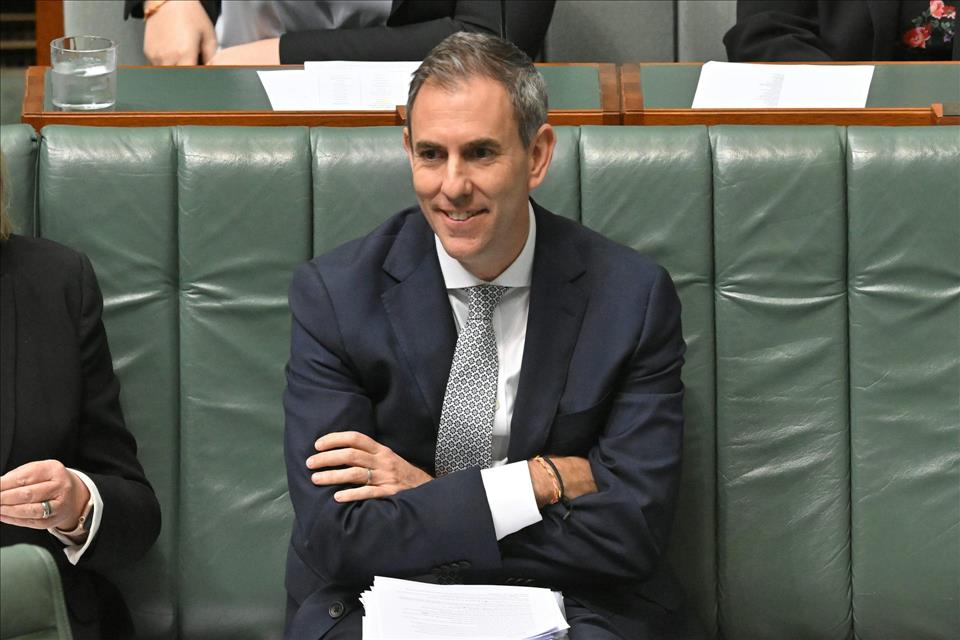
Chalmers Says Intergenerational Report Shows Super Puts Australia Head Of The Pack In Containing Pension Spending


Chalmers casts the next federal election as an“existential moment” for Australia's compulsory superannuation scheme, which was a major Labor reform.
In the IGR, to be released on September 21, Treasury projects the number of Australians over age pension age will almost double to about nine million by 2066. But the share of this cohort receiving a pension or income support payment is projected to fall, from 66% last year to 52% by 2066.
Spending on age and service pensions is projected to decline from 2.3% of GDP last year to 1.8% in 2066.
The IGR, prepared by Treasury, maps out how economic and social changes are likely to unfold over the next four decades. There have been five previous reports, with the first in 2002.
In a speech to the Super Members Council, released ahead of delivery, Chalmers says superannuation“will be front and centre” of the report.
Chalmers says our superannuation scheme means“no other developed country will do a better job than Australia at taking pressure off the pension system, while boosting retirement incomes at the same time”
Spending on age and service pensions is projected to be nearly 10% of GDP by 2060 in the United Kingdom, 8% in Canada, 7% in New Zealand, and 6% in the United States.
“Total pension spending is expected to go up in most OECD countries, in Australia spending as a percentage of GDP will go down.”
“Pension spending as a share of the economy will be the lowest in the OECD but even as those costs moderate, retirees will have more economic security not less.”
Chalmers says superannuation makes the budget more sustainable in an ageing society.
The median retirement age balance will near $450,000 over the next decade.“That's a big leap from a bit over $200,000 in the latest data – another considerable improvement on the $115,000 a decade earlier,” Chalmets says.
“And drawdowns from superannuation are projected to double to around 6% by 2066.”
The $4 trillion super pool is“a key driver of the growth in foreign income inflows, supporting our gross national income,” Chalmers says.
“So while it's boosting retirement incomes it's helping to unlock investment here and abroad, reduce reliance on the pension, strengthen international relationships and deepen our capital markets.”
Chalmers says compulsory super,“with preservation at its core”, is facing its biggest threat since it began, intrduced by the Hawke-Keating governments.
Chalmers says the Council's modelling showed a median full-time worker would see their retirement income cut by $25,000. A couple would be more than $50,000 worse off.
“Every dollar a twenty five year old withdraws now would mean they lose around $3 by the time they retire.”
He says One Nation and the Liberal and National parties“would put at risk the fiscal sustainability, higher living standards and stronger economy that the IGR shows will be supported by a strong and maturing super system”.


Legal Disclaimer:
MENAFN provides the
information “as is” without warranty of any kind. We do not accept any
responsibility or liability for the accuracy, content, images, videos,
licenses, completeness, legality, or reliability of the information
contained in this article. If you have any complaints or copyright issues
related to this article, kindly contact the provider above.
Comments
No comment