

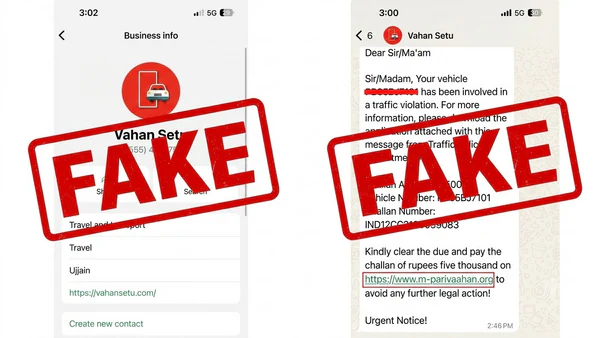
₹5,000 Traffic Challan On Whatsapp? It Could Be A Scam: Here's How To Verify It


The safest way to check whether a traffic fine is genuine is to verify it directly through the official e-Challan portal, rather than clicking on a link received on WhatsApp. The Ministry of Road Transport and Highways warns users about fraudulent websites and mobile applications impersonating its e-Challan service and says the official platform should be accessed directly.
How the fake traffic challan scam worksA typical scam message claims that a traffic violation has been recorded and that a fine, such as ₹5,000, must be paid immediately. The message may contain a payment link or ask the recipient to download an application to view or settle the challan.
Some scams use APK files, which are Android application packages, disguised as traffic or mParivahan apps. Government and police advisories have warned that such files can install malware and potentially give criminals access to sensitive information. The CRPF has specifically warned about fake RTO e-Challan APKs being circulated through WhatsApp.
Does traffic police send challans on WhatsApp?Motor vehicle authorities have specifically warned against WhatsApp messages containing payment links or APK files. Kerala's Motor Vehicles Department said in an August 2026 advisory that its challan notifications are sent through the Parivahan system to registered mobile numbers, and that the department does not send payment links or APK applications through WhatsApp.
Also Read | WhatsApp group, secret cash transfers, IS links: Report exposes hawala networkThis means a WhatsApp message demanding payment and directing you to download an app or click an unfamiliar link should be treated as suspicious.
How to check if your ₹5,000 challan is genuineDo not use the link provided in the WhatsApp messag. Instead, open the official e-Challan portal directly and check your challan using your vehicle or challan details. The government portal provides an option to check pending challans and payment status.
Check the domain: The official e-Challan site ends in govThe official e-Challan portal uses a gov domain. Users should type the address into their browser rather than relying on links received through WhatsApp, SMS or email. A website using a similar name but a different domain should be treated with caution.
The official portal is operated by the National Informatics Centre on behalf of the Ministry of Road Transport and Highways and uses a gov domain. Be particularly cautious of websites with similar names but different domain extensions.
Never download a traffic challan APK from WhatsAppA genuine-looking logo or the name“Parivahan” does not make an application legitimate. Fraudsters can use official-looking branding to persuade victims to install malicious software.
Also Read | From FASTag to credit cards: What you can now pay on WhatsAppGovernment advisories recommend never installing an APK received through WhatsApp or another messaging service. Apps should instead be downloaded from trusted official app stores or accessed through government websites.
What happens if you click the link or install the app?A malicious application can potentially compromise personal and financial information stored on a phone. Police have reported cases in which fake traffic-challan APKs were used to gain access to banking information and facilitate unauthorised transactions. In one case reported by Hyderabad Police, a victim who received a fake traffic-fine message through WhatsApp suffered unauthorised transactions after installing a malicious APK.
Also Read | WhatsApp 'Scam Alert' beta launches on Android: How it helps block fraudstersIf you have installed a suspicious APK, disconnect the device from the internet, contact your bank if financial information may have been compromised and report the incident immediately.
Where to report a traffic challan scamIf money has been lost or you believe you have been targeted by a cyber fraud, call the National Cyber Crime Helpline at 1930 or file a complaint through the National Cyber Crime Reporting Portal. The government portal also allows users to report suspicious WhatsApp numbers, websites, phone numbers and other digital identifiers.
The key rule is simple: do not panic, click or pay because a WhatsApp message claims you owe a traffic fine. Verify the challan independently through the official government portal first.

Legal Disclaimer:
MENAFN provides the
information “as is” without warranty of any kind. We do not accept any
responsibility or liability for the accuracy, content, images, videos,
licenses, completeness, legality, or reliability of the information
contained in this article. If you have any complaints or copyright issues
related to this article, kindly contact the provider above.
Comments
No comment