

Public Space Opens In Zarqa Under £300,000 British Academy-Funded Project


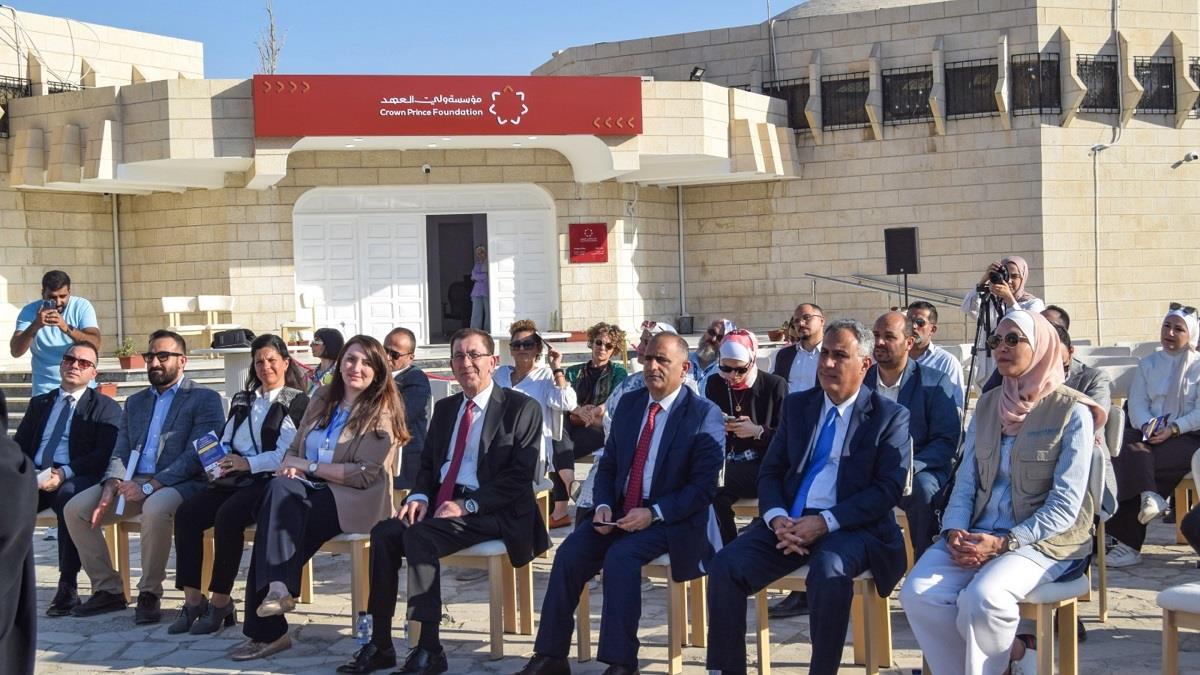
Zarqa, Sept. 8 (Petra) -- A new public space designed to promote social interaction, youth engagement and the preservation of Zarqa's urban memory was inaugurated Tuesday at the Hashemite University's Hashemite Hall Garden as part of a £300,000 heritage and public-space project funded by the British Academy.
The "Ta'leela," or "Gathering," space was developed through a two-year project titled "Spotlight on Zarqa: Heritage, Public Space, and Youth in Jordan's Industrial Heart," in partnership with Manchester Metropolitan University, Zarqa Municipality, UN-Habitat, the Council for British Research in the Levant (CBRL), Liwan and Sanabel.
The inauguration was attended by representatives of the Ministry of Local Administration, Zarqa Municipality and UN-Habitat, including UN Resident Coordinator in Jordan Sheri Ritsema-Anderson, along with university officials, project partners, youth and community organizations, students and local residents.
Designed with the participation of Zarqa youth and university students, the space provides a community hub for meetings, youth activities and dialogue, while incorporating elements that document and preserve the city's social and urban history.
The project seeks to strengthen young people's connection with Zarqa and its heritage through oral-history research, community engagement and architectural design tailored to local needs. It also examines the city's military heritage, industrial significance and educational landscape, with a focus on revitalizing public spaces as platforms for community interaction.
The "Ta'leela" space features an architectural installation inspired by the project's identity, including a QR code that gives visitors access to residents' memories and experiences. It also includes an interactive multimedia exhibition documenting aspects of Zarqa's oral and social history and provides a venue for youth and community activities.
Ritsema-Anderson said the project has created a public space where social issues can be discussed and is expected to generate sustainable initiatives led by members of the local community.
Dean of the Faculty of Engineering Adnan Muqattash, who inaugurated the space on behalf of the university president, said the initiative demonstrates the value of partnerships among universities, local communities and national and international institutions.
He said the space could serve as a model for developing public spaces in Zarqa and other Jordanian cities by engaging youth, strengthening community participation and preserving local memory as part of the broader national narrative.
Muqattash explained that "Ta'leela," a traditional Jordanian gathering, reflects values of meeting, dialogue, communication and the exchange of stories and experiences. He said the name was chosen to reflect the space's role in providing residents, particularly those in nearby densely populated neighborhoods, with a place to meet and interact.
Secretary-General of the Ministry of Local Administration Mohammad Amoush stressed the need for open, safe and attractive public spaces in densely populated Zarqa that respond to young people's needs and provide suitable environments for communication, interaction and participation.
Project Supervisor Hala Ghanem of the university's Department of Architectural Engineering said the initiative adopted a participatory approach involving youth, residents, the municipality, researchers and designers in documenting Zarqa's memory, identifying community needs and developing design proposals.
She said nine Zarqa-based researchers were trained in qualitative research and interviewing and contributed to documenting nearly 40 oral-history accounts of the city's memory and transformations. The findings were then developed with architecture students into spatial and visual representations of the site.
Ghanem stressed that public spaces should be viewed as a living part of the urban fabric, shaped by daily interactions, adding that their social, cultural and economic contexts, together with community involvement, are essential to their sustainability.
Sarah Lane, lead researcher from Manchester Metropolitan University, said the project combined qualitative and creative research methods to establish a cultural archive celebrating Zarqa's heritage while creating a public space that encourages youth engagement, participation and dialogue.
//Petra// AJ

Legal Disclaimer:
MENAFN provides the
information “as is” without warranty of any kind. We do not accept any
responsibility or liability for the accuracy, content, images, videos,
licenses, completeness, legality, or reliability of the information
contained in this article. If you have any complaints or copyright issues
related to this article, kindly contact the provider above.
Comments
No comment