

403
Sorry!!
Error! We're sorry, but the page you were looking for doesn't exist.
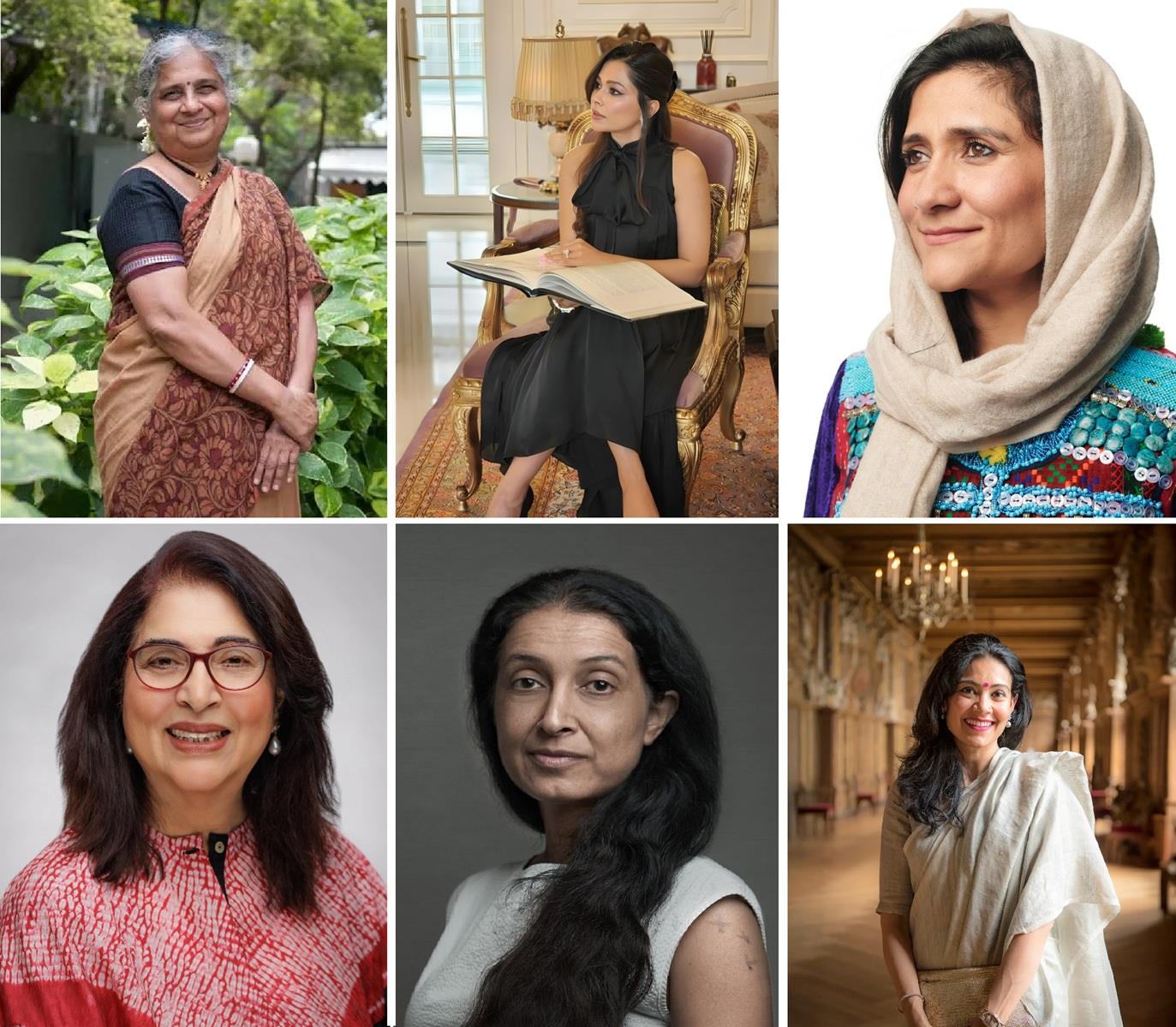
International Literacy Day: From Classrooms to Communities, 6 Women Expanding the Reach of Education


(MENAFN- Life and Style News) .
What if the real measure of education is not what happens inside a classroom, but how far its impact travels?
As India and the world rethink access, equity and the purpose of education, a growing group of women are demonstrating that meaningful learning extends beyond school walls into homes, communities, teacher networks, digital platforms and systems.
These six women represent distinctly different approaches to making education more accessible, inclusive and consequential.
1. Devyani Jaipuria: Connecting School Education with Social Impact
Devyani Jaipuria offers a distinctive example of how education can operate across both mainstream schooling and underserved communities. Her work with DPS Shiksha Kendra focuses on first-generation learners and extending educational opportunity to children who may otherwise have limited access to quality schooling.
The larger significance lies in the ripple effect: when a child becomes the first in a family to access sustained education, the impact can extend well beyond academic achievement influencing aspirations, confidence and future opportunities.
The bigger story: Education can become a bridge between individual opportunity and community advancement.
2. Sudha Murty: Building the Infrastructure for Learning
Sudha Murty's education legacy illustrates why access is about more than enrolment. During her tenure at Infosys Foundation, education initiatives included school libraries, computer-literacy programmes and support for educational institutions. The Foundation says its work has included establishing more than 60,000 school libraries and strengthening educational infrastructure.
It is an important reminder that books, technology and learning environments can determine how effectively children engage with education.
The bigger story: Sometimes, expanding education means building the ecosystem around the classroom.
3. Shabana Basij-Rasikh: Keeping Education Possible When Access Is Restricted
Shabana Basij-Rasikh has become an important voice for girls' education in Afghanistan, demonstrating how alternative and digital models can help sustain learning when traditional access is disrupted.
Her work challenges the assumption that education must always depend on a conventional physical classroom particularly for girls facing barriers to schooling.
The bigger story: When circumstances close classrooms, education needs new pathways to remain open.
4. Shaheen Mistri: From Individual Students to Systemic Change
Shaheen Mistri began with a small after-school centre serving 15 children and went on to establish the Akanksha Foundation and Teach For India. Akanksha now operates schools across Mumbai, Pune and Nagpur, while Teach For India has built a nationwide network of education-focused leaders.
Her journey illustrates the shift from educating children individually to strengthening teachers, leadership and the wider education ecosystem.
The bigger story: Sustainable change requires changing systems, not just classrooms.
5. Dr. Urvashi Sahni: Linking Education With Girls' Empowerment
Dr. Urvashi Sahni has spent decades connecting education with gender equality, teacher training and curriculum reform. Through Study Hall Educational Foundation, her work has reached disadvantaged children and trained teachers across government schools.
Her model places education alongside confidence, agency and gender awareness.
The bigger story: Education becomes transformative when it gives learners the ability to question, participate and lead.
6. Radhika Bharat Ram: Extending Learning Through Mentorship
Radhika Bharat Ram represents another crucial layer of education: what happens after formal schooling. Through school leadership and involvement with initiatives such as the KARM Fellowship, her work connects education with mentorship, leadership and opportunity.
The bigger story: Knowledge creates potential; mentorship can help young people convert that potential into action.
The Ripple Effect
These women are working through different models, but their approaches point to the same evolution: education is no longer just about reaching a classroom; it is about reaching people.
The strongest education systems do more than teach a curriculum. They strengthen families, equip teachers, empower girls, create networks and open pathways to opportunity.
Because the real reach of education is measured not by where learning begins, but by how far its impact travels.
What if the real measure of education is not what happens inside a classroom, but how far its impact travels?
As India and the world rethink access, equity and the purpose of education, a growing group of women are demonstrating that meaningful learning extends beyond school walls into homes, communities, teacher networks, digital platforms and systems.
These six women represent distinctly different approaches to making education more accessible, inclusive and consequential.
1. Devyani Jaipuria: Connecting School Education with Social Impact
Devyani Jaipuria offers a distinctive example of how education can operate across both mainstream schooling and underserved communities. Her work with DPS Shiksha Kendra focuses on first-generation learners and extending educational opportunity to children who may otherwise have limited access to quality schooling.
The larger significance lies in the ripple effect: when a child becomes the first in a family to access sustained education, the impact can extend well beyond academic achievement influencing aspirations, confidence and future opportunities.
The bigger story: Education can become a bridge between individual opportunity and community advancement.
2. Sudha Murty: Building the Infrastructure for Learning
Sudha Murty's education legacy illustrates why access is about more than enrolment. During her tenure at Infosys Foundation, education initiatives included school libraries, computer-literacy programmes and support for educational institutions. The Foundation says its work has included establishing more than 60,000 school libraries and strengthening educational infrastructure.
It is an important reminder that books, technology and learning environments can determine how effectively children engage with education.
The bigger story: Sometimes, expanding education means building the ecosystem around the classroom.
3. Shabana Basij-Rasikh: Keeping Education Possible When Access Is Restricted
Shabana Basij-Rasikh has become an important voice for girls' education in Afghanistan, demonstrating how alternative and digital models can help sustain learning when traditional access is disrupted.
Her work challenges the assumption that education must always depend on a conventional physical classroom particularly for girls facing barriers to schooling.
The bigger story: When circumstances close classrooms, education needs new pathways to remain open.
4. Shaheen Mistri: From Individual Students to Systemic Change
Shaheen Mistri began with a small after-school centre serving 15 children and went on to establish the Akanksha Foundation and Teach For India. Akanksha now operates schools across Mumbai, Pune and Nagpur, while Teach For India has built a nationwide network of education-focused leaders.
Her journey illustrates the shift from educating children individually to strengthening teachers, leadership and the wider education ecosystem.
The bigger story: Sustainable change requires changing systems, not just classrooms.
5. Dr. Urvashi Sahni: Linking Education With Girls' Empowerment
Dr. Urvashi Sahni has spent decades connecting education with gender equality, teacher training and curriculum reform. Through Study Hall Educational Foundation, her work has reached disadvantaged children and trained teachers across government schools.
Her model places education alongside confidence, agency and gender awareness.
The bigger story: Education becomes transformative when it gives learners the ability to question, participate and lead.
6. Radhika Bharat Ram: Extending Learning Through Mentorship
Radhika Bharat Ram represents another crucial layer of education: what happens after formal schooling. Through school leadership and involvement with initiatives such as the KARM Fellowship, her work connects education with mentorship, leadership and opportunity.
The bigger story: Knowledge creates potential; mentorship can help young people convert that potential into action.
The Ripple Effect
These women are working through different models, but their approaches point to the same evolution: education is no longer just about reaching a classroom; it is about reaching people.
The strongest education systems do more than teach a curriculum. They strengthen families, equip teachers, empower girls, create networks and open pathways to opportunity.
Because the real reach of education is measured not by where learning begins, but by how far its impact travels.

Legal Disclaimer:
MENAFN provides the
information “as is” without warranty of any kind. We do not accept any
responsibility or liability for the accuracy, content, images, videos,
licenses, completeness, legality, or reliability of the information
contained in this article. If you have any complaints or copyright issues
related to this article, kindly contact the provider above.
Comments
No comment