

403
Sorry!!
Error! We're sorry, but the page you were looking for doesn't exist.
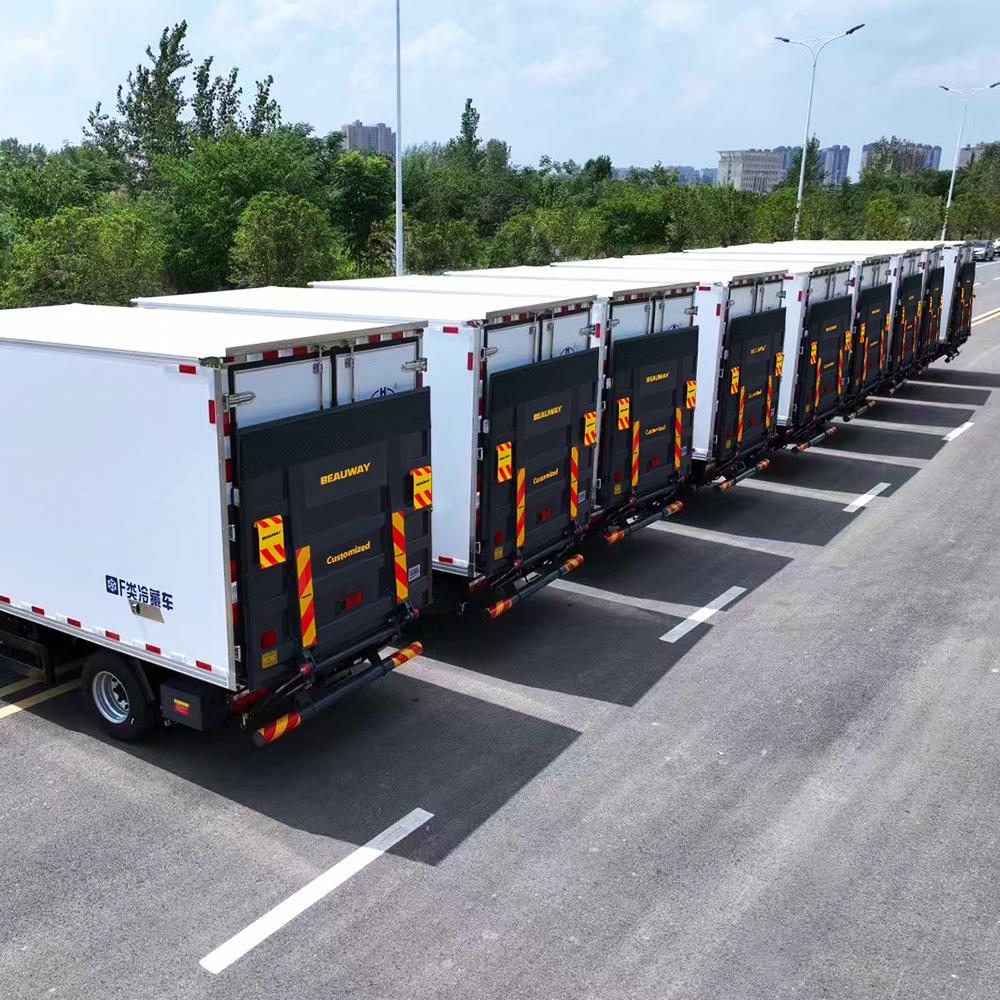
Which Tail Lift Actually Fits the Way Your Fleet Loads?


(MENAFN- Global Industrial Parts Inc.) Most fleets don't choose a tail lift wrong because they picked a bad brand. They choose wrong because they picked based on the truck, not the loading pattern. A tail lift is a mechanical system, and every mechanical design makes trade-offs — capacity for speed, ground clearance for platform depth, simplicity for flexibility. Match the wrong trade-off to your daily routine, and you'll be fighting the equipment for years instead of working with it.
Start with how the truck actually gets loaded, not what it's rated to carry
Two fleets running the same 7.5-tonne box truck can need completely different lift types. One does six multi-drop stops a day, in and out of tight urban loading bays, mostly with a pump truck and cased goods. The other does one or two heavy pallet drops a day at a warehouse dock, using a forklift or electric pallet truck on the platform. Same chassis, same rough payload — but the loading pattern points to different equipment.
That's the real question behind fleet tail lift selection: how often does the platform cycle, what's actually standing on it when it does, and how much room do you have to work with at the rear of the vehicle.
Cantilever tail lifts: built for heavier, less frequent cycles
Cantilever designs use hydraulic rams mounted on the chassis to lift and tilt the platform, and the platform typically doubles as the rear door — no separate door panel to manage. Because the arms carry the load directly rather than folding it into storage, cantilever units generally handle heavier loads and can also tilt to bridge an uneven surface or dock edge. The trade-off is a slower cycle and more exposed hydraulic components to inspect, which matters more on high-frequency multi-drop routes than on scheduled warehouse-to-warehouse runs.
If your heaviest cycles involve forklifts or loaded pallet trucks rolling straight onto the platform, a cantilever tail lift is usually the more forgiving choice — it's the configuration built around carrying weight, not around folding away neatly.
Tuckaway and folding lifts: built for space, not for the heaviest load
Folding (tuckaway) lifts store flat under the vehicle bed when not in use, which keeps the full width of the rear doors clear for loading by hand — a real advantage on multi-drop urban routes where the driver is in and out of the vehicle dozens of times a day. The compromise is a lower typical capacity than a comparable cantilever unit and a slightly more involved unfolding sequence, which means driver familiarity matters more.
For parcel, retail delivery, and food distribution routes where the platform is used constantly but rarely maxed out, this is usually the better fit than a heavier cantilever system the fleet doesn't need.
Column (vertical) lifts: stability over raw capacity
Column lifts move straight up and down along fixed rails instead of tilting outward, which keeps the load level throughout the cycle. That predictability is valuable for fragile, high-value, or awkwardly stacked cargo, and the simpler mechanism generally means fewer moving parts to maintain. The limitation is platform depth and overall lifting height compared to cantilever designs, so it suits vans and lighter commercial vehicles better than heavy multi-pallet trucks.
Matching type to loading pattern
A rough way to think about it:
Frequent stops, hand-loaded goods, tight urban access → folding/tuckaway
Forklift or pallet-truck loading, heavier average weight per cycle → cantilever
Fragile or high-value cargo, frequent height changes, vans/light trucks → column
None of this replaces checking your actual heaviest realistic load and vehicle payload limits before ordering — but it narrows the field before you start comparing capacity charts. Get the platform type wrong for your loading pattern, and even the correctly-rated unit will feel like the wrong choice within a year.
Start with how the truck actually gets loaded, not what it's rated to carry
Two fleets running the same 7.5-tonne box truck can need completely different lift types. One does six multi-drop stops a day, in and out of tight urban loading bays, mostly with a pump truck and cased goods. The other does one or two heavy pallet drops a day at a warehouse dock, using a forklift or electric pallet truck on the platform. Same chassis, same rough payload — but the loading pattern points to different equipment.
That's the real question behind fleet tail lift selection: how often does the platform cycle, what's actually standing on it when it does, and how much room do you have to work with at the rear of the vehicle.
Cantilever tail lifts: built for heavier, less frequent cycles
Cantilever designs use hydraulic rams mounted on the chassis to lift and tilt the platform, and the platform typically doubles as the rear door — no separate door panel to manage. Because the arms carry the load directly rather than folding it into storage, cantilever units generally handle heavier loads and can also tilt to bridge an uneven surface or dock edge. The trade-off is a slower cycle and more exposed hydraulic components to inspect, which matters more on high-frequency multi-drop routes than on scheduled warehouse-to-warehouse runs.
If your heaviest cycles involve forklifts or loaded pallet trucks rolling straight onto the platform, a cantilever tail lift is usually the more forgiving choice — it's the configuration built around carrying weight, not around folding away neatly.
Tuckaway and folding lifts: built for space, not for the heaviest load
Folding (tuckaway) lifts store flat under the vehicle bed when not in use, which keeps the full width of the rear doors clear for loading by hand — a real advantage on multi-drop urban routes where the driver is in and out of the vehicle dozens of times a day. The compromise is a lower typical capacity than a comparable cantilever unit and a slightly more involved unfolding sequence, which means driver familiarity matters more.
For parcel, retail delivery, and food distribution routes where the platform is used constantly but rarely maxed out, this is usually the better fit than a heavier cantilever system the fleet doesn't need.
Column (vertical) lifts: stability over raw capacity
Column lifts move straight up and down along fixed rails instead of tilting outward, which keeps the load level throughout the cycle. That predictability is valuable for fragile, high-value, or awkwardly stacked cargo, and the simpler mechanism generally means fewer moving parts to maintain. The limitation is platform depth and overall lifting height compared to cantilever designs, so it suits vans and lighter commercial vehicles better than heavy multi-pallet trucks.
Matching type to loading pattern
A rough way to think about it:
Frequent stops, hand-loaded goods, tight urban access → folding/tuckaway
Forklift or pallet-truck loading, heavier average weight per cycle → cantilever
Fragile or high-value cargo, frequent height changes, vans/light trucks → column
None of this replaces checking your actual heaviest realistic load and vehicle payload limits before ordering — but it narrows the field before you start comparing capacity charts. Get the platform type wrong for your loading pattern, and even the correctly-rated unit will feel like the wrong choice within a year.
Global Industrial Parts Inc.
Legal Disclaimer:
MENAFN provides the
information “as is” without warranty of any kind. We do not accept any
responsibility or liability for the accuracy, content, images, videos,
licenses, completeness, legality, or reliability of the information
contained in this article. If you have any complaints or copyright issues
related to this article, kindly contact the provider above.
Comments
No comment