

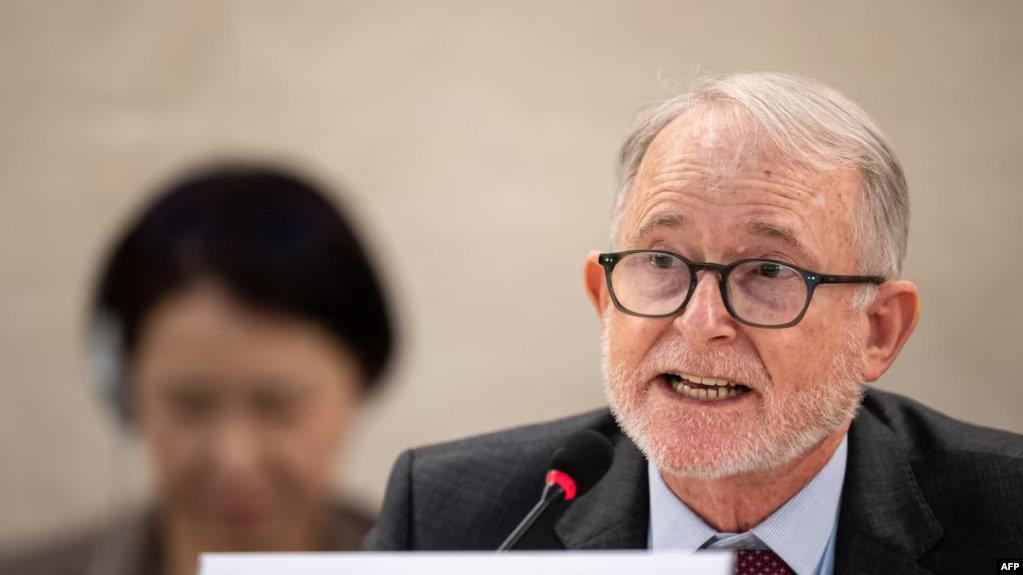
Richard Bennett Says Afghanistan's 2004 Constitution Was Suspended


In a new report submitted to the U.N. Human Rights Council, Bennett said the Taliban have steadily dismantled Afghanistan's constitutional and judicial order since August 2021, removing key safeguards such as the separation of powers and judicial independence while reviewing Republic-era laws for compliance with their interpretation of Sharia.
The report says the Taliban have not introduced a new constitution. Instead, they govern through decrees, edicts, policies and regulations issued by the movement's leadership, creating widespread legal uncertainty over which laws remain in force and which have been effectively abolished.
Bennett said the suspension of the 2004 Constitution marked a fundamental shift in Afghanistan's legal system. The constitution, adopted after the fall of the Taliban's first regime, guaranteed a range of civil and political rights, including protections for women, freedom of expression and an independent judiciary.
According to the report, Taliban authorities have replaced that framework with rules rooted in their ideological interpretation of Islam, extending state control beyond government institutions into nearly every aspect of daily life.
The report says Taliban policies regulate education, employment, public participation, dress, freedom of expression, media activity and even personal behavior, leaving Afghans subject to a growing body of restrictions with little legal clarity or judicial oversight.
U.N. says institutions protecting rights have been dismantledBennett said institutions established during the former Islamic Republic to safeguard human rights have been systematically dismantled since the Taliban takeover.
The report highlights the dissolution of government bodies responsible for protecting women's rights and the elimination of legal mechanisms that previously addressed gender-based violence and discrimination. It also points to the removal of female judges and prosecutors and the erosion of independent oversight institutions.
The U.N. expert said these changes have severely weakened access to justice, particularly for women and girls, who face extensive restrictions on education, employment and participation in public life.

Legal Disclaimer:
MENAFN provides the
information “as is” without warranty of any kind. We do not accept any
responsibility or liability for the accuracy, content, images, videos,
licenses, completeness, legality, or reliability of the information
contained in this article. If you have any complaints or copyright issues
related to this article, kindly contact the provider above.
Comments
No comment