

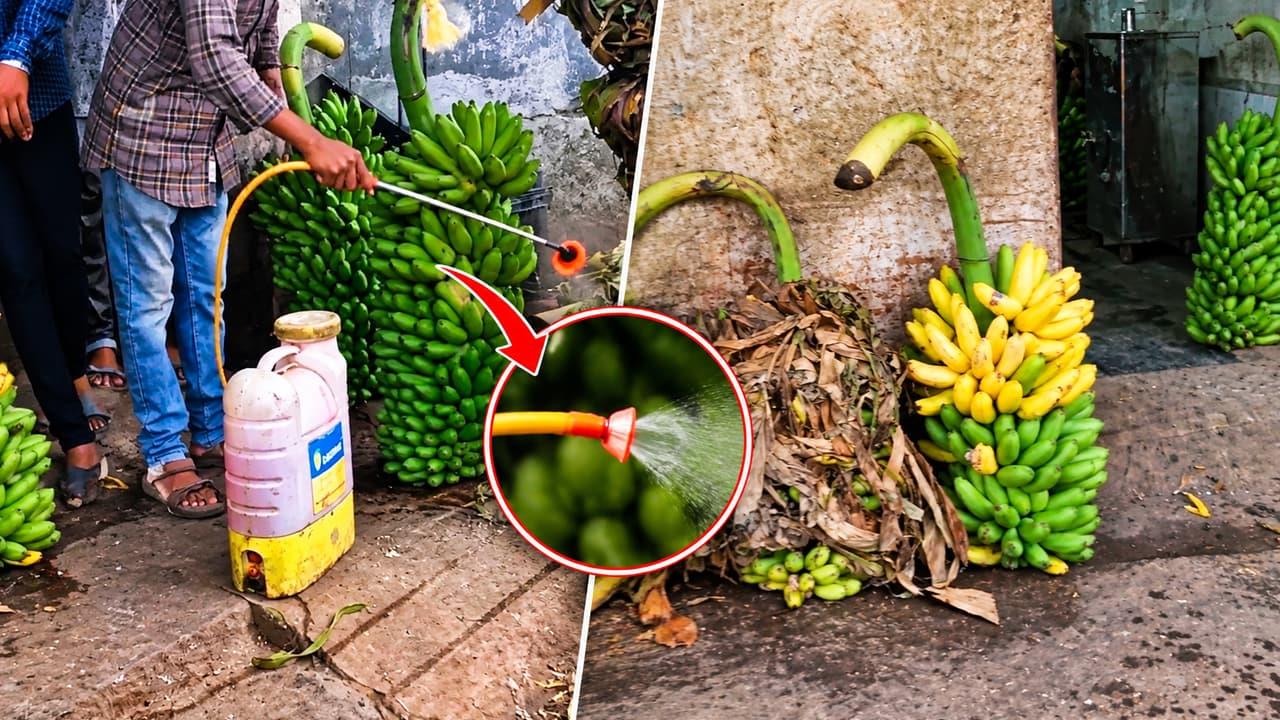
WATCH: Bananas Being Sprayed With Chemicals? Viral Video Raises Food Safety Concerns


A video showing raw banana bunches being treated with a liquid has gone viral on social media, sparking concerns about the use of chemicals to speed up fruit ripening. The footage shows a person spraying a substance on bananas, while a social media post claims such practices could pose health risks.
WATCH: Viral banana video sparks concern
The video has triggered questions among consumers about how bananas reaching local markets are ripened. However, the exact substance being sprayed in the clip has not been independently established, and the footage alone cannot confirm claims that a cancer-causing chemical was used.
The issue, however, is not entirely new. Authorities have repeatedly warned against illegal methods of artificially ripening fruits, including bananas.
What FSSAI says about chemical ripening
The Food Safety and Standards Authority of India (FSSAI) strictly prohibits the use of calcium carbide for artificially ripening fruits. The chemical can release acetylene gas containing harmful impurities such as arsenic and phosphorus.
FSSAI has also recently directed states and Union Territories to intensify inspections of fruit markets, mandis, warehouses and ripening facilities. Officials have been asked to take action against banned ripening practices.
Importantly, artificial ripening itself is not prohibited. FSSAI permits controlled use of ethylene gas, which is a natural plant hormone, as a safer ripening method under prescribed conditions. Directly treating fruits with ethylene in powder or liquid form is not permitted.
Recent crackdown highlights the concern
The issue has also led to enforcement action. In August 2026, officials in Karnataka's Udupi district reportedly raided locations linked to an illegal banana-ripening network and seized around 5,000 kg of raw bananas, along with chemicals and equipment.
Therefore, while the viral clip has raised a legitimate food-safety concern, it cannot by itself prove what chemical was used or that the bananas shown are hazardous. Consumers should rely on verified food-safety information rather than unverified social media claims.

Legal Disclaimer:
MENAFN provides the
information “as is” without warranty of any kind. We do not accept any
responsibility or liability for the accuracy, content, images, videos,
licenses, completeness, legality, or reliability of the information
contained in this article. If you have any complaints or copyright issues
related to this article, kindly contact the provider above.
Comments
No comment