

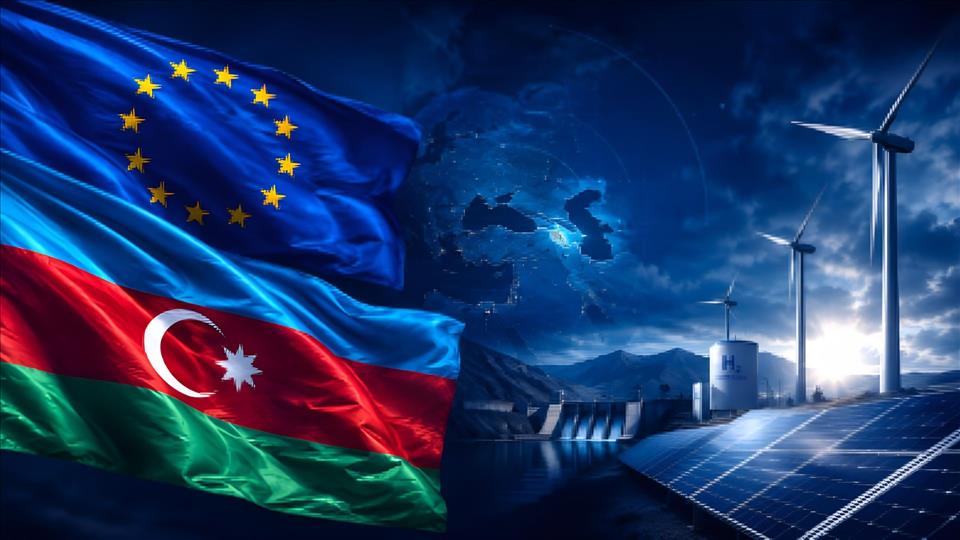
Azerbaijan's Wind Boom Opens New Front In Europe's Energy Market


A new stage is taking shape in Azerbaijan's energy sector, whose exports have been largely associated with oil and natural gas for many years. Currently, another important direction is being added to Azerbaijan's energy potential: green energy. Recent indicators show that this sector is beginning to manifest itself in real electricity production.
The rapid growth observed in wind energy is particularly noteworthy. In January-June 2026, 475.7 million kilowatt-hours of electricity were produced at wind power plants in Azerbaijan. This is an increase of 454.7 million kilowatt-hours compared to the same period last year. In other words, an extremely large leap has been recorded in wind energy production.
What is more interesting is that the growth is expected to continue in the second half of the year. According to the statement of the Minister of Energy of Azerbaijan, Parviz Shahbazov, by the end of 2026, wind energy production is expected to increase by about six times, and solar energy production by more than 26 percent.
These figures show that Azerbaijan's renewable energy strategy is starting to yield practical results.
Solar energy also plays an important role in this process. In the first six months of 2026, 282.7 million kilowatt-hours of electricity were produced at solar power plants. Taking into account hydroelectric power plants, the total electricity production from renewable energy sources amounted to 2.7937 billion kilowatt-hours.
This dynamic creates a greater opportunity for Azerbaijan. The country can prepare to satisfy only part of its domestic electricity demand from renewable sources and export part of the green electricity it produces to foreign markets in the future.
This is where Azerbaijan's 2030 targets are of particular importance. In the coming years, the country plans to implement new projects in solar and wind energy, increase generation capacity, expand the electricity grid, and create energy storage capabilities. This process creates the basis for turning Azerbaijan's large renewable energy potential into an exportable product.
The European direction is one of the most important parts of this strategy. The planned electricity connections to export Azerbaijan's green electricity to the European market via Georgia and the Black Sea could open up new export opportunities for the country. In particular, the creation of a roughly 3-gigawatt transmission facility forms an important infrastructure base for Azerbaijan to supply larger volumes of energy to the European electricity market in the future.
It is possible to talk about the expansion of Azerbaijan's energy export model. For a long time, the main export products in the country's energy sector have been oil and gas. In the future, green electricity may also be added to this list.
This could create a number of important economic advantages for Azerbaijan. First of all, diversifying energy exports would strengthen the long-term sustainability of the country's energy sector. Second, new wind and solar projects would encourage foreign investment, the introduction of new technologies to the country, and the development of energy infrastructure. Third, Azerbaijan could strengthen its position as a new partner in Europe's energy transition.
One of the most important points is that Azerbaijan has great natural advantages for this process. The Caspian Sea is distinguished by its particularly strong wind potential. There are also extensive opportunities for using solar energy in various regions of the country. Combining these resources with modern technologies, a strong electricity grid, and energy storage systems could enable Azerbaijan to generate large amounts of green electricity.
In this regard, the breakthrough in wind energy production in 2026 can be seen as the beginning of a larger process. The nearly six-fold increase in wind energy production and the expectation of a more than 26 percent increase in solar energy indicate that Azerbaijan's green energy sector is growing rapidly.
If this dynamic continues in the coming years, 2030 could mark the beginning of a new stage in Azerbaijan's energy history. While remaining a traditional energy exporter, the country could also become a green electricity exporter.
For decades, pipelines have defined Azerbaijan's energy map. The energy map of the future may gradually be defined by power cables.
The main opportunity for Azerbaijan lies precisely in this: converting the wind of the Caspian and the country's sun into electricity and exporting it to regional and European markets. This is not just a new energy project, but the formation of the future model of Azerbaijan's energy exports.

Legal Disclaimer:
MENAFN provides the
information “as is” without warranty of any kind. We do not accept any
responsibility or liability for the accuracy, content, images, videos,
licenses, completeness, legality, or reliability of the information
contained in this article. If you have any complaints or copyright issues
related to this article, kindly contact the provider above.
Comments
No comment