

Island Supply Chains In The Age Of Automation: What's Actually Changing


It's a tight island supply chain where a single delayed shipment can empty a grocery shelf or halt a construction site for days. That pressure cooker is exactly where robotics and automation are proving their worth right now.
The Second Wave Hitting Maritime LogisticsThe first wave of maritime automation arrived with the containerization revolution of the late 1950s, introducing mechanical cranes and standardized handling.
Today, a second and considerably more sophisticated wave is arriving, driven by robotics, machine vision, the industrial internet of things, and artificial intelligence. For island-bound cargo, that second wave matters more than the first ever did.
Island supply chains carry a structural disadvantage: every node in the chain is separated by water, so there's no fallback truck route when something goes wrong. Automation doesn't just add speed here.
It adds predictability, and predictability is worth more than speed when you're shipping perishables to a destination with no alternative supplier next door.
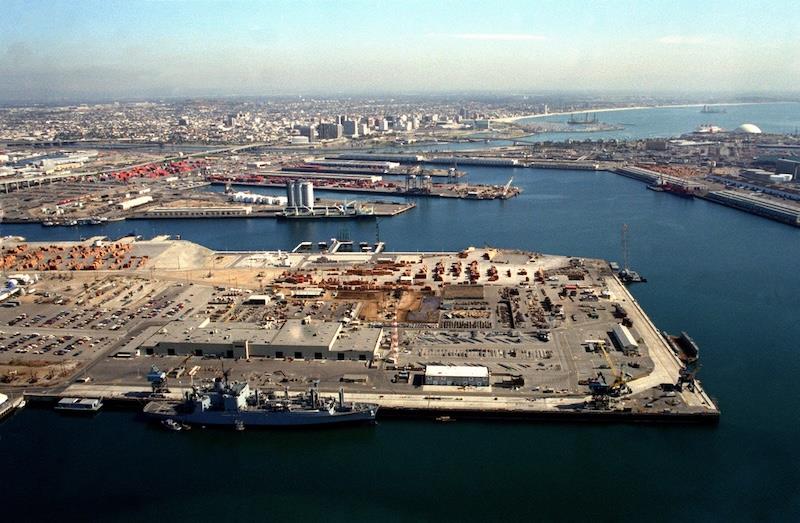
The most visible advances in shipping automation are happening at the port, where cargo containers move from ship to shore and through the terminal. A 2024 U.S. Government Accountability Office report confirmed that all 10 of the largest U.S. container ports have adopted some form of automation technology.
For shippers routing cargo through those gateway ports toward island destinations, that baseline of digitized gate systems and container tracking creates a data trail that connects the mainland leg to the final ocean leg.
The Island Automation Gap: A Framework for Understanding the StakesThink of island supply chains through what I'd call the Island Automation Gap, the distance between what technology can do and what island-route operators have actually deployed. The gap has three layers.
Layer one is port-side throughput. Automated cranes and guided vehicles at origin ports affect dwell times, which ripple directly into vessel departure schedules for smaller regional carriers. When a container misses a weekly sailing, the island customer waits seven more days, not the usual one or two that a mainland customer would absorb.
Layer two is in-transit visibility. Real-time IoT tracking across a container's full journey – from consolidation warehouse through truck, to port, to vessel, to destination pier- is becoming the baseline expectation.
Shippers using Caribbean shipping services with integrated digital platforms can trace a crate of electronics or a pallet of produce as accurately as a domestic parcel, something unthinkable fifteen years ago.
Layer three is cold-chain integrity. This is where the stakes get truly high. Produce, pharmaceuticals, and refrigerated goods represent a significant share of island imports, and temperature deviation is the enemy.
Between 7% and 15% of all foods spoil during transit globally, a figure that Telenor IoT cites when making the case for sensor-based cold-chain monitoring.
On an island route, that spoilage rate doesn't just hurt a shipper's margins; it directly affects what ends up on store shelves.
Where Robots Are Actually Operating Right NowBeyond the broad numbers, it's worth being specific about which technologies are doing real work in maritime and near-island logistics today.
The AGV and automated crane story at origin terminals is the part most island shippers feel without realizing it. Faster turnaround at a port like South Florida means a vessel departs on time and the Bahamas or St. Lucia delivery hits its window. Miss that window, and the knock-on effects multiply quickly on the receiving end.
“Beyond the quay, many maritime operations still involve the sort of dangerous, dirty, and dull tasks that drive demand for automated solutions”, said the Association for Advancing Automation (A3), 2026. Such solutions are emerging below the waterline.
Hull inspection, traditionally performed by divers or during costly dry dock cycles, is increasingly performed by autonomous underwater vehicles and remotely operated vehicles equipped with high-resolution cameras, sonar, and ultrasonic metal thickness sensors that can detect corrosion and structural wear.
For a regional carrier running tight schedules on island routes, cutting the frequency and cost of dry-dock inspections has a direct impact on vessel availability and freight pricing.
A Concrete Scenario: Nassau Produce RunPicture a produce shipper based in Medley, Florida, routing a less-than-container-load shipment of fresh tomatoes and peppers to Nassau.
The cargo gets consolidated at a South Florida warehouse, tagged with an IoT temperature sensor, and moved through an automated gate at the port on a Tuesday evening. An AGV slots the reefer container into the terminal stack. The vessel departs Wednesday morning.
During the crossing, the sensor logs temperature readings every 15 minutes. At one point, a brief spike triggers an alert; the reefer unit cycled off for 40 minutes before restarting.
The carrier's operations team sees the alert in real time, confirms the unit self-recovered, and documents the event for the receiver.
When the cargo lands in Nassau Thursday afternoon, the produce is in spec, and the shipper has a complete digital temperature record proving it. No dispute, no rejected load.
That scenario would have been logistics fiction in 2010. Today it's standard operating procedure for carriers who've invested in the right sensor and tracking infrastructure. The technology didn't eliminate risk. It made risk visible and manageable, which, on an island route, is the next best thing.
A Practical Checklist for Island Shippers Evaluating Automation-Ready CarriersNot every carrier on a regional route has kept pace with the tech. Here's what to look for before you commit freight to a service:
-
Digital tracking portal with container-level visibility- you should see your cargo's status at every transfer point, not just when it arrives.
Continuous reefer monitoring with exception alerts- if you're shipping anything temperature-sensitive, ask specifically whether the carrier logs sensor data throughout the voyage.
Electronic documentation and customs filing integration- paper-based processes at any handoff point introduce delays that compound fast on island schedules.
Published sailing schedules with vessel tracking- a carrier confident in its operations publishes real departure and arrival data, not estimates.
Clear LCL consolidation procedures- for smaller shippers, the consolidation process is where cargo sits longest and where visibility gaps appear most often.
The honest projection: the automation gap between major hub ports and regional island routes will keep narrowing, but it won't close overnight. The technology exists.
The ROI case is strong for carriers running high-frequency island schedules. The limiting factor is capital allocation and, in some markets, regulatory frameworks that haven't caught up with what the hardware can do.
What's already clear is that shippers who treat carrier technology as a deciding factor, not an afterthought, are the ones avoiding the seven-day wait when a shipment misses its vessel.
That cold-chain alert in the Nassau scenario didn't happen by accident. It happened because someone chose a carrier who invested in the right infrastructure.
The island supply chain is a demanding environment. Automation doesn't make it simple. But it does make the failure modes smaller, faster to catch, and easier to document. For anyone moving cargo across open water to an island destination, that's not a nice-to-have. It's the whole game.

Legal Disclaimer:
MENAFN provides the
information “as is” without warranty of any kind. We do not accept any
responsibility or liability for the accuracy, content, images, videos,
licenses, completeness, legality, or reliability of the information
contained in this article. If you have any complaints or copyright issues
related to this article, kindly contact the provider above.
Comments
No comment