

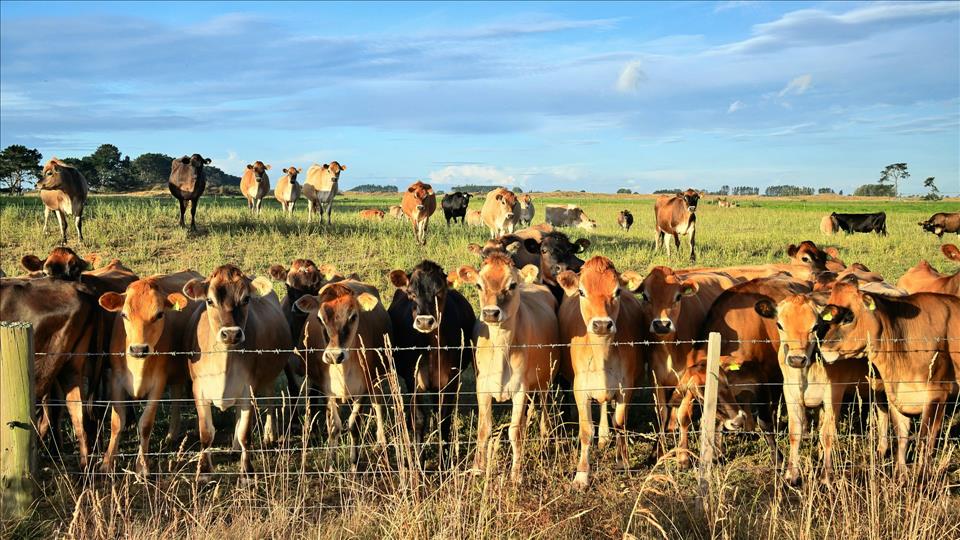
Can What We Feed Farm Animals Directly Benefit Our Own Health? Our Research Suggests It Can


These diseases are among the greatest health challenges globally and in New Zealand, placing growing pressure on healthcare systems.
This highlights the need for prevention strategies that address not only individual consumer behaviour but environments and food systems.
Research increasingly shows how connected our health is to that of the animals we eat and the land they graze. The conventional view of landscapes as merely sites of food production no longer holds.
My team's research focuses on designing and implementing new food-production systems as part of a project that integrates farming with health in pursuit of“healthscapes”.
Our objective is to innovate, demonstrate and manage a tangible transition from current practices to a system designed to enhance health from the ground up, with measured improvements in soil, plant, animal, human and community health.
A new approach to pasture-based farmingNew Zealand's conventional pasture-based farming often relies on uniform and monotonous feed systems dominated by grass monocultures. Even balanced mix diets, repeated without variation, compromise animal welfare, behaviour, health and nutrition.
One of the central practices in integral health farming is“functional diversity”, which combines – in space and time – multiple forage species. It includes grasses (ryegrasses, fescues, cocksfoot), herbs (plantain, chicory), legumes (alfalfa, perennial and annual aromatic clovers) and commercial soil bio-stimulants.
This lets animals satisfy their nutritional, medicinal and prophylactic needs, while enhancing soil health.
Our pastoral livestock production laboratory has compared conventional, multispecies and functional-diversity grazing options and management in sheep, cattle and deer. We found improved growth, feed efficiency, milk production and animal wellbeing.
Functional diversity systems also cut the loss of nitrogen to the environment by about 30% in sheep and 42% in dairy cows.
Effects on food compositionA key question is whether adaptations of grazing management can change the biochemical composition of animal products. We analysed milk, beef, lamb and venison from different grazing systems for thousands of metabolites involved in biological processes.
Milk from cows grazing on functional-diversity pastures showed higher levels of several beneficial compounds, helping the body burn fat properly for energy. Without enough of them, the heart and muscles weaken, blood sugar can drop dangerously low, and the liver and brain can be affected.
Other compounds we measured help the body make healthy red blood cells and support the brain chemicals involved in mood and motivation. Too little can cause tiredness and breathlessness from anaemia, along with memory problems and a higher risk of depression.
At the same time, functional diversity cut in half the level of a compound linked to a higher risk of heart disease and dementia.
Venison from deer grazing these systems showed even larger shifts: a 27-fold increase in antioxidant and anti-inflammatory properties, as well as other properties associated with foetal brain development, and a 59-fold rise in metabolites that are part of oxidative stress regulation pathways, associated with positive mental health and amelioration of stress.
Lamb and beef likewise showed increased compounds linked to antioxidant activity, cardiovascular and mental health, anti-carcinogenic function and improvements in nutrient absorption.
Human feeding trialsTo test whether differences in these animal products translate into measurable effects for people consuming them, we ran the first-ever“cause-effect” randomised feeding trials.
We evaluated health markers after consumption of beef or lamb from animals grazed on conventional, multispecies or functional-diversity pastures. Each participant acted as their own control by eating product from each system, reducing variation between people.
Researchers collected blood before and after each meal and quantified changes in circulating metabolites – thousands of small molecules governing inflammation, oxidative balance, lipid and amino acid metabolism, cardiovascular function and cellular signalling.
Consumers eating beef from functional-diversity systems had higher levels of circulating metabolites linked to cholesterol metabolism, vascular function, energy regulation and the reduction of kidney-associated stress, as well as metabolites that reduce the risk of developing colon cancer.
Consumers eating lamb from these systems produced similar circulating metabolites profiles linked to better neuroprotection, cardiovascular health, antioxidant defence, reduced inflammation, lipid regulation and nutrient absorption, as well as anti-carcinogenic properties.
Together, these findings show grazing systems can shape the body's response to food in ways relevant to preventing or easing chronic disease. Pasture design and grazing management can also shape animal welfare, performance and environmental impacts.
The integral health farming approach shows agriculture can support future preventative health strategies through food of higher biological value, alongside improved environmental sustainability and animal welfare.
The farm, in short, becomes part of the public health system, generating value that flows from landscape to policy, from healthy land to healthy people.


Legal Disclaimer:
MENAFN provides the
information “as is” without warranty of any kind. We do not accept any
responsibility or liability for the accuracy, content, images, videos,
licenses, completeness, legality, or reliability of the information
contained in this article. If you have any complaints or copyright issues
related to this article, kindly contact the provider above.
Comments
No comment