

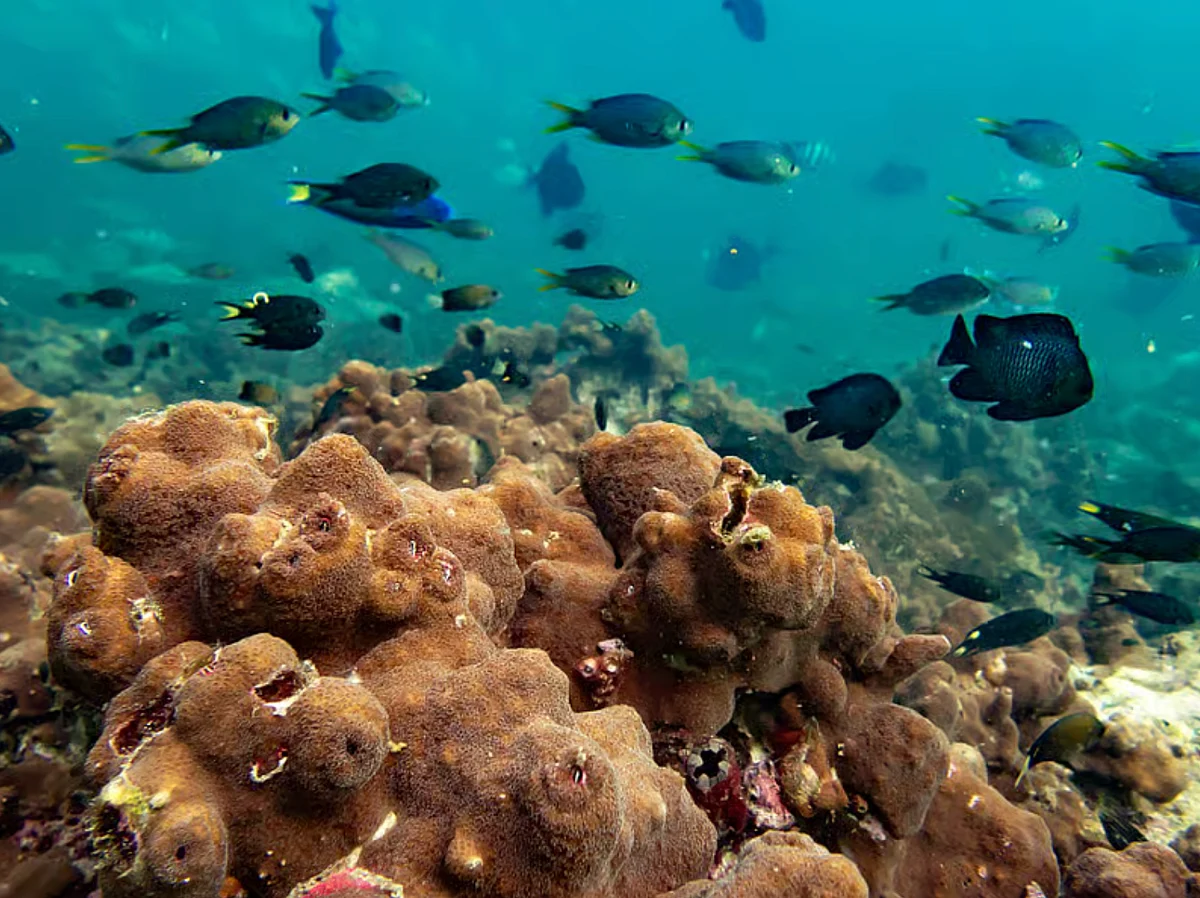
UAE Marine Life Under Climate Pressure As Arabian Gulf Faces Rising Temperatures


- By: Nandini Sircar
The UAE's unusually hot marine environment could offer scientists a rare window into how ecosystems may respond as the world gets warmer - but researchers warn that even the Gulf's most resilient species are not immune to climate change.
Prof John A. Burt, Director of the Mubadala Arabian Center for Climate and Environmental Sciences (Mubadala ACCESS) at NYU Abu Dhabi (NYUAD), said the UAE's coastal waters are home to ecosystems that have adapted to some of the planet's most extreme marine conditions.
Recommended For You“This is an incredibly hot system that we're seeing. There're mosaic ecosystems that line on (UAE) shorelines. We have, believe it or not, 4 per cent of the entire world's seagrass rates (that) occur off the coast of the UAE.” Burt said.
Stay up to date with the latest news. Follow KT on WhatsApp Channels.
He said the UAE's heat-tolerant marine ecosystems make the country particularly valuable for climate research, with lessons from the Gulf potentially offering clues about what could happen in other tropical regions as global temperatures rise.
“The UAE represents an important natural laboratory to really try and understand how organisms cope with and respond to extreme environmental conditions,” he said.
The issue took centre stage at the DECCA 2026 event, at the Grand Hyatt Dubai, where experts discussed how technology, conservation and monitoring is increasingly becoming important to help protect the UAE's diverse marine environments.
Why UAE's resilient corals are still showing signs of stressBurt cautioned that the Gulf's ability to withstand extreme heat should not be mistaken for immunity.
The warning is particularly stark for coral reefs. He pointed to the severe bleaching event of 2017, when summer temperatures reached 38°C - around 2°C above the normal summer maximum - resulting in widespread coral mortality.
“We have these robust systems that are here that are able to cope with these extreme environmental issues, but that does not mean they're immune to climate change,” Burt said.
Research involving more than 800 coral reef surveys spanning 19 years has also shown deterioration in reef health in parts of the region, he said, underscoring the need for closer monitoring and interventions.
“This means that while we do have the most tolerant ecosystems in the world, they're not immune to climate change. So, we need to start studying them in more detail and looking at interventions that might help ecosystems like this,” he said.
The concern extends beyond corals to fish - and potentially to the UAE's future food security.
Burt said fish in the Gulf can be significantly smaller than those outside it, reflecting the physiological cost of living in extreme conditions. A seemingly small difference in size can have major consequences for reproduction.
“If you're talking about Hamour (fish), it's going to produce about 350,000 eggs per female. If it gets 10 centimeters bigger, it's going to produce 3.5 million eggs,” he said.
Warming Gulf could bring about declining oxygenTemperature, however, is not the only pressure facing the region's marine ecosystems.
Scientists are increasingly studying what Burt described as“compound” stresses - multiple environmental pressures interacting with each other.
One emerging concern is an oxygen minimum zone in the central Gulf, between Oman and the UAE, where oxygen levels at depth can become too low for fish to survive.
Burt said modelling has shown that the zone has expanded significantly since the mid-1980s.
“We've done modeling work that has shown that since the mid-1980s, this has grown by 40 percent, and that oxygen minimum zone is now going towards the rich fishing areas that are off the coast of Abu Dhabi and above,” he said.
For a region where marine resources have long been closely tied to food and livelihoods, the implications could be significant.
Burt said the Gulf is providing scientists with an increasingly detailed picture of how marine life responds to extreme conditions - but also a clearer understanding of its vulnerabilities.
“We we've learned a lot, and we're learning more every single day about this amazing system that we have here. But we also now recognise the vulnerability.”
ALSO READ- From AI to underwater robots: How UAE is protecting coral reefs, marine life Commentary: Strait of Hormuz crisis left a climate threat lurking in Gulf waters UAE's climate-resilient system makes residents among least worried about extreme heat

Legal Disclaimer:
MENAFN provides the
information “as is” without warranty of any kind. We do not accept any
responsibility or liability for the accuracy, content, images, videos,
licenses, completeness, legality, or reliability of the information
contained in this article. If you have any complaints or copyright issues
related to this article, kindly contact the provider above.
Comments
No comment