

'Ball Is In Iran's Court': GCC Chief Says Tehran Must Rebuild Gulf Trust After Attacks


- By: Ahmed Waqqas Alawlaqi
Iran has taken its relationship with Gulf states“back to square one” after months of attacks across the region and must now prove through its actions that it wants a different relationship, the Gulf Cooperation Council's Secretary-General said on Monday.
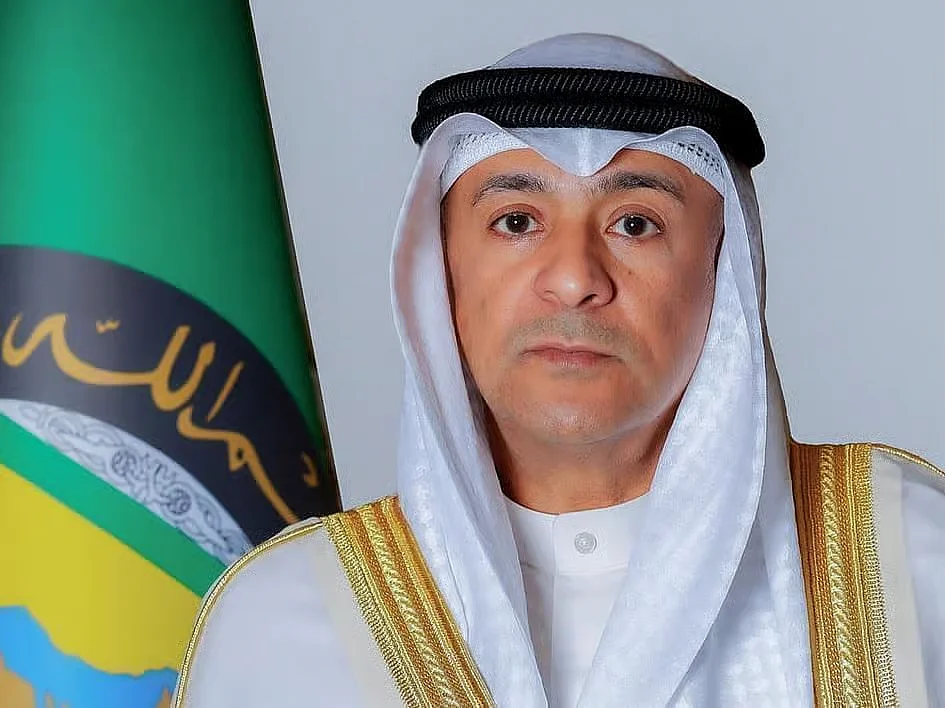
“The ball is in Iran's court,” Jasem Mohamed AlBudaiwi said during a fireside chat at the Hili Forum in Abu Dhabi.“It is Iran that must prove itself to the GCC states and the international community.”
Recommended For YouHis remarks came as the six-member bloc works through a series of projects shaped by what happened after February 28, including stronger logistics links, water interconnection, strategic reserves, alternative routes for oil and gas pipelines and greater electricity interconnection capacity.
Stay up to date with the latest news. Follow KT on WhatsApp Channels
AlBudaiwi said some work across these areas had reached around 50 to 60 per cent completion, with some at about 70 per cent. He did not specify during the session which percentage corresponded to each individual project.
The work follows an extraordinary consultative meeting of GCC leaders in Jeddah on April 28, when the General Secretariat was asked to study lessons from the crisis and accelerate joint projects. An official statement after that meeting identified transport and logistics, the GCC railway, electricity interconnection, oil and gas pipelines, water interconnection and areas for strategic reserves among the priorities. Leaders also called for greater military integration and faster completion of a ballistic-missile early-warning system.
What happened when Hormuz closedAlBudaiwi offered one of the clearest examples of why those links now matter.
When the Strait of Hormuz was closed, he said Bahrain, Qatar and Kuwait faced a serious logistical problem because of their geography. The UAE, Saudi Arabia and Oman stepped in with ports, roads, trucks, containers and other logistics capacity to keep supplies moving.
“What the UAE, Saudi Arabia and our brothers in Oman provided was remarkable,” he said.“Nothing was missing.”
Some existing regulations were also temporarily eased to allow goods to move more easily to the three affected countries, he said.
“Trucks were going back and forth, ports were open to us, the platforms at the ports, the containers, the roads, the trucks,” AlBudaiwi said.“Countries had certain rules and regulations, but to help these three, they removed those rules and said: go ahead, until, God willing, things are resolved.”
He described the six states since February 28 as operating like a“beehive”, with coordination extending across military, economic and security affairs as well as health, food, water and electricity.
Official GCC figures give some indication of the scale of that coordination. By June, the bloc said more than 150 extraordinary ministerial and technical meetings had been held to manage the repercussions of the attacks. AlBudaiwi also said at the time that GCC forces had intercepted more than 7,000 ballistic missiles and drones launched by Iran towards member states.
That assessment came hours after Dr Anwar Gargash, Diplomatic Adviser to the UAE President, used an earlier Hili Forum address to argue that, on the broader strategic challenge posed by Iran, Gulf states had not always translated their shared understanding into a sufficiently united response. Gargash said rebuilding trust with Iran after the attacks could take decades.
AlBudaiwi's argument was that the crisis had demonstrated how much practical cooperation already existed, while also forcing the GCC to consider where more integration was needed.
'They knew what they wanted to hit'On the relationship with Tehran itself, however, his language was considerably harder.
AlBudaiwi recalled an October 2024 meeting in Doha between the six GCC foreign ministers and Iranian Foreign Minister Abbas Araghchi. Gulf states, he said, laid out two tracks: the problems they saw in the relationship and the opportunities that could exist if relations improved.
Iran was asked at that time to take a confidence-building step, he said.
“To this day, as we have seen, nothing [happened],” AlBudaiwi said.“They have taken the relationship back to square one.”
The October 2024 meeting was publicly described at the time as an attempt to create a more positive environment between Iran and the GCC, with both sides discussing regional escalation and the need for restraint.
AlBudaiwi said the attacks since February had fundamentally changed the equation.
“They knew where they wanted to strike. They knew what they wanted to hit. That means this was planned,” he said.
He estimated that Iran had directed only a small part of the arsenal it had accumulated towards Israel.
“Of all this arsenal they built, they sent perhaps 5 per cent towards Israel, and the rest was all at us in the GCC states,” he said.“They are the ones who attacked you. We did not attack you. They are the ones who directed the missiles at you.”
GCC states, he said, had instead been trying to de-escalate and persuade parties to move away from a military course.
Dialogue remains possibleDespite that language, AlBudaiwi did not rule out talks.
“Iran is a neighbour. Iran is there. We have to deal with it, and it has to deal with us,” he said.
Asked whether political changes inside Iran made it difficult to know who had the authority to negotiate on Tehran's behalf, he said the GCC would not try to determine which Iranian official had the greatest influence.
“If they send one person, I will speak with that person. If they send another person, I will speak with him,” he said.
What mattered, he added, was Iranian behaviour rather than the internal mechanics of its political system.
“If it is genuinely serious, genuinely sincere and genuinely wants to see de-escalation in the region, it will send the person it believes can negotiate and speak with us,” he said.“We do not interfere in that. We intervene in the behaviour. We look at the Iranian reactions.”
No need to 'reinvent the wheel' on HormuzAlBudaiwi also pushed back against the idea that the crisis required an entirely new international arrangement for the Strait of Hormuz.
“There is no need for us to reinvent the wheel,” he said.“International law exists, it has been respected and applied for all these years. What we are demanding is the implementation of international law and a return to the situation as it was before February 28.”
UN Security Council Resolution 2817, adopted in March, condemned the Iranian attacks on GCC states and Jordan and specifically condemned actions or threats aimed at closing or obstructing navigation through the Strait of Hormuz.
His remarks gained added relevance on Monday as Iran said it planned to announce a new restricted zone in the Gulf and maps for a new shipping corridor through the Strait, amid renewed maritime tensions and a sharp fall in commercial traffic through the waterway.
AlBudaiwi said the conflict had reinforced a broader point about the Gulf's place in the world. The GCC's combined economy is worth about $2.4 trillion, while non-oil sectors now account for about 78 per cent of nominal GDP, according to GCC figures.
But for the Secretary-General, the immediate test is less about those numbers than what the six countries do with the lessons of the past six months.
The logistics corridors opened during the crisis, the planned water and energy links and the push for strategic reserves all point to the same question: how much of the Gulf's resilience can now be built into permanent systems before the next disruption arrives.
The third edition of the Hili Forum is being held in Abu Dhabi on September 7 and 8 under the theme“Gulf at Crossroads: Conflict, Consequences and Course Correction”. Jointly organised by the Emirates Center for Strategic Studies and Research and the Anwar Gargash Diplomatic Academy, it brings together policymakers, diplomats, academics and experts to examine the security, economic and technological shifts affecting the Gulf.
ALSO READ- Iran launched 3,300 missiles, drones at UAE; most targeted civilian sites: Gargash Opening of Hormuz strait may need multinational force, experts say at Abu Dhabi forum Iran miscalculated by targeting UAE, researcher says

Legal Disclaimer:
MENAFN provides the
information “as is” without warranty of any kind. We do not accept any
responsibility or liability for the accuracy, content, images, videos,
licenses, completeness, legality, or reliability of the information
contained in this article. If you have any complaints or copyright issues
related to this article, kindly contact the provider above.
Comments
No comment