

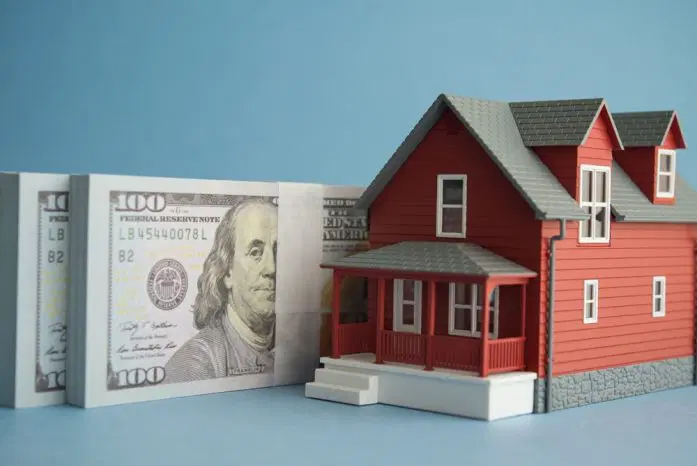
You Have $100,000 In Home Equity And $25,000 In Credit Card Debt. Should You Tap The House?


Having $100,000 in home equity and $25,000 in credit card debt creates a tempting mathematical shortcut: Borrow against the house, wipe out the cards, and move on. On paper, the idea can look almost suspiciously tidy, especially when a home equity loan or HELOC offers a lower interest rate than the cards.
But there is a crucial detail hiding underneath that tidy math. Credit card debt can hurt your budget, but home-secured debt puts the house itself on the line, so the right answer depends on more than the interest rate.
The Interest Rate Is Only Half the StoryA home equity loan can offer a lower interest rate than credit cards, which can make consolidation attractive. A home equity loan gives the borrower a lump sum, while a HELOC provides a revolving credit line that allows the homeowner to borrow as needed. Home equity loans often carry fixed rates, while HELOCs usually carry adjustable rates, which means a HELOC payment can change over time.
That difference matters when the goal involves paying off $25,000 of credit card debt rather than simply finding a smaller monthly payment. A homeowner should compare the total interest, fees, repayment period, and expected monthly payment instead of grabbing whichever option advertises the lowest initial rate. The Consumer Financial Protection Bureau also warns that consolidation can cost more overall when fees, longer repayment periods or changing rates enter the picture.
The bigger issue involves collateral. Credit card companies generally cannot take the house simply because a card balance remains unpaid, but a home equity loan or HELOC uses the home as security for the debt. If the homeowner cannot make the new payments, the lender could pursue foreclosure.
That changes the character of the debt. A lower interest rate does not automatically make a loan safer if it turns unsecured debt into debt attached to the roof over the household's head.
$100,000 of Equity Does Not Mean $100,000 of Spending MoneyThe homeowner in this scenario has a valuable asset, but equity does not function like a checking account. Equity represents the home's value minus the balance owed on existing mortgages, and a lender still decides how much additional debt the homeowner can qualify for. Income, credit history, existing debts, property value and the lender's requirements all factor into that decision.
Even if the lender approves enough money to eliminate the entire $25,000 balance, borrowing against the house consumes some of the financial cushion created by that equity. That cushion can matter later if the homeowner needs money for a major repair, faces an income disruption or wants to refinance. A HELOC can also come with application, appraisal, title, annual, cancellation or other fees, depending on the lender and the specific plan.
There is another wrinkle that can sneak up on homeowners who focus too heavily on the new monthly payment. HELOCs usually have a draw period followed by a repayment period, and payments can rise when the repayment phase begins. Some plans can even require repayment of the outstanding balance when the draw period ends, so the fine print deserves more attention than the glossy rate displayed at the top of an advertisement.
Homeowners should also resist the idea that a paid-off credit card balance automatically means the debt problem has disappeared. If spending continues at the same pace after consolidation, the household could eventually face a new credit card balance alongside the home equity debt.
That creates the worst version of the strategy: the homeowner puts the house behind the old debt, then rebuilds the old debt on the cards. Consolidation works far better when it accompanies a realistic spending plan that prevents the credit card balances from returning.
When Tapping the Equity Could Make SenseUsing home equity can make sense when the homeowner has stable income, a clear payoff plan and enough monthly cash flow to handle the new payment comfortably. The numbers also need to show a meaningful advantage after accounting for interest and loan fees, rather than merely producing a smaller payment by stretching the debt over a longer period. The homeowner should also keep enough emergency savings to avoid reaching for the credit cards again when an unexpected bill arrives.
A fixed-rate home equity loan can offer more predictable payments than a variable-rate HELOC, which may appeal to someone who knows exactly how much debt needs to disappear. A HELOC can offer flexibility, but that flexibility can tempt borrowers to keep drawing money long after the original credit card balances disappear. Either option requires a close look at the loan agreement, repayment schedule, fees and consequences of falling behind.
There is also a tax misconception worth clearing up before anyone starts calculating a refund. The IRS says interest on a home equity loan or HELOC generally does not qualify for the home mortgage interest deduction when the borrowed money pays personal expenses such as credit card debt. The rules differ when the proceeds buy, build or substantially improve the home, so homeowners should not assume that debt consolidation creates a tax break.
The House Should Not Become the Emergency Credit CardBefore tapping $100,000 of equity, homeowners should price several alternatives, including a direct repayment plan, a personal loan, a balance-transfer offer when available and qualified nonprofit credit counseling. The CFPB specifically recommends exploring alternatives that do not put the home at risk when considering a home equity loan for debt consolidation.
A useful test involves one uncomfortable question: What happens if income drops for several months? If the answer involves missed payments, draining every dollar of savings or immediately reaching for another credit card, the home equity loan probably creates too much risk. If the answer involves a healthy cash reserve, manageable payments and a firm plan to eliminate the new debt, the calculation looks considerably different.
The homeowner should also compare the total cost of each option, not just the advertised interest rate. Closing costs can add hundreds or thousands of dollars to a home equity loan, while a HELOC can carry its own collection of fees and variable-rate risks.
A $25,000 credit card balance deserves an aggressive payoff strategy, but the house deserves an equally serious layer of protection. The goal should not simply involve getting rid of one debt account. The goal should involve leaving the household with less debt, more financial breathing room and a home that remains safely outside the line of fire.
The Best Use of Equity May Be Leaving It AloneHome equity can become a powerful financial tool, but it can also make a manageable debt problem much more consequential. For someone with $100,000 in equity and $25,000 in credit card debt, the decision should hinge on affordability, total borrowing costs, spending habits, emergency savings and the ability to keep making payments even when life gets messy.
So, would you use $25,000 of home equity to eliminate $25,000 of credit card debt, or would you rather attack the cards without putting the house behind them?

Legal Disclaimer:
MENAFN provides the
information “as is” without warranty of any kind. We do not accept any
responsibility or liability for the accuracy, content, images, videos,
licenses, completeness, legality, or reliability of the information
contained in this article. If you have any complaints or copyright issues
related to this article, kindly contact the provider above.
Comments
No comment