

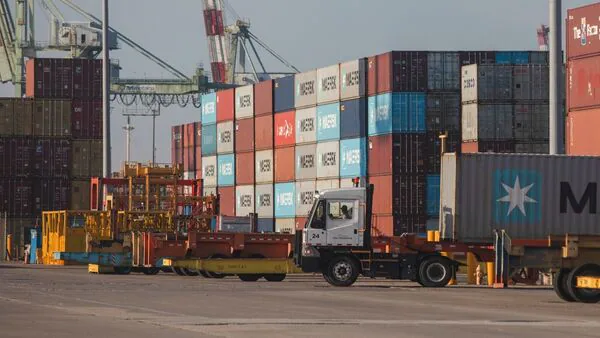
DGFT Launches API Facility To Streamline Certificate Of Origin Process


The facility is aimed at reducing repetitive data entry, minimizing errors and speeding up CoO applications, the commerce ministry said in a statement.
Currently, exporters must enter CoO-related information separately on the DGFT platform even when the same data is already available in their business software. Under the new API facility, application data can be electronically transferred from an exporter's system to the DGFT platform, eliminating duplicate entry.
Also Read | Minor textile trade violations may attract fines, not jail, under proposed rulesThe facility covers both preferential and non-preferential CoOs. Preferential CoOs are issued under free trade agreements (FTAs ), regional trade agreements (RTAs) and preferential trade agreements (PTAs), allowing exporters to claim applicable tariff concessions in importing countries. Non-preferential CoOs are used for customs clearance, compliance, trade remedies and other trade-related purposes and do not provide tariff benefits.
Exporters can obtain API credentials through the API Management section of the CoO portal and register the IP addresses from which their systems will connect, the DGFT said.
Three APIs are available: the authentication token API for secure login; the CoO file API for submitting applications and receiving certificates; and the certificate verification API for verifying issued certificates.
The system will maintain a transaction ledger for each application, giving exporters an electronic record of its status. Applications can be tracked through stages including Draft, In Process, Approved, Certificate Issued and Rejected. The ledger will also capture the acknowledgement ID, file number, file date and certificate number.
The DGFT said the API framework includes multiple security safeguards for reliable information exchange. Requests and responses are digitally signed using SHA-256 RSA digital signatures with 2048-bit X.509 certificates to ensure data integrity, sender authentication and non-repudiation.
Passwords are protected using PBKDF2 hashing with a dynamic salt, while system access is restricted to IP addresses whitelisted by exporters. Each access token remains valid for 60 minutes.
Also Read | Govt shifts raw sugar import quota to daily allocation amid rising pricesThe facility covers major trade agreements and certification schemes, including the India-Japan CEPA, India-Korea CEPA, SAFTA, SAPTA, ASEAN-India FTA, India-Singapore CECA, India-Malaysia CECA, India-Chile PTA, India-Mercosur PTA, India-UAE CEPA, India-Australia ECTA, India-Oman CEPA, India-EFTA TEPA, India-UK CETA, the Generalized System of Preferences and the Non-Preferential CoO Scheme.
The system will automatically apply the relevant fields, origin criteria and validation rules based on the trade agreemen or certification scheme selected by the exporter.
The registration, authentication and technical integration process is available on the Trade Connect e-Platform, along with a step-by-step help manual annexed to the Trade Notice.
Exporters, Export Promotion Councils, designated CoO issuing agencies and trade bodies can approach the DGFT Helpdesk with queries, suggestions and feedback on the electronic Certificate of Origin module.
The facility was introduced through Trade Notice No. 25/2026-27 dated 7 September.
Also Read | Vijay Shekhar Sharma's Resilient offers Paytm stock worth $513 mn in block trade
Legal Disclaimer:
MENAFN provides the
information “as is” without warranty of any kind. We do not accept any
responsibility or liability for the accuracy, content, images, videos,
licenses, completeness, legality, or reliability of the information
contained in this article. If you have any complaints or copyright issues
related to this article, kindly contact the provider above.
Comments
No comment