

403
Sorry!!
Error! We're sorry, but the page you were looking for doesn't exist.
The Tail Lift That Never Once Complained — Until It Needed a Full Rebuild


(MENAFN- Global Industrial Parts Inc.) A tail lift can run for years without a single reported fault, then fail catastrophically in a single afternoon. That's not bad luck. It's usually the end result of small, unreported wear that a routine tail lift inspection would have caught months earlier — corrosion in a hinge point, a seal that's been weeping slowly, a joint that's been binding just slightly more each week. None of it shows up as a fault code. It just quietly accumulates until the day the lift is finally asked to do something it can no longer do smoothly.
This is the pattern fleet managers run into more often than they'd like to admit: the unit with the cleanest maintenance log is sometimes the one that goes down hardest.
Why "no complaints" isn't the same as "no problems"
A tail lift doesn't announce its own decline. Unlike an engine that starts knocking or a brake that starts squealing, a hydraulic lift's early failure signs are subtle — a half-second delay before the platform responds, a slightly uneven descent, a faint resistance at one hinge point that a driver in a hurry won't stop to mention. Multiply that across a fleet, and you get units that look fine on paper and are quietly deteriorating in practice.
This is exactly why a scheduled tail lift safety inspection matters more than most fleets treat it. It's not a box-ticking exercise. It's the only mechanism that catches the gap between "still moves" and "still moving correctly." Fleets that treat tail lift inspections as a fixed calendar item, rather than a response to complaints, are consistently the ones that avoid the expensive surprise rebuild.
How often should a tail lift be inspected?
There's no single universal number — load frequency, route conditions, and unit age all affect the right interval — but the working principle used across most professional fleets is straightforward: inspect on a fixed schedule regardless of how much the unit has been used, not just when a driver flags an issue. A tail lift inspection uk operators rely on typically checks hydraulic fluid condition, hinge and pivot wear, platform structural integrity, and control response time — the same categories that quietly degrade without ever triggering a driver complaint.
Skipping that fixed schedule is how a five-minute check turns into a multi-day repair. Waiting for a tail lift breakdown to trigger the inspection is, in effect, choosing the most expensive possible moment to find out something was wrong.
The rebuild is rarely about one part
When a tail lift finally does fail after a long quiet stretch, the failure is almost never isolated to one component. A hinge that's been slightly stiff for months puts uneven stress on the arm next to it. A seal that's been seeping puts extra load on the pump trying to compensate for lost pressure. By the time someone notices, several systems have already been quietly compensating for each other — which is why the eventual repair often looks disproportionate to whatever the "final" symptom was.
Consistent tail lift maintenance breaks this chain early, while the fix is still a single part rather than a cascade of them.
What this means day to day
A tail lift that's never logged a complaint isn't necessarily a tail lift that's fine. It might just be a tail lift nobody's looked closely at yet. The fleets that avoid the expensive surprise rebuild aren't the ones with the newest units — they're the ones that treat a quiet maintenance history as a reason to look closer, not a reason to look away.
If your fleet runs a mix of hydraulic tail lift units across different routes and duty cycles, building a fixed inspection interval into your schedule — rather than a reactive one — is the single change most likely to keep a "no complaints" unit from becoming a full rebuild.
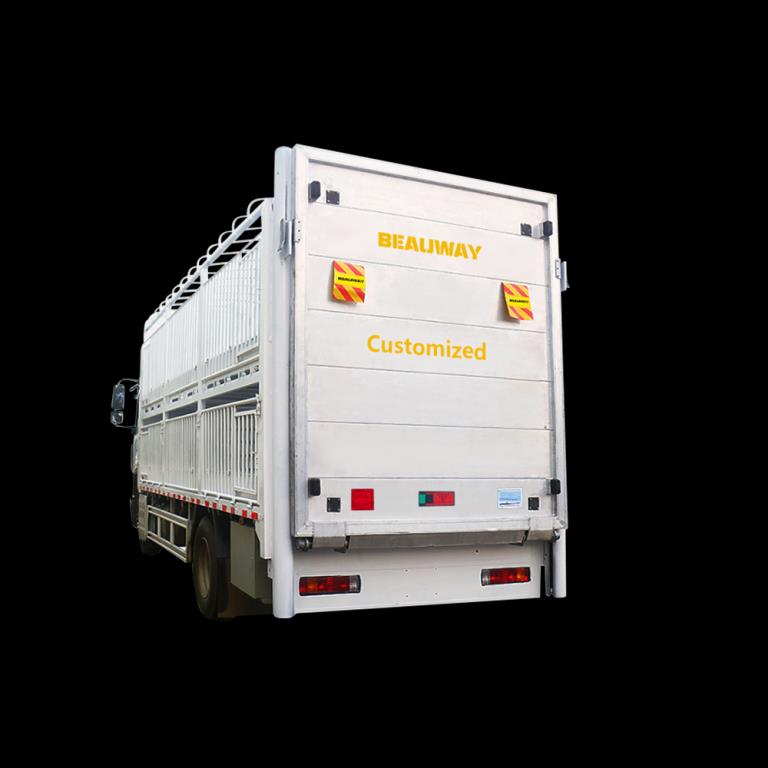
Beauway has been specializing in the field of logistics loading and unloading equipment for many years, with a full product range covering tail lifts, dock levelers, and lifting platforms. For a customized solution tailored to your specific site conditions, you are welcome to schedule a technical consultation.
This is the pattern fleet managers run into more often than they'd like to admit: the unit with the cleanest maintenance log is sometimes the one that goes down hardest.
Why "no complaints" isn't the same as "no problems"
A tail lift doesn't announce its own decline. Unlike an engine that starts knocking or a brake that starts squealing, a hydraulic lift's early failure signs are subtle — a half-second delay before the platform responds, a slightly uneven descent, a faint resistance at one hinge point that a driver in a hurry won't stop to mention. Multiply that across a fleet, and you get units that look fine on paper and are quietly deteriorating in practice.
This is exactly why a scheduled tail lift safety inspection matters more than most fleets treat it. It's not a box-ticking exercise. It's the only mechanism that catches the gap between "still moves" and "still moving correctly." Fleets that treat tail lift inspections as a fixed calendar item, rather than a response to complaints, are consistently the ones that avoid the expensive surprise rebuild.
How often should a tail lift be inspected?
There's no single universal number — load frequency, route conditions, and unit age all affect the right interval — but the working principle used across most professional fleets is straightforward: inspect on a fixed schedule regardless of how much the unit has been used, not just when a driver flags an issue. A tail lift inspection uk operators rely on typically checks hydraulic fluid condition, hinge and pivot wear, platform structural integrity, and control response time — the same categories that quietly degrade without ever triggering a driver complaint.
Skipping that fixed schedule is how a five-minute check turns into a multi-day repair. Waiting for a tail lift breakdown to trigger the inspection is, in effect, choosing the most expensive possible moment to find out something was wrong.
The rebuild is rarely about one part
When a tail lift finally does fail after a long quiet stretch, the failure is almost never isolated to one component. A hinge that's been slightly stiff for months puts uneven stress on the arm next to it. A seal that's been seeping puts extra load on the pump trying to compensate for lost pressure. By the time someone notices, several systems have already been quietly compensating for each other — which is why the eventual repair often looks disproportionate to whatever the "final" symptom was.
Consistent tail lift maintenance breaks this chain early, while the fix is still a single part rather than a cascade of them.
What this means day to day
A tail lift that's never logged a complaint isn't necessarily a tail lift that's fine. It might just be a tail lift nobody's looked closely at yet. The fleets that avoid the expensive surprise rebuild aren't the ones with the newest units — they're the ones that treat a quiet maintenance history as a reason to look closer, not a reason to look away.
If your fleet runs a mix of hydraulic tail lift units across different routes and duty cycles, building a fixed inspection interval into your schedule — rather than a reactive one — is the single change most likely to keep a "no complaints" unit from becoming a full rebuild.
Beauway has been specializing in the field of logistics loading and unloading equipment for many years, with a full product range covering tail lifts, dock levelers, and lifting platforms. For a customized solution tailored to your specific site conditions, you are welcome to schedule a technical consultation.
Global Industrial Parts Inc.
Legal Disclaimer:
MENAFN provides the
information “as is” without warranty of any kind. We do not accept any
responsibility or liability for the accuracy, content, images, videos,
licenses, completeness, legality, or reliability of the information
contained in this article. If you have any complaints or copyright issues
related to this article, kindly contact the provider above.
Comments
No comment