

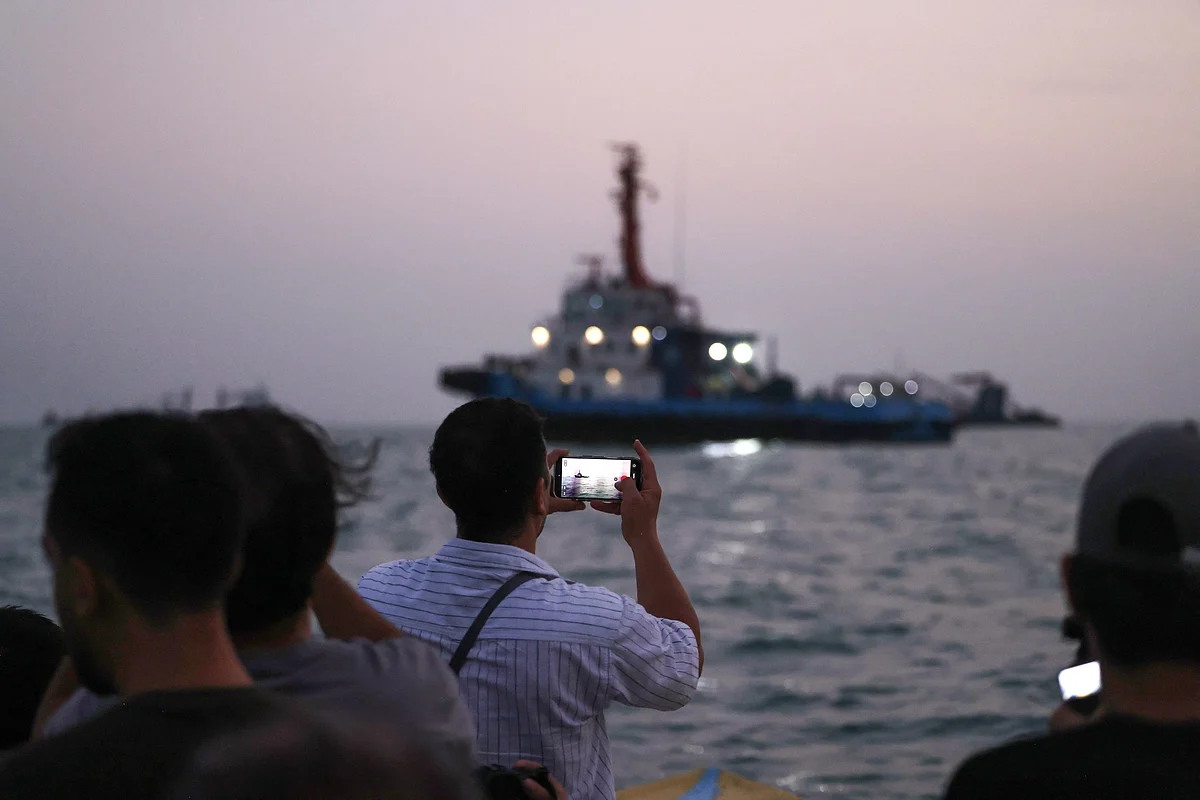
Commentary: From Oman To Iran, Strait Of Hormuz Remains Central To Gulf Security


The Strait of Hormuz returns to prominence whenever the region trembles. It is the artery that fuels the world's energy needs, yet it also exposes the fragility of regional and international security.
Recommended For YouWhat we are witnessing today is not an anomaly but a continuation of a long pattern that has made Hormuz both an economic blessing and a strategic curse for foe and friend alike.
Stay up to date with the latest news. Follow KT on WhatsApp Channels.
For centuries, the strait served as the gateway to the Gulf and a theatre of imperial rivalry. Control over Hormuz meant control over the trade routes linking India, East Africa, Iran and Iraq. Despite the long Arab coastlines flanking it, the strait remained largely outside Arab authority-first under Persian influence, then the Portuguese, and later under the British, who dominated maritime routes under the pretext of securing passage to India.
Arab powers did, at moments, assert themselves. The Ya'aruba era saw Oman expel the Portuguese and build a fleet capable of shaping navigation at the Gulf's entrance. Under the Al Bu Sa'id dynasty, Omani influence stretched from Bandar Abbas to Zanzibar, creating the closest approximation of Arab leverage over the strait. The Qawasim further strengthened regional maritime power, challenging Portuguese and British expansion and securing vital trade routes.
Global energy lifelineThe 20th century transformed Hormuz from a traditional trade corridor into a global energy lifeline. Nearly a third of the world's seaborne oil passes through it, entangling the interests of major powers and elevating the strait to a central pillar of international security.
Iran's periodic attempts to impose transit fees echo older precedents, such as the Portuguese“cartaz” system, which regional and international powers once united to dismantle. The principle endures: Hormuz is an international passage governed by the rule of unrestricted transit, not unilateral control.
Today, Washington and Tehran navigate a fragile balance that seeks to avoid open confrontation while managing persistent tension. Recent weeks have brought renewed friction-harassment of vessels, expanded Western naval deployments, rising drone activity, and intermittent diplomatic overtures. International warnings underscore that any disruption to the strait would immediately reverberate through global energy markets and supply chains.
The latest developments highlight a deeper impasse. Iran continues to impose restrictions on vessel movement, signalling that ships may face fines or detention without prior authorisation. The US has reinforced its naval posture and tightened sanctions, with direct negotiations largely stalled. Mediation efforts by regional actors have produced only limited openings, including discussions about a controlled shipping corridor partly in Omani waters, but no durable agreement has emerged. Commercial traffic now moves under heightened caution.
These dynamics have immediate global repercussions. Oil prices fluctuate with each incident, shipping companies adjust routes and insurance premiums, and governments warn of the risks of miscalculation.
Hormuz remains a mirror reflecting the region's reality-a passage where alliances shift, rivalries intensify, and tremors ripple outward to shape the security of the Gulf and the wider world. It is a curse on the foe who cannot bypass it, and a curse on the friend who cannot do without it. Between these two truths, the strait continues its historic role: Gateway of the Gulf, arena of rivalry, and barometer of regional transformation.
ALSO READ- Commentary: Strait of Hormuz is trapped between geopolitics and legal vacuum 'Still in wartime situation': Iran nuclear chief says sites not cleared for inspections Commentary: Safeguarding Strait of Hormuz is securing world's ability to feed itself

Legal Disclaimer:
MENAFN provides the
information “as is” without warranty of any kind. We do not accept any
responsibility or liability for the accuracy, content, images, videos,
licenses, completeness, legality, or reliability of the information
contained in this article. If you have any complaints or copyright issues
related to this article, kindly contact the provider above.
Comments
No comment