

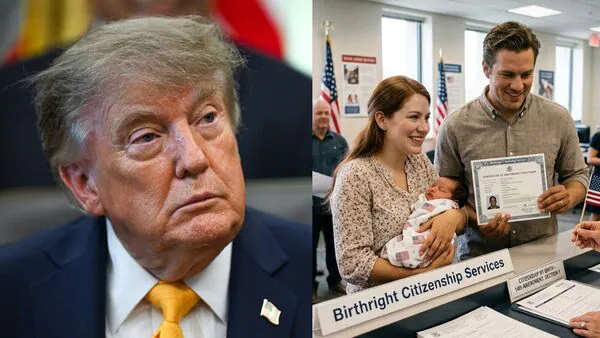
Trump Pushes For Birthright Citizenship In US: What It Means? Who Are Likely To Be Impacted?


This isn't the first time that Trump sought to cut down the circumstances in which children born in the US would receive citizenship.
What is US birthright citizenship, and what changes is Trump's government seeking?
US birthright citizenship is the principle under which anyone born on US soil is generally considered a US citizen from birth, regardless of the immigration status of their parents. The right is rooted in the Citizenship Clause of the 14th Amendment, ratified in 1868, which established citizenship for people born in the United States and subject to its jurisdiction.
The US Supreme Court has historically upheld this principle from time to time. A recent Supreme Court ruling in June 2026 also addressed the scope of the 14th Amendment's Citizenship Clause in litigation over the Trump administration's efforts to restrict birthright citizenship.
Also Read | US birthright citizenship: US proposes new passport rules for children Why it is important for Donald Trump govtRestricting birthright citizenship has been a major part of Donald Trump's broader immigration crackdown from earlier. His administration argues that the existing system can be exploited through what is being referred to as“birth tourism”, where foreign nationals travel to the US, including those on non-immigrant visas, with the sole purpose of giving birth in the country to obtain US citizenship for their child.
In his August 6 executive order, Trump sought to limit birthright citizenship, including those whose parents work for foreign governments or are classified as“alien enemies”. It also restricts citizenship for kids born in the US whose parents are accused of using fraud or commercial arrangements to obtain citizenship.
According to the White House, the changes in birthright citizenship are aimed at protecting the“meaning and value” of American citizenship.
Also Read | Birthright fight hearing in US Supreme Court - Why a 1880 ruling is in focus? Judge blocks new limitsTrump's latest order arrived after an earlier attempt to restrict birthright citizenship. In June, the US Supreme Court ruled against the earlier order, stating that it conflicted with the 14th Amendment's Citizenship Clause, as reported by Reuters. Trump then issued a narrower order on August 6, which was also challenged in court.
On September 2, US District Judge Deborah Boardman in Maryland blocked it through a preliminary injunction. The judge ruled that children covered by the lawsuit would remain US citizens at birth.
The Trump administration reportedly argued that the case was premature as agencies had not yet issued rules to implement the order. However, the judge rejected that argument.
Who are likely to be impacted?The proposed changes to US birthright citizenship are likely to have an important impact. Under the draft reviewed by Reuters, parents or legal guardians applying for a US passport for their children could be required to submit proof of their own US citizenship or immigration status. Documents such as a US passport or birth certificate for citizens, or documents such as an I-94 form or permanent resident card of the parents, might be required to obtain citizenship for their child.
Currently, parents can establish their relationship to the child by providing government-issued identification. For now, they are not required to submit evidence of their own citizenship or immigration status.
The measure is expected to affect primarily families with children born in the US whose parents are non-citizens. This includes immigrants on temporary visas or families with complex immigration circumstances.
Reuters reported that the State Department's proposed guidance would use parental citizenship and immigration information to determine whether a child falls within the categories covered by the executive order.
For Indian-origin families, it can be a significant issue as well. A large number of Indians live and work in the US on employment-based visas, including H-1B visas, while many are permanent residents or are waiting for green cards.
If the restrictions are implemented, affected parents could face additional scrutiny during passport-related processes as well. However, the executive order remains blocked by the preliminary injunction for now.

Legal Disclaimer:
MENAFN provides the
information “as is” without warranty of any kind. We do not accept any
responsibility or liability for the accuracy, content, images, videos,
licenses, completeness, legality, or reliability of the information
contained in this article. If you have any complaints or copyright issues
related to this article, kindly contact the provider above.
Comments
No comment