

403
Sorry!!
Error! We're sorry, but the page you were looking for doesn't exist.
What Is Dock Shock, and Why Should Loading Dock Operators Care?


(MENAFN- Global Industrial Parts Inc.) Forklift operators can cross a dock leveler well over a hundred thousand times a year. Most of those crossings barely register — until the leveler's design isn't doing its job, and every pass sends a jolt through the operator, the equipment, and whatever's on the forks. That jolt has a name in the industry: dock shock.
What Actually Causes It
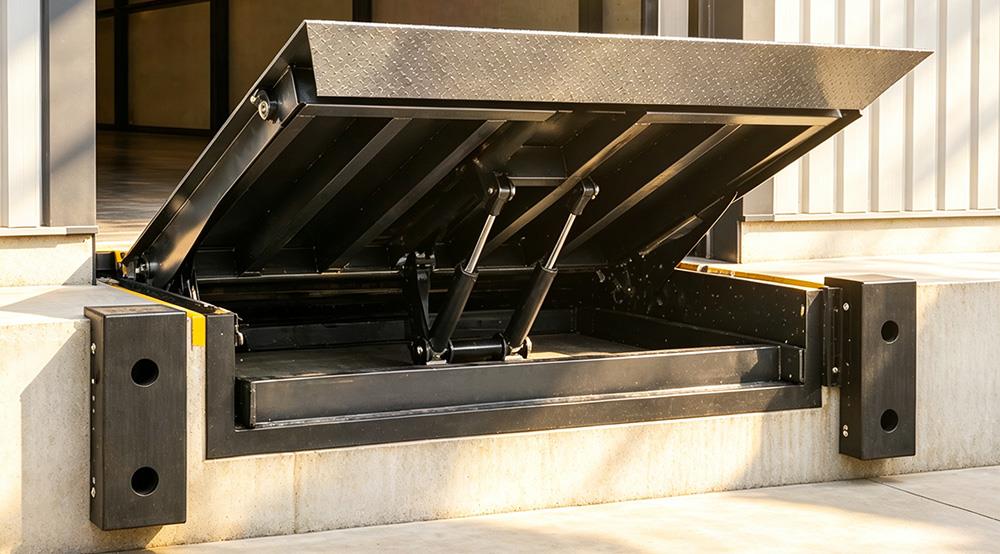
Dock shock happens at the transition points — where the leveler meets the trailer bed, and where the lip meets the leveler deck. Gaps, misalignment, or a rigid deck that can't flex with an out-of-balance trailer all create small but repeated impacts. On their own, each pass seems minor. Repeated hundreds of times a day, they add up.
This is where a mechanical dock leveler shock absorbing system earns its keep — a deck and lip designed to flex and maintain contact with the trailer bed, instead of forcing every irregularity into a hard bump.
The Real Cost: People, Product, and Equipment
Dock leveler safety isn't just about preventing dramatic accidents. The slow, repeated impact of poor transitions contributes to:
Whole-body vibration exposure for forklift operators, linked to chronic back and neck strain over time
Product damage from repeated jarring, especially with fragile or stacked loads
Accelerated wear on forklifts and the leveler itself, driving up dock leveler shocks and part replacement over time
None of this shows up as a single dock leveler accident on an incident report. It shows up gradually, in maintenance costs and operator complaints that are easy to write off individually.
Signs Your Dock Is Generating More Shock Than It Should
A few dock leveler safety tips worth checking on your own dock:
Listen for a distinct "clunk" as forklifts cross the lip — smooth transitions shouldn't produce a sharp impact sound.
Check whether the deck flexes to meet an out-of-balance trailer, or stays rigid and forces the trailer to do all the adjusting.
Ask operators directly whether certain bays feel noticeably rougher than others — they usually know before a maintenance log does.
Why It's Worth Fixing
A dock leveler local safety issue like this rarely gets prioritized because nothing appears broken. But reducing dock shock is one of the more overlooked upgrades available for a loading dock — it protects people, product, and equipment at the same time, without changing how the dock operates day to day.
If your current setup is generating more jolt than it should, it's worth having someone assess whether the leveler's hydraulic dock leveler transition design is actually doing what it's supposed to. A smoother deck-to-trailer transition tends to pay for itself in reduced strain and reduced repair costs before long.
Dock shock is quiet damage. That's exactly why it gets ignored — and exactly why it's worth checking.
What Actually Causes It
Dock shock happens at the transition points — where the leveler meets the trailer bed, and where the lip meets the leveler deck. Gaps, misalignment, or a rigid deck that can't flex with an out-of-balance trailer all create small but repeated impacts. On their own, each pass seems minor. Repeated hundreds of times a day, they add up.
This is where a mechanical dock leveler shock absorbing system earns its keep — a deck and lip designed to flex and maintain contact with the trailer bed, instead of forcing every irregularity into a hard bump.
The Real Cost: People, Product, and Equipment
Dock leveler safety isn't just about preventing dramatic accidents. The slow, repeated impact of poor transitions contributes to:
Whole-body vibration exposure for forklift operators, linked to chronic back and neck strain over time
Product damage from repeated jarring, especially with fragile or stacked loads
Accelerated wear on forklifts and the leveler itself, driving up dock leveler shocks and part replacement over time
None of this shows up as a single dock leveler accident on an incident report. It shows up gradually, in maintenance costs and operator complaints that are easy to write off individually.
Signs Your Dock Is Generating More Shock Than It Should
A few dock leveler safety tips worth checking on your own dock:
Listen for a distinct "clunk" as forklifts cross the lip — smooth transitions shouldn't produce a sharp impact sound.
Check whether the deck flexes to meet an out-of-balance trailer, or stays rigid and forces the trailer to do all the adjusting.
Ask operators directly whether certain bays feel noticeably rougher than others — they usually know before a maintenance log does.
Why It's Worth Fixing
A dock leveler local safety issue like this rarely gets prioritized because nothing appears broken. But reducing dock shock is one of the more overlooked upgrades available for a loading dock — it protects people, product, and equipment at the same time, without changing how the dock operates day to day.
If your current setup is generating more jolt than it should, it's worth having someone assess whether the leveler's hydraulic dock leveler transition design is actually doing what it's supposed to. A smoother deck-to-trailer transition tends to pay for itself in reduced strain and reduced repair costs before long.
Dock shock is quiet damage. That's exactly why it gets ignored — and exactly why it's worth checking.
Global Industrial Parts Inc.
Legal Disclaimer:
MENAFN provides the
information “as is” without warranty of any kind. We do not accept any
responsibility or liability for the accuracy, content, images, videos,
licenses, completeness, legality, or reliability of the information
contained in this article. If you have any complaints or copyright issues
related to this article, kindly contact the provider above.
Comments
No comment