

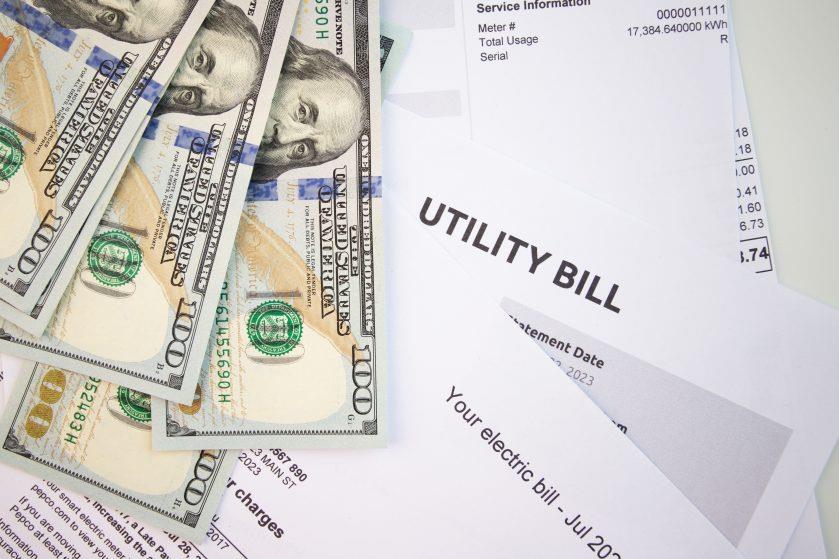
Ways Your Utility Bills Can Change How Much SNAP You Receive


When low-income households apply for or recertify their benefits through the Supplemental Nutrition Assistance Program, the primary focus is naturally placed on household earnings and gross monthly income. However, financial eligibility and final benefit calculations depend heavily on a complex equation that factors in your monthly household expenditures. Chief among these secondary financial factors are your residential housing and utility costs. The amount you pay for electricity, natural gas, water, sewage, and home heating services can dramatically shift the size of your monthly food assistance deposit. Understanding how caseworker agencies evaluate these utility expenses ensures that participants claim every deduction they legally deserve.
The structure of the food stamp program recognizes that a family spending an overwhelming portion of their income on basic survival necessities has far less money left over for a healthy diet. Because utility costs fluctuate drastically depending on geographic region, home insulation quality, and seasonal weather extremes, federal and state guidelines incorporate specialized deduction mechanisms. If your utility bills spike or your living arrangements change, your net countable income shifts in response. Recognizing how these financial variables interact can help you anticipate benefit adjustments and prevent unexpected drops in your monthly food budget.
The Excess Shelter Deduction MechanicThe primary vehicle through which utility bills influence your food stamp allotment is known as the excess shelter deduction. When state caseworkers calculate your net monthly income, they first tally your gross earnings and apply standard deductions for earned income, dependent care, and medical expenses. Next, they evaluate your total shelter costs, which combine your monthly rent or mortgage payment with your out-of-pocket utility expenses.
Under federal guidelines, if your combined housing and utility costs exceed half of your household's remaining income after other deductions have been applied, that financial burden is recognized as an excess shelter expense. This excess amount is then subtracted directly from your countable income calculation. Because a lower net countable income yields a higher final food stamp allotment, higher utility and housing expenses can directly translate into more robust nutritional assistance each month. For households with elderly or disabled members, the rules are even more favorable, as the traditional cap on excess shelter deductions is completely removed, allowing full credit for total housing and utility stress.
Standard Utility Allowances Versus Actual BillsState human services agencies generally do not require participants to track down and submit every single fluctuating monthly utility bill down to the exact penny. Instead, administrative offices utilize standardized estimates known as Standard Utility Allowances, or SUAs. These fixed figures represent average low-income utility costs within a specific region or state, streamlining the application process for both caseworkers and applicants. Depending on which services you pay for separately from your base rent, you typically fall into one of several distinct utility tiers that dictate your overall deduction amount.
The highest tier is typically reserved for households that incur separate heating or cooling costs. Running an electric air conditioning unit during scorching summer months or paying for gas and electric furnace heating in the winter unlocks the heating and cooling standard utility allowance. This tier provides the largest standard deduction, which maximizes your shelter calculation advantage. Lower tiers exist for households that do not pay for heating or cooling but cover at least two other basic services, such as electricity, water, or trash collection, as well as minimal deductions for phone-only utility expenses.
The Crucial Difference Between Utilities Included in Rent and Paid SeparatelyWhether your utility costs are bundled directly into a flat rental payment or billed independently by municipal providers completely alters how caseworkers calculate your aid. If your landlord covers all electricity, gas, water, and waste management services, wrapping them into a single monthly payment, you generally cannot claim a separate utility deduction. Your shelter calculation is limited to the base rent amount, missing out on the added financial buffer provided by utility formulas.
Conversely, if your lease explicitly states that you are responsible for paying your own utility bills separately over a base rent, you unlock eligibility for standard utility allowances. Even if your actual monthly utility bill happens to be relatively low during mild spring or autumn months, qualifying for a heating or cooling standard allowance based on your independent billing structure locks in the designated deduction tier. This distinction makes the exact wording of a residential lease agreement a critical factor in determining public assistance calculations.
The Role of Energy Assistance Programs in Boosting Food AidAnother powerful intersection between utility management and nutritional assistance involves federal and state energy support initiatives, most notably the Low Income Home Energy Assistance Program. In many participating jurisdictions, receiving even a nominal amount of seasonal energy assistance-sometimes referred to as“heat and eat” policies-automatically satisfies the criteria needed to qualify for the highest heating and cooling standard utility allowance tier.
When a household receives a small fuel assistance grant, state welfare systems cross-reference the data, granting immediate access to the maximum utility deduction without requiring complex verification of actual historical bills. This administrative bridge prevents families from getting caught in restrictive deduction caps, ensuring that energy support translates seamlessly into higher food stamp distributions. Staying informed about local energy assistance application windows can thus provide a double benefit for household budgeting.
Staying Proactive With Utility Changes and ReportingBecause utility costs and living situations are fluid, failing to report changes to your local caseworker can cost your household. If you transition from an apartment where utilities were included to a home where you pay every service provider out of pocket, you must report the change to your agency immediately. Providing proof of independent utility responsibility triggers a formal budget reassessment. That can raise your monthly food benefit. Maintaining open lines of communication with your caseworker ensures your household receives accurate support as utility rates fluctuate.
What To Read NextUtility Bill Help Is Still Available: Here Are 6 Places Where You Can Find It
Is Your Freezer a Savings Tool or a $500 Food Graveyard?
Food-at-Home Prices Are 2.7% Higher Than Last Year: Where Families Can Still Save
Why Professional Heating Repair is Essential for Your Home's Comfort
The 7 Most Addictive Restaurant Menu Items, and How To Recreate Them at Home

Legal Disclaimer:
MENAFN provides the
information “as is” without warranty of any kind. We do not accept any
responsibility or liability for the accuracy, content, images, videos,
licenses, completeness, legality, or reliability of the information
contained in this article. If you have any complaints or copyright issues
related to this article, kindly contact the provider above.
Comments
No comment