

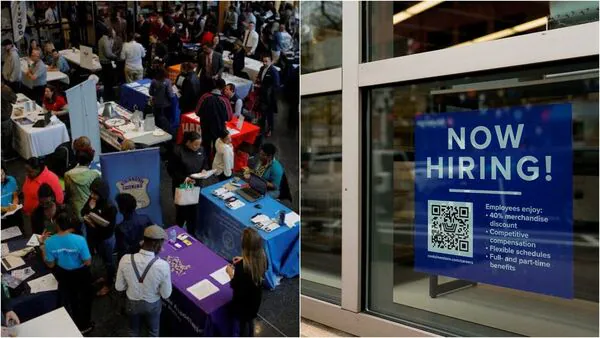
US Economy Creates 162,000 Jobs In August As Unemployment Holds At 4.1% Despite Recent Slowdown Fears


The unemployment rate was unchanged at 4.1% while the labour force participation edged up to 61.6%, according to figures released on Friday by the Bureau of Labour Statistics. The number of unemployed people stood at about 7 million, little changed from July.
The scale of the jobs gain was striking. Employment had increased by an average of only 31,000 a month over the previous year, making August's 162,000 rise a significant departure from that subdued pace. MarketWatch reported that economists had expected a gain of roughly 53,000 jobs.
Quick answers to key questions
.5 QUESTIONS1What are the key job creation numbers reported for August in the US economy?⌵The US economy added 162,000 jobs in August, significantly exceeding forecasts and marking a noteworthy improvement from previous months.
2Why did the unemployment rate remain unchanged at 4.1% despite job gains?⌵The unemployment rate held steady at 4.1% as the number of unemployed individuals remained around 7 million, indicating a stable labor market.
3How did revisions to previous employment figures affect August's job report?⌵Revisions indicated that job gains in July and June were higher than initially reported, adding 55,000 more jobs combined, thus alleviating concerns about a potential contraction.
4Should investors be concerned about the uneven job growth in different sectors?⌵Yes, the uneven job growth, with declines in sectors like information and subdued numbers in retail and professional services, suggests underlying vulnerabilities in the labor market.
5How might the August jobs report influence the Federal Reserve's upcoming policy decisions?⌵The strong job creation may provide the Federal Reserve with more flexibility regarding interest rates, especially if inflation data remains high, impacting their meeting on September 15-16.
Also Read | Emerging-Market Stocks, Currencies Gain After Soft US Jobs DataMore importantly, the latest report also changed the picture for the preceding two months.
July, initially reported as a loss of 23,000 jobs, was revised to show a gain of 21,000. June's increase was also revised upwards, from 20,000 to 31,000. Taken together, the revisions mean employment in June and July was 55,000 higher than previously estimated.
That has effectively removed much of the concern created by July's initially reported contraction.
Hiring in August was not confined to one part of the economy. Food services and drinking places accounted for the biggest increase, adding 59,000 jobs, well above their average monthly gain of 12,000 over the previous year. Local government education added another 42,000 positions, while manufacturing employment rose by 16,000.
Health care, which has been one of the most dependable sources of US employment growth, was notably less vigorous. It added 13,000 jobs in August, considerably below its average monthly increase of 32,000 over the past year.
There were also clear areas of weakness. Employment in the information industry fell by 23,000, highlighting the uneven nature of the recovery even as the overall payroll figure strengthened. Several other major industries, including retail, financial activities, transportation and warehousing, and professional and business services, showed little change during the month.
Pay continued to rise, although not at a pace that dramatically changes the inflation picture. Average hourly earnings for private-sector workers increased by 10 cents, or 0.3%, to $37.75. Wages were up 3.1% from a year earlier. The average working week also edged higher, reaching 34.4 hours.
Also Read | Wall Street mixed after stronger-than-expected jobs data How does this matter for the upcoming Federal Reserve meeting?The report is likely to matter significantly for the Federal Reserve as officials prepare for their September policy meeting. The Federal Open Market Committee is scheduled to meet on September 15 and 16, with the policy decision and press conference due on September 16.
A labour market that is creating jobs at a stronger pace, while keeping unemployment at 4.1%, gives policymakers more flexibility than they would have had if employment had contracted for a second consecutive month.
But the figures do not settle the interest-rate question on their own. The Fed's decision will also depend heavily on incoming inflation data. MarketWatch said the strength of the employment report gives the central bank greater scope to concentrate on inflation if price pressures remain elevated.
Also Read | How insulated is the US economy from the Iran war?For now, the August figures suggest that fears of an abrupt deterioration in US employment were premature. The labour market is not returning to the extraordinary pace seen earlier in the post-pandemic recovery. It is, however, proving considerably harder to derail than the weak headline figures from July had implied.

Legal Disclaimer:
MENAFN provides the
information “as is” without warranty of any kind. We do not accept any
responsibility or liability for the accuracy, content, images, videos,
licenses, completeness, legality, or reliability of the information
contained in this article. If you have any complaints or copyright issues
related to this article, kindly contact the provider above.
Comments
No comment