

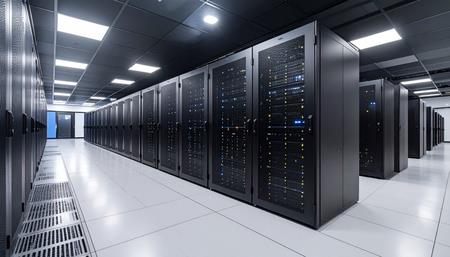
Emerging Market Data Centre Pipeline Doubles Current Global Capacity: Report


According to a report by S&P Global Ratings, growing opposition to data centre construction in developed economies is prompting operators to seek expansion opportunities elsewhere, potentially attracting substantial investment into digital infrastructure across emerging markets.
However, benefits are unlikely to be distributed evenly, it said and noted that the scale of investment and the pace of development will depend on factors including government policy, availability of natural resources and supporting infrastructure.
In addition, S&P has expected that the conversion of planned projects into operational facilities to vary significantly across regions and favouring countries with reliable electricity grids, transparent permitting systems, access to renewable energy and adequate capital availability.
It also identified energy and water availability as the primary risks facing the sector.
In fast-growing data centre hubs, expansion is increasingly colliding with power grid bottlenecks and water stress.
Moreover, developers could also face rising social opposition if projects are perceived to increase electricity costs, weaken grid reliability or limit local access to land and water resources, according to the report.
It further noted that in Asia-Pacific rapid expansion in markets, including India, is placing greater strain on power infrastructure, increasing the urgency of renewable energy deployment.
At the same time, concerns over grid reliability may encourage some operators to rely on independent power sources that could be less environmentally friendly. Water stress in coastal and industrial areas is also expected to accelerate the adoption of more water-efficient cooling technologies.
Meanwhile, in the Middle East, abundant and relatively low-cost power is helping support data centre growth but acute water scarcity presents a significant challenge.
While expanding solar energy capacity is supporting the sector, S&P said operators moving into increasingly arid areas may need to adopt technologies such as solar-powered desalination and advanced closed-loop cooling systems to manage resource constraints.

Legal Disclaimer:
MENAFN provides the
information “as is” without warranty of any kind. We do not accept any
responsibility or liability for the accuracy, content, images, videos,
licenses, completeness, legality, or reliability of the information
contained in this article. If you have any complaints or copyright issues
related to this article, kindly contact the provider above.
Comments
No comment