

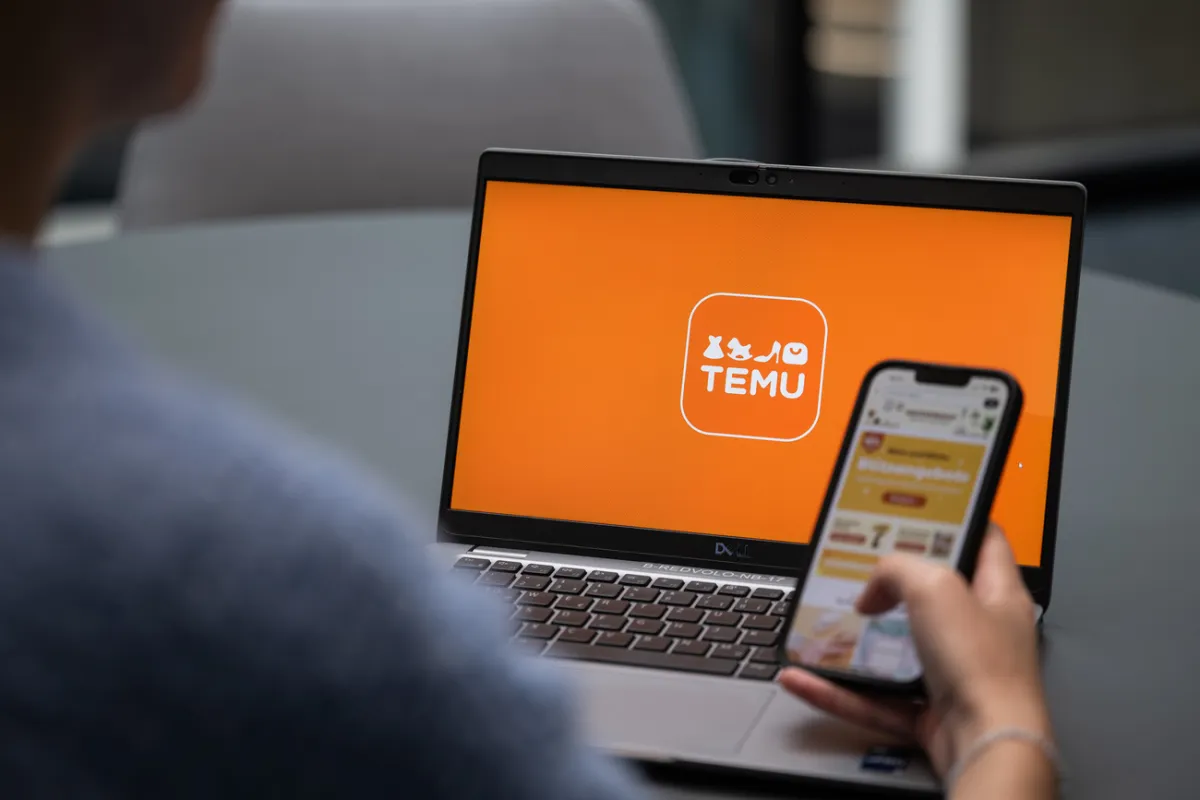
Chinese Retail Platform Temu Challenges Consumers And Retailers - SWI Swissinfo.Ch


However, just because something is labelled“local” does not necessarily mean there is a Swiss supplier behind it. In the event of a dispute, this can become a problem for consumers.
Since Temu was founded in 2022, the online shop has been growing rapidly. In Switzerland, the platform has already climbed to fourth place among the top-grossing online shops, overtaking Amazon in the process. The majority of orders are dispatched directly from China, where delivery times range from six to 20 days.
+ How Switzerland could become a hub for Chinese e-commerce
Temu has been pursuing a new strategy since September of last year. With its“local to local” programme, the platform is opening up access to Swiss retailers, who can sell their products directly via Temu.
The Swiss association for small and medium-sized businesses (SMEs) has announced a partnership with Temu. This is intended to make it easier for smaller Swiss firms to access the platform, while allowing Temu to drastically reduce delivery times and boost its image.
One of the Swiss retailers already selling products via Temu is Daniel Lauper. He applied to Temu right at the beginning to reach additional customers for his household and leisure products via the platform.
More More Swiss lawmakers demand curbs on Chinese online retailersThis content was published on Jun 2, 2026 Parliament agrees to take tougher action against Temu and similar Chinese online retailers.
Read more: Swiss lawmakers demand curbs on Chinese online reta Temu exerts pressureTemu regularly sends local retailers such as Lauper price adjustment proposals of up to 40% off. He sees this as“pressure to lower prices”. If he does not comply, Temu simply reduces the visibility of his products.
Temu's delivery terms are strict compared to those of Swiss platforms. He must deliver within one to two days. There is a CHF5 ($6) penalty per late parcel.“It's quite rigorous. We've never seen anything like this on other platforms,” Lauper told Swiss public broadcaster SRF.
Temu also relies on local warehouses in addition to retailers. Warehouses spread across Europe where goods from China are held in stock.
On the Temu app, all products from a local warehouse are marked with a“Local” label. For Temu users, however, it is not immediately clear whether this refers to a local retailer or a local warehouse belonging to a Chinese retailer.
Bernhard Egger, managing director of traders association Handelsverband, has issued a warning about warehouses belonging to Chinese retailers. Anyone ordering a product via Temu does not enter into a contract with Temu, but with the manufacturer behind it.
'It's almost a farce'If the retailer is Swiss, product safety and liability are governed by Swiss law. However, if the retailer is Chinese, Chinese law applies and products do not have to comply with Swiss safety standards.“In the event of a dispute, you stand no chance as a Swiss consumer,” said Egger.
In its terms and conditions, Temu completely absolves itself of responsibility and disclaims any liability. Egger criticises the fact that Swiss legislation can be circumvented by such a system.“It's almost a farce,” he complains.
SRF consumer programme Kassensturz put some questions to Temu. The Chinese online retail giant did not respond to critical questions, but merely explained its business model in general terms.

Legal Disclaimer:
MENAFN provides the
information “as is” without warranty of any kind. We do not accept any
responsibility or liability for the accuracy, content, images, videos,
licenses, completeness, legality, or reliability of the information
contained in this article. If you have any complaints or copyright issues
related to this article, kindly contact the provider above.
Comments
No comment