

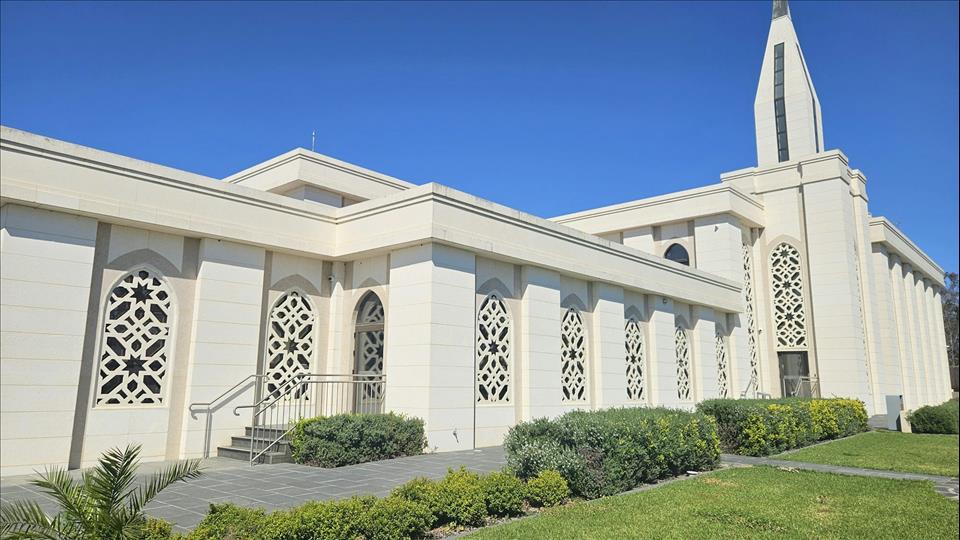
'I Feel More Comfortable Asking Questions': How We Worked With Mosques To Talk With Muslim Women About Reproductive Health


Many Australian Muslim women are at risk of falling through the cracks this way; many have experienced discrimination in health-care settings (or worry they will). Others are unsure if certain treatments or health practices align with their religious values, or (for those born overseas) may be unfamiliar with how the Australian health-care system works.
This can end up discouraging them from seeking care they need. In some communities, cultural norms also make it hard for women to ask questions openly about sex, contraception, periods, pregnancy and birth.
To address these gaps, we worked with Muslim women in Sydney over two years to co-design and deliver resources aimed at helping Muslim women understand their own reproductive health and available health services.
Our report, launched this week, reveals how the mosque itself can be a crucial setting for the delivery of culturally appropriate, evidence-based reproductive health resources for Muslim women in Australia.
What we didIn the first year of our project (which we called WARDA, meaning“rose” in Arabic), we went to many mosque communities to learn from women.
We worked with female faith leaders and community volunteers at local mosques to start women's“discussion circles” around reproductive health. We wanted to ask these women what reproductive health meant to them, where the gaps were and how to address these gaps.
We had an advisory group of faith leaders, health professionals and other community leaders – all of whom were Muslim women in New South Wales.
They helped us interpret the data we collected and develop four faith-informed community workbooks. Our goal was to produce health resources and information that was scientifically sound and evidence based, while also aligning with the religious values of Muslim women.
We also included in the booklets detail on how women could get more information from existing services and resources, including groups such as Jean Hailes for Women's Health, Perinatal Anxiety and Depression Australia (PANDA ), endometriosis and pelvic pain clinics, Family Planning NSW and local women's health centres.
What we foundWe then held 26 workshops with 490 women across NSW mosques and Muslim community organisations, to present and discuss the four booklets. Of these women:
- 30% were born in Australia the others came from 33 different countries 21 different languages were spoken some were married, some were not almost half spoke either only English or English with another language at home 67% were from areas of most social disadvantage 67% had a bachelors degree or higher.
It soon became clear that simply translating mainstream health messaging into other languages was not enough. Many told us they needed faith-informed information and assurance from female faith leaders that the information provided was aligned with their religious values. One participant, a 23-year-old woman born in Pakistan, told us:
They also appreciated having a non-judgemental women-only environment where facilitators could provide faith-informed accurate health information in a non-stigmatising way. One 42-year-old woman born in Morocco told us:
Another UAE-born woman, aged 23, said:
During our evaluation process, we found that 99.8% said they would recommend the workshops and resources to others, 91.2% found them very useful and 81.8% intended to make changes in their life after attending one of the workshops.
When asked what kinds of actions they would take following the project, women told us they would do things such as:
Where to from here?The women we worked with called for these workshops to be held more often and on an ongoing basis, including more age groups in them, and for similar programs to be held for Muslim men. One participant told us:
Another said she would
For policymakers, our project shows how working with and in mosques with female faith leaders can help get evidence-based women's health information to women who may otherwise be quite hard to reach through mainstream health messaging.


Legal Disclaimer:
MENAFN provides the
information “as is” without warranty of any kind. We do not accept any
responsibility or liability for the accuracy, content, images, videos,
licenses, completeness, legality, or reliability of the information
contained in this article. If you have any complaints or copyright issues
related to this article, kindly contact the provider above.
Comments
No comment