

ISRO Achieves Its First Major Success This Year With GSLV-F17/EOS-05 Mission: Why Is It Historic?


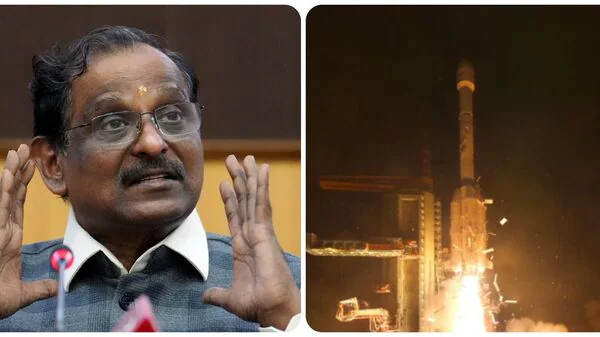
Following the successful launch, ISRO chairman V Narayanan said,“I am very happy to announce that the Geosynchronous Satellite Launch Vehicle (GSLV)-F17 vehicle has successfully and precisely injected the advanced Earth observation satellite EOS-05, the Geo-Imaging Satellite, into the intended and required orbit [Sub-Geosynchronous Transfer Orbit].”
Also Read | India plans space station by 2035; first BAS module approved: ISRO chiefPrime Minister Narendra Modi hailed the launch as“another outstanding achievement by ISRO and a proud moment for our nation.”
He said,“The growing partnership between ISRO and Indian industry is adding new strength and scale to our space programme and expanding India's capabilities across the entire space ecosystem.”
The GSLV rocket lifted off at 2:55 am local time from the country's main spaceport at Sriharikota and reached the designated orbit 18 minutes later, according to the ISRO's launch broadcast on YouTube.
What's GSLV-F17/EOS-05 mission? Why is it historic?EOS-05 is a state-of-the-art Earth observation spacecraft. It is India's first-ever imaging satellite from Geosynchronous orbit. The GSLV-F17 vehicle successfully placed the EOS-05 satellite into a Sub-Geosynchronous Transfer Orbit (Sub- GTO), breaking the eight-month spell.
At over 2,300 kg, this is the heaviest satellite ever to be carried by a GSLV and the satellite was perfectly ahead in its trajectory.
“Today, we have injected the heaviest satellite, 2367 kgs, using this launch vehicle. The health of the satellite is perfectly alright,” the ISRO chief said.
GSLV-F17 is the 19th flight of India's Geosynchronous Satellite Launch Vehicle (GSLV).
The pre-dawn launch on Friday follows a gap of nearly eight months and marks ISRO's first success of the year. The success assumes even greater significance because it came at a time when questions were being raised over India's launch capability.
Also Read | Will ISRO resignations impact Gaganyaan? Here's what ex-ISRO scientists sayThe Polar Satellite Launch Vehicle or PSLV rocket has suffered consecutive failures, in 2025 and January of 2026. On January 12, ISRO's PSLV-C62 rocket carrying 16 satellites failed to place them in the intended orbit after encountering an "anomaly" in the critical third stage of the launch.
Besides, the GSLV-F17/EOS-05 mission is said to be a replacement for the unsuccessful GSLV-F-10/EOS-03 mission of 2021, according to PTI. An onboard computer had aborted that mission at 307 seconds into the flight then.
A probe into the post-flight data had indicated that an anomaly in the Cryogenic Upper Stage led to the mission failure, according to ISRO.
Also Read | Centre Tightens Exit Rules As Over 100 ISRO Scientists Quit And Retire Early“Regarding GSLV-F10, there was a small problem with the cryogenic stage. After that, a national-level committee clearly addressed the reason, and we have made all the improvements. With that, not only this vehicle, but last year we also had two important missions, including the NISAR mission using this vehicle, and we have improved the reliability of the total vehicle itself. That we have done,” the ISRO chief told PTI.
Is it a spy satellite?Later, at a press conference, the ISRO chief said, as per PTI, that the earth observation satellite's operational lifetime is 9 years and dismissed speculation that it was a "spy satellite."
What will EOS-05 satellite do?ISRO chief Narayanan said that once EOS-05 is operationalised in orbit, it will become India's first dedicated imaging satellite from the geo orbit and provide important strategic data for the country.
The satellite is intended to support continuous monitoring of India and nearby areas for Earth observation. Mission Director Thomas Kurien said the mission carried a uniquely configured EOS capable of near-real-time imaging.
Also Read | Higher pay, faster growth: Why over 100 scientists quit ISRO in recent months"The eye in the sky," as one of the senior scientists involved in the mission described the satellite, is set to provide real-time imagery and help the nation in areas including agriculture, and disaster management, PTI reported.
ISRO chief Narayanan said this satellite“is going to continuously scan a particular portion of the Earth, mainly India and its surroundings.” For persistent monitoring purposes, it is going to be useful," he added.
Further explaining the importance of this satellite, Narayanan said it is the first satellite“to be placed in the geo-platform 36,000 km platform for the earth observation purpose of our country for multiple uses... This is the heaviest satellite lifted by the GSLV vehicle till today... This is the second successful mission in this financial year [after Skyroot mission]....”
He said the assured lifetime of the satellite is seven years. "I am confident it will work for more than 9 years...," he added.
Union minister Jitendra Singh also hailed the "historic" launch, saying that EOS-05 will enable advanced imaging across visible, infrared, multi-spectral and hyperspectral bands.
Six more launches this yearWhile addressing a press conference, the ISRO chief said the space agency is targeting another six launches in the current financial year.
"This financial year, in the direction of the Prime Minister, we are targeting six more launches,” Narayanan told ANI.
On GaganyaanNarayanan also spoke about the Gaganyaan human spaceflight programme, describing it as a technology-intensive mission. He said the launch vehicle being prepared for the mission is human-rated and that ISRO is continuing work to get the programme ready.
“Gaganyaan is a technology-intensive mission. The vehicle is human-rated. We are getting ready for this mission. A lot of development work we have completed, including safety system development,” he said.
The ISRO chief said a substantial amount of development work for Gaganyaan had already been completed, including the development of safety systems. He added that preparations for the human spaceflight mission were progressing.

Legal Disclaimer:
MENAFN provides the
information “as is” without warranty of any kind. We do not accept any
responsibility or liability for the accuracy, content, images, videos,
licenses, completeness, legality, or reliability of the information
contained in this article. If you have any complaints or copyright issues
related to this article, kindly contact the provider above.
Comments
No comment