

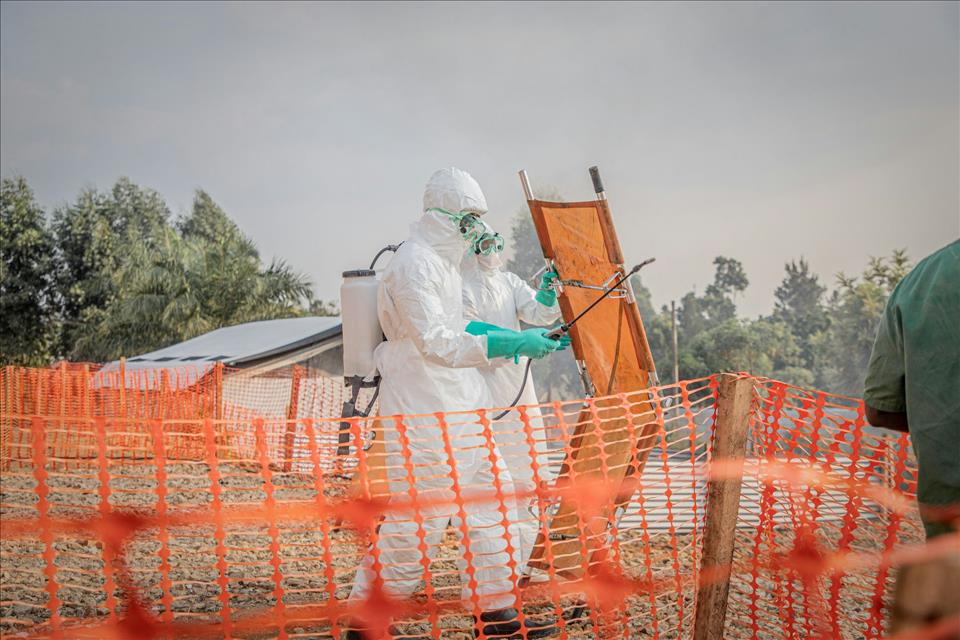
DRC's Ebola Epidemic Could Be The Worst In History: 4 Things That Could Help End It


As at 1 September 2026, more than 6,186 confirmed cases and 3,007 deaths have been reported since May 2026 when it was first declared. It is the deadliest Ebola outbreak in the history of the DRC. The outbreak is being driven by the Bundibugyo strain of the virus that causes Ebola disease. There is currently no licensed vaccine or specific treatment for Bundibugyo.
The outbreak is thought to have originated in the high-mobility mining area of Mongbwalu in Ituri, north-east DRC, in late April 2026, before spreading through interconnected communities and healthcare networks to Rwampara and Bunia – health zones in the Ituri province – and subsequently Uganda.
The response to the outbreak has been nationally led by the government of the DRC, with Africa Centres for Disease Control, the World Health Organization and other partners supporting the expansion of surveillance, laboratory capacity, treatment centres, infection prevention and control, vaccination, logistics, community engagement and safe and dignified burials.
Significant progress has been achieved, including interruption of transmission in Uganda through decisive national leadership and close collaboration with communities.
However, in the DRC, insecurity, population mobility, delayed detection, gaps in financing and supplies, and insufficient community ownership have continued to sustain transmission.
The response is therefore not yet sufficient to interrupt transmission in the DRC. This underscores the need to bring surveillance, testing, treatment, vaccination and community engagement closer to the village level.
As public health experts with expertise in Ebola who have been at the forefront of containing the latest outbreak in DRC, it is our view that more is required.
What's required is informed by the four factors that have made this epidemic difficult to control:
- the DRC's difficult geographical and humanitarian environment
highly mobile populations
low trust and poor community engagementthe incomplete scientific arsenal against the Bundibugyo virus.
Read more: Ebola outbreak in the DRC: four reasons it will be hard to contain
The four factorsFirst, this is an outbreak occurring in an exceptionally difficult environment. The affected areas are vast, remote and, in many places, insecure. Short journeys can take a day or more on bad roads, particularly during the rainy season (which is now).
Second, populations are highly mobile. Mining communities, motorcycle transport,displacement and cross-border movement connect villages and health zones that are difficult to monitor. The outbreak has been concentrated in several interconnected areas, particularly in Ituri, about 2,886km from Kinshasa, the DRC capital. Bunia, the main urban hub in Ituri, is connected to surrounding transmission areas. Movement of people is important in the response.
Third, trust and community engagement remain challenges. When people are afraid, when health facilities have closed after health workers have died, or when families have experienced Ebola without seeing an effective response, they may delay or avoid getting help. This directly affects surveillance. Current investigations by our team suggest that a substantial proportion of cases are being identified outside established contact lists. The response therefore cannot depend only on traditional contact tracing.
Fourth, unlike Ebola caused by the Zaire species, the Bundibugyo virus has no licensed vaccine or specific treatment. Clinical research is therefore part of the response itself.
The DRC has launched Ebola vaccination in Kisangani. The first injections were administered to health workers and other frontline responders. More than 50,000 doses have been received. The International Coordinating Group on Vaccine Provision has approved 70,000 doses of Ervebo for use in the country. Around 20,000 doses will be used in a clinical trial to assess its effectiveness against the Bundibugyo strain.
Read more: Ebola survivors struggle to return to normal lives: what I found out in Sierra Leone and Liberia
The response thus farIt is important to recognise how much has been achieved in only three months – between 15 May and 15 August 2026.
More than 20 Ebola treatment and isolation facilities have been established or supported. At the height of the crisis in late May 2026, treatment capacity was overwhelmed, with bed occupancy exceeding 200%. In late August, occupancy had fallen to around 66%.
Laboratory capacity has expanded dramatically, with 22 laboratories operating across the five affected provinces. Before there was only one in Kinshasa with the capacity to detect Bundibugyo. This has helped reduce turnaround time between sample collection and result, from over a week to just hours.
Safe and dignified burials have also improved substantially, with the vast majority now taking place within 24 hours.
These improvements matter. They are signs that the response can change the trajectory of an epidemic when resources, coordination and technical capacity come together.
There are also encouraging epidemiological signals. The effective reproduction number has fallen substantially from the very high levels (Rt 4.0) observed in May. The average number of people that each patient infects has fallen from four to just over one.
The scale of resources mobilised for the outbreak is substantial, with approximately US$1.72 billion in pledges, including US$118.5 million committed by African countries. Around US$867 million (about half of the pledges) has reportedly been released.
The continental response plan launched on 27 June 2026 by Africa CDC and WHO was designed around a simple principle: one plan, one budget, one team, one monitoring and evaluation framework, with communities at the centre.
Read more: Can a vaccine built for one Ebola virus stop another? The World Health Organization is about to find out
What's requiredThe next phase must centre on the villages. Local representatives, health workers and leaders should become active partners in surveillance, early detection, referral, risk communication and community protection.
Digital tools can support this, but technology must serve the community rather than replace it.
Commercial motorcycle riders, who connect communities across enormous distances, must be engaged as partners in the response rather than being treated simply as a risk.
Vaccination must be brought closer to communities. Research must be done where the epidemic is occurring. Clinical trials of vaccines and therapeutics must proceed with urgency and scientific rigour.
Read more: The hunt for a new Ebola vaccine: two scientists explain the challenges
Rebuilding trustEssential health services must continue alongside Ebola control.
The same applies to the reopening of schools. This must happen with infection-prevention measures, including training teachers, providing hygiene facilities, developing clear referral mechanisms, and adapting communication about the epidemic for school children and families.
Humanitarian and Ebola responses must also be integrated. A community facing insecurity, displacement and disease cannot be expected to navigate separate systems for each crisis.
Finally, Ebola doesn't respect borders. The collaboration between the DRC and Uganda shows what regional solidarity can look like. It's about joint surveillance, moving diagnostic capacity closer to border communities, sharing information and coordinated action. The DRC-Uganda lessons must be extended to South Sudan, the Republic of Congo and other neighbouring countries as agreed in Bangui, Central African Republic, in mid August.


Legal Disclaimer:
MENAFN provides the
information “as is” without warranty of any kind. We do not accept any
responsibility or liability for the accuracy, content, images, videos,
licenses, completeness, legality, or reliability of the information
contained in this article. If you have any complaints or copyright issues
related to this article, kindly contact the provider above.
Comments
No comment