

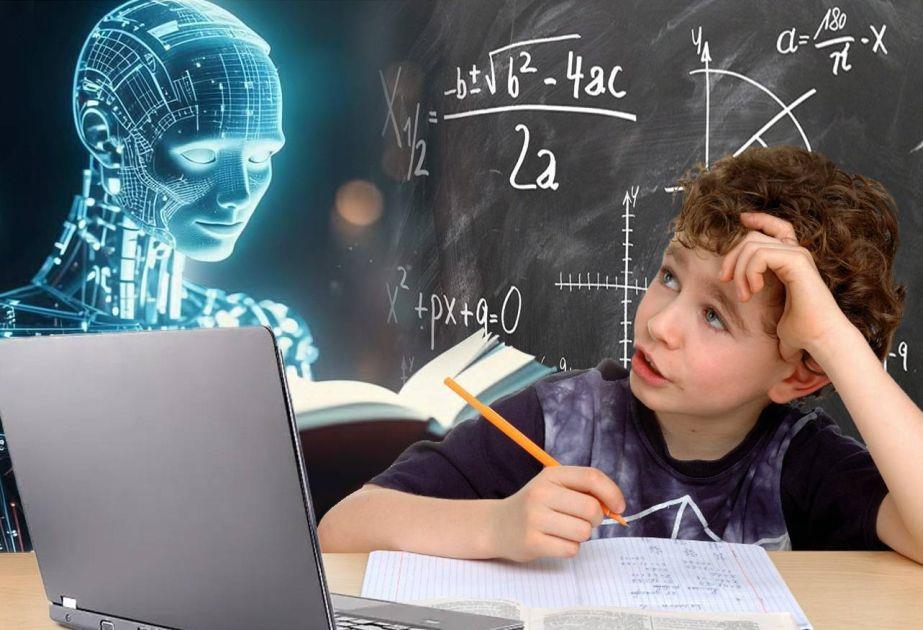
New York Schools Ban Student AI Use


New York City plans to introduce a ban on the use of artificial intelligence by students in public schools through the eighth grade. The new rules are expected to be announced today and will take effect next week.
The measure is part of a major reform of technology use in the largest public school system in the United States, which serves around 900,000 students each year. Under the new policy, younger students will also face restrictions on the use of personal technology in classrooms. Children will not be allowed to use laptops or tablets during lessons until the third grade, when they are usually around nine or ten years old.
The changes are being closely watched by other school districts and states across the US, as many educators are still trying to determine how much technology should be used in classrooms.
Teachers and parents have raised concerns about AI-powered educational software, arguing that excessive reliance on such tools could affect children's mental development and reduce their ability to think independently. Some educators are particularly worried that students may begin using AI to solve problems instead of developing their own reasoning and critical-thinking skills.
Under the new rules, students will be allowed to use AI only in high school, which begins in the ninth grade in the American education system. Even then, its use will be restricted to specific educational purposes, including learning about AI itself.
AI-powered chatbots designed to provide psychological or emotional support will also be prohibited in schools. Teachers, however, will still be allowed to use AI for certain administrative tasks, such as preparing lesson materials or drafting messages. They will not be allowed to use AI to grade or evaluate students' assignments.
The city's Department of Education also recommends limiting screen time during lessons to about 45 minutes for middle school students in grades 6–8 and 30 minutes for elementary school students. However, one major challenge remains: it is difficult to control how students use AI outside the classroom, especially on their personal smartphones and computers.
The new policy is based on an earlier proposal published in March that introduced a“traffic light” system for AI use. Under that approach, different activities were classified as green, yellow, or red depending on whether AI was considered appropriate.
Interestingly, New York City's approach to AI has already changed once. In 2023, the school system banned students from using ChatGPT, but the restriction was lifted less than a year later. The latest rules suggest that officials are now trying to take a more structured approach rather than simply banning technology altogether.
The debate reflects a much bigger question facing schools around the world: should children learn to work without AI first, or should they learn how to use it responsibly from an early age? New York's experiment could provide an important answer as education systems try to adapt to the rapid development of artificial intelligence.

Legal Disclaimer:
MENAFN provides the
information “as is” without warranty of any kind. We do not accept any
responsibility or liability for the accuracy, content, images, videos,
licenses, completeness, legality, or reliability of the information
contained in this article. If you have any complaints or copyright issues
related to this article, kindly contact the provider above.
Comments
No comment