

Warsh Shift Points To An 'Insurance' Fed Hike


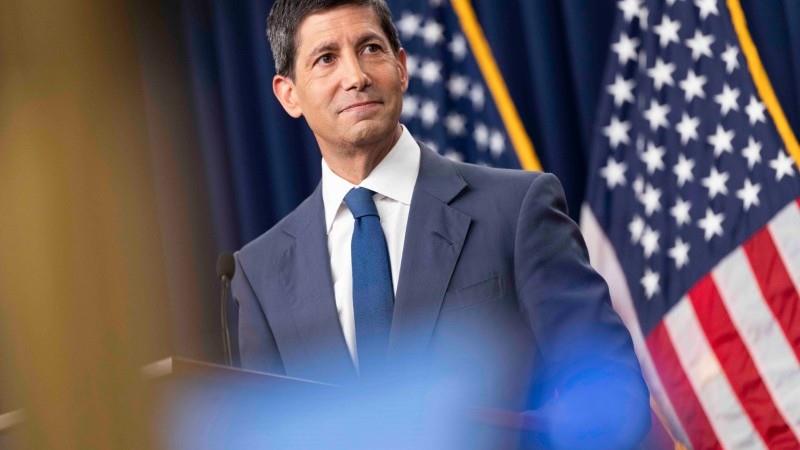
Ahead of the Federal Reserve's Jackson Hole Symposium, we were comfortable with the view that the Fed would be patient and hold rates steady well into 2027. However, Chair Warsh took a notably more hawkish stance in his keynote address. He emphasised a focus on inflation, which has been above target for 65 consecutive months, and a sense that financial conditions aren't tight in an environment of full employment. Given this, we need to change the way we think about the September Fed decision. Previously, it was that the Fed would hold unless the data justifies a hike. Now it is that the Fed will hike, unless the data justifies a pause. The shift is subtle, but significant.
There are two key August data points ahead of that decision; the 4 September jobs report and the 11 September CPI print. Before Jackson Hole, we would have said it requires a non-farm payrolls figure of 75k+, the unemployment rate holding at 4.1% with core CPI coming in at 0.3% month-on-month or above to result in a vote in favour of a rate hike. Now, we suspect it will likely require a jobs figure below 25k, possibly even net job losses, with a core CPI MoM reading below 0.2% MoM, to prevent/delay a hike.
While maintaining a forecast of a stable Fed funds rate through to 2027 could be justified based on our growth, inflation and jobs forecasts, the shift in stance needs to be taken on board. After having sounded hawkish in June and then backtracked in July, what would it mean to Warsh's credibility to have gone hawkish again in August only to turn more dovish in September? His emphasis on trends rather than individual data points also suggests he has made his mind up and, with no-one on the FOMC openly hostile to a rate hike, we have to say that a 25bp increase now looks more likely than a hold. With Treasury Secretary Scott Bessent watching nervously as longer-dated yields climb, he too is likely to be on board. Even President Trump has seemingly given him a pass, saying "he'll do what he has to do".
Although our macro projections suggest the Fed has the room to waitRegarding the macro backdrop, the economy continues to look robust with high-income consumer spending and tech investment the key activity drivers amidst tepid job creation and weak consumer sentiment. Middle- and lower-income households remain under financial pressure, with real household disposable incomes having flatlined for 18 months and the savings ratio remaining close to historical lows at just 3%. Meanwhile, delinquency ratios for credit cards and auto loans are at record levels. Business capex outside tech remains subdued while imports are set to continue to be a drag as foreign-sourced products are utilised in the tech investment boom. Higher government borrowing costs are contributing to higher mortgage rates and corporate borrowing costs and this will act as a headwind to overall activity.
Inflation has been undershooting expectations recently, but as Kevin Warsh pointed out, it remains above target. The lack of progress surrounding oil and gas flows from the Strait of Hormuz means headline disinflation has stalled, but our geopolitical assessment is that the situation will improve, and oil prices will resume their declines later in the year. We also expect ongoing progress in the core metrics despite a re-escalation in trade tensions with Canada and anxiety over“chipflation” tied to semiconductor shortages.
After all, we remain in a less onerous tariff regime than 12 months ago and $166bn of International Emergency Economic Powers Act (IEEPA) tariff refunds continue to be a cash flow boost for corporate America. Computers, peripherals and telephone equipment (including smartphones) have a weighting of less than 0.7pp in the basket for CPI while the use of hedonic (quality adjustment) pricing will mitigate retail price increases. The shelter component, with a 35% weighting in the CPI basket, should continue to moderate given the stagnant property market and cooling private sector rents. Supply-side cost pressures should be further mitigated by subdued wage growth. We expect inflation to return to 2% in the summer of 2027.
Weak wage growth unless labour turnover increases Source: Macrobond, ING"> We expect this to be a one-off "risk management" hikeOrdinarily the assumption is that if the Fed hikes, they don't do just one. However, this time around we think that may be the case as the soft jobs figures and cooling inflation data calm Fed worries. Market and consumer inflation expectations remain in check, so we see parallels with the late 1990s – cuts in early 1996 before a pause, then one 'risk management' hike in March 1997 before a long pause through late 1998.

Legal Disclaimer:
MENAFN provides the
information “as is” without warranty of any kind. We do not accept any
responsibility or liability for the accuracy, content, images, videos,
licenses, completeness, legality, or reliability of the information
contained in this article. If you have any complaints or copyright issues
related to this article, kindly contact the provider above.
Comments
No comment