

403
Sorry!!
Error! We're sorry, but the page you were looking for doesn't exist.
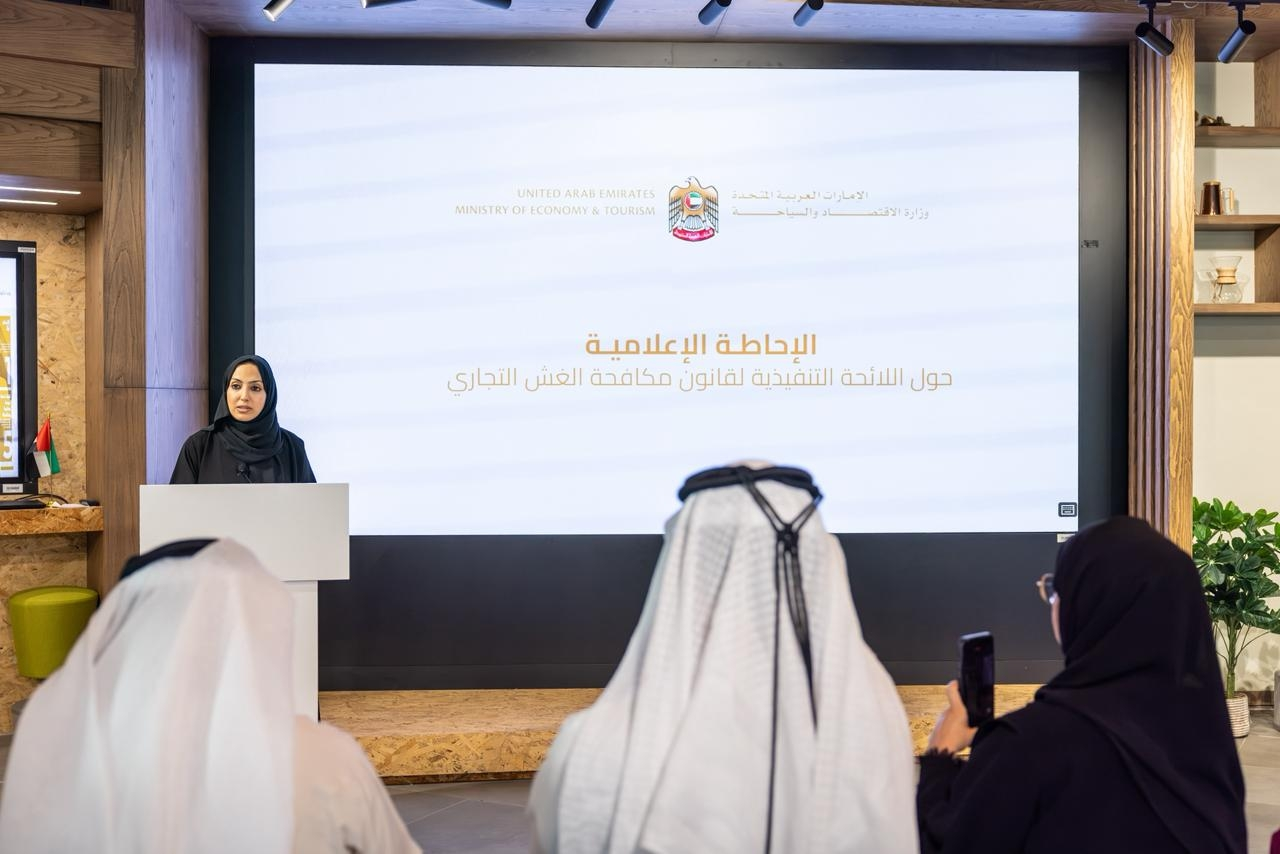
Ministry Of Economy And Tourism Reviews Executive Regulations Of Anti-Commercial Fraud Law And Their Role In Enhancing Market Integrity And Combating Improper Commercial Practices


(MENAFN- Mid-East Info) H.E. Safeya Al Safi highlights the significant strides made by the UAE in developing an advanced legislative system for commercial fraud control
Abu Dhabi, September 2026 – During a media briefing held today at its Dubai headquarters, the Ministry of Economy and Tourism reviewed the key provisions of the Executive Regulations of Federal Law by Decree No. (42) of 2023 concerning Anti-Commercial Fraud, issued pursuant to Cabinet Decision No. (107) of 2026. The briefing also addressed the regulations' role in developing mechanisms for addressing improper commercial practices, enhancing compliance by commercial establishments and companies with applicable legislation, and improving the efficiency of supervisory and enforcement procedures relating to commercial fraud and trade in counterfeit, adulterated, or fake goods. These measures contribute to protecting the rights of consumers and trademark owners, consolidating a business environment founded on transparency and fair competition, and reinforcing the strength and attractiveness of the UAE market. Her Excellency Safeya Al Safi, Assistant Undersecretary for the Commercial Control and Governance Sector at the Ministry of Economy and Tourism, affirmed that the UAE, under the guidance of its wise leadership, has made great strides in developing an advanced legislative and regulatory system to strengthen the commercial fraud control framework, safeguard market integrity, protect consumer rights, and provide an attractive and secure business climate for investors and trademark owners, particularly given that the UAE currently offers more than 2,000 economic activities to its business community to engage in. Combating commercial fraud: A fundamental pillar in embedding efficiency and transparency in the business environment Her Excellency Safeya Al Safi said:“Combating commercial fraud represents a fundamental pillar for consolidating a national economy that is efficient and transparent, and that stimulates investment and innovation. In this regard, the issuance of the Executive Regulations of the Anti-Commercial Fraud Law is a new milestone in developing market control mechanisms in line with best practices, enhancing consumer protection against counterfeit and fake goods, and regulating seizure and inspection procedures. These measures support the compliance of establishments and companies with relevant laws and decisions and strengthen the confidence of the business community and investors in the UAE's business environment, in line with the objectives of the 'We the UAE 2031' vision.” A regulation that keeps pace with rapid market developments and modern trade patterns: Her Excellency Safeya Al Safi stated that the Regulation has been prepared and developed to keep pace with rapid market developments and modern trade patterns. It reinforces the competitiveness of the internal trade system by supporting the country's efforts to combat unlawful commercial practices, including those related to e-commerce, enhancing coordination between competent national authorities and bodies. It further improves law enforcement efficiency, which underpins market integrity and strengthens the UAE's position as a leading global hub for economy and business. The Assistant Undersecretary further explained that the issuance of the Executive Regulations of the Anti-Commercial Fraud Law underscores the UAE's commitment to continuing the development of its legislative structure, as the provisions of this Regulation provide a comprehensive legislative and regulatory framework for addressing commercial fraud relating to goods and commodities. She emphasised that there will be zero tolerance towards any commercial fraud practices or trading of counterfeit and fake goods in the markets, and that the Ministry will implement the provisions of the Regulation efficiently and effectively in coordination and partnership with the competent authorities. Ministry's efforts to combat commercial fraud in the UAE: Her Excellency Safeya Al Safi said:“The Ministry of Economy and Tourism continues its efforts to strengthen cooperation with its partners in the public and private sectors, and to develop legislative and supervisory frameworks to combat commercial fraud and protect markets and consumers from improper commercial practices, thereby safeguarding the rights of consumers and trademark owners. In this regard, the Ministry, in collaboration with local economic and supervisory authorities, conducted 10,023 inspection tours relating to commercial fraud during the first quarter of 2026, which resulted in the detection of 189 violations across the UAE.” Her Excellency added:“Over the past period, the Ministry has worked to enhance compliance with legislation and policies relating to combating commercial fraud in the UAE's markets by combining the legislative, supervisory, and modern technological tools, implementing periodic inspection campaigns, developing intelligent systems to monitor market activity and analyse data to detect potential violations, and continuously tracking the prices of basic commodities to ensure market stability through the price monitoring system.” Expanded joint campaigns to combat counterfeit, adulterated, and non-conforming goods: Her Excellency Safeya Al Safi indicated that the Ministry of Economy and Tourism has been keen to enhance cooperation with supervisory authorities and bodies at both the federal and local levels, particularly economic departments, e-commerce platforms, and sales outlets, to implement expanded joint campaigns to combat counterfeit, adulterated, and non-conforming goods, with regular market monitoring and ensuring that commercial establishments adhere to approved legislation and requirements. Key provisions of the Executive Regulations of the Anti-Commercial Fraud Law: The Executive Regulations of the Anti-Commercial Fraud Law include a set of provisions aimed at strengthening efforts to combat commercial fraud in the UAE and enhancing the efficiency of market oversight, the most notable of which are:
Abu Dhabi, September 2026 – During a media briefing held today at its Dubai headquarters, the Ministry of Economy and Tourism reviewed the key provisions of the Executive Regulations of Federal Law by Decree No. (42) of 2023 concerning Anti-Commercial Fraud, issued pursuant to Cabinet Decision No. (107) of 2026. The briefing also addressed the regulations' role in developing mechanisms for addressing improper commercial practices, enhancing compliance by commercial establishments and companies with applicable legislation, and improving the efficiency of supervisory and enforcement procedures relating to commercial fraud and trade in counterfeit, adulterated, or fake goods. These measures contribute to protecting the rights of consumers and trademark owners, consolidating a business environment founded on transparency and fair competition, and reinforcing the strength and attractiveness of the UAE market. Her Excellency Safeya Al Safi, Assistant Undersecretary for the Commercial Control and Governance Sector at the Ministry of Economy and Tourism, affirmed that the UAE, under the guidance of its wise leadership, has made great strides in developing an advanced legislative and regulatory system to strengthen the commercial fraud control framework, safeguard market integrity, protect consumer rights, and provide an attractive and secure business climate for investors and trademark owners, particularly given that the UAE currently offers more than 2,000 economic activities to its business community to engage in. Combating commercial fraud: A fundamental pillar in embedding efficiency and transparency in the business environment Her Excellency Safeya Al Safi said:“Combating commercial fraud represents a fundamental pillar for consolidating a national economy that is efficient and transparent, and that stimulates investment and innovation. In this regard, the issuance of the Executive Regulations of the Anti-Commercial Fraud Law is a new milestone in developing market control mechanisms in line with best practices, enhancing consumer protection against counterfeit and fake goods, and regulating seizure and inspection procedures. These measures support the compliance of establishments and companies with relevant laws and decisions and strengthen the confidence of the business community and investors in the UAE's business environment, in line with the objectives of the 'We the UAE 2031' vision.” A regulation that keeps pace with rapid market developments and modern trade patterns: Her Excellency Safeya Al Safi stated that the Regulation has been prepared and developed to keep pace with rapid market developments and modern trade patterns. It reinforces the competitiveness of the internal trade system by supporting the country's efforts to combat unlawful commercial practices, including those related to e-commerce, enhancing coordination between competent national authorities and bodies. It further improves law enforcement efficiency, which underpins market integrity and strengthens the UAE's position as a leading global hub for economy and business. The Assistant Undersecretary further explained that the issuance of the Executive Regulations of the Anti-Commercial Fraud Law underscores the UAE's commitment to continuing the development of its legislative structure, as the provisions of this Regulation provide a comprehensive legislative and regulatory framework for addressing commercial fraud relating to goods and commodities. She emphasised that there will be zero tolerance towards any commercial fraud practices or trading of counterfeit and fake goods in the markets, and that the Ministry will implement the provisions of the Regulation efficiently and effectively in coordination and partnership with the competent authorities. Ministry's efforts to combat commercial fraud in the UAE: Her Excellency Safeya Al Safi said:“The Ministry of Economy and Tourism continues its efforts to strengthen cooperation with its partners in the public and private sectors, and to develop legislative and supervisory frameworks to combat commercial fraud and protect markets and consumers from improper commercial practices, thereby safeguarding the rights of consumers and trademark owners. In this regard, the Ministry, in collaboration with local economic and supervisory authorities, conducted 10,023 inspection tours relating to commercial fraud during the first quarter of 2026, which resulted in the detection of 189 violations across the UAE.” Her Excellency added:“Over the past period, the Ministry has worked to enhance compliance with legislation and policies relating to combating commercial fraud in the UAE's markets by combining the legislative, supervisory, and modern technological tools, implementing periodic inspection campaigns, developing intelligent systems to monitor market activity and analyse data to detect potential violations, and continuously tracking the prices of basic commodities to ensure market stability through the price monitoring system.” Expanded joint campaigns to combat counterfeit, adulterated, and non-conforming goods: Her Excellency Safeya Al Safi indicated that the Ministry of Economy and Tourism has been keen to enhance cooperation with supervisory authorities and bodies at both the federal and local levels, particularly economic departments, e-commerce platforms, and sales outlets, to implement expanded joint campaigns to combat counterfeit, adulterated, and non-conforming goods, with regular market monitoring and ensuring that commercial establishments adhere to approved legislation and requirements. Key provisions of the Executive Regulations of the Anti-Commercial Fraud Law: The Executive Regulations of the Anti-Commercial Fraud Law include a set of provisions aimed at strengthening efforts to combat commercial fraud in the UAE and enhancing the efficiency of market oversight, the most notable of which are:
-
Enhancing proactive market oversight by regulating inspection procedures, detecting violations, and dealing with counterfeit goods in accordance with clear and effective procedures.
Regulating procedures for the custody of seized items and their disposal in accordance with prescribed controls, ensuring their preservation and preventing their re-circulation or leakage into the markets, in addition to regulating procedures for their destruction.
Enhancing coordination and data exchange between the Ministry and the competent authorities regarding the measures taken.
Regulating the application of administrative penalties in cases prescribed by law, thereby raising compliance levels and deterring unlawful commercial practices.
Strengthening governance and transparency principles by documenting procedures and ensuring traceability and accountability at all stages of dealing with seized items.

Legal Disclaimer:
MENAFN provides the
information “as is” without warranty of any kind. We do not accept any
responsibility or liability for the accuracy, content, images, videos,
licenses, completeness, legality, or reliability of the information
contained in this article. If you have any complaints or copyright issues
related to this article, kindly contact the provider above.
Comments
No comment