

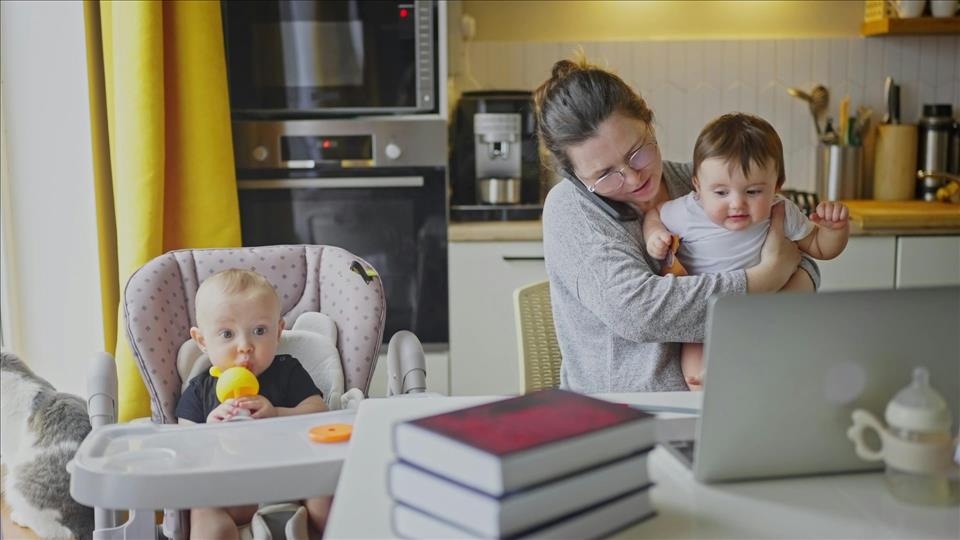
Being A Councillor Is Still A Difficult Career For Women Why This Matters For Democracy


Although there has been progress in recent decades, women still make up only around a third of councillors in the UK. Our research on women's participation in local government suggests that family-friendly working arrangements could be part of the solution.
Being a local councillor typically involves 20-25 hours of work per week. In England, they are not paid a salary, but receive an average annual“allowance” of around £7,000.
Those councillors who are also employed often have to take time off for these duties. This makes it difficult for people on lower incomes and with time constraints (including caring for others) or inflexible jobs to become a councillor.
This matters because councillors are responsible for important decisions that directly affect the everyday lives of everyone in their area – things like social care, housing and transport. If some groups are underrepresented, then policy decisions and the quality of democracy suffer.
We surveyed 534 sitting councillors in England, split into two groups. The first group, serving as a control, read about a hypothetical council with standard working practices.
The second group read about the same hypothetical council – but this time it offered family-friendly policies including reimbursement of childcare costs, dependent-care costs and the option to participate in meetings remotely.
Both groups were asked how likely they would be to stand for election to the council they had just read about. They used a scale of zero (“would definitely not stand”) to ten (“would definitely stand”).
For the women councillors who took part, family-friendly policies increased their willingness to stand again by almost a full point on a zero-to-ten scale. Among men, there was no measurable effect.
In the control group, women reported significantly lower levels of willingness to stand again. But when councillors were presented with a more family-friendly council environment, that gender gap disappeared entirely. As such, family-friendly policies were found to eliminate the gender gap in willingness to re-run for office.
A stranger in your own homeOur findings suggest the issue is broader than just childcare. Caring responsibilities extend across someone's lifetime and can include looking after older relatives, adult dependents, grandchildren or family members with health needs.
Women continue to shoulder a disproportionate share of this work throughout their lives. In the UK, women spend roughly an hour more each day than men on caring and household work.
The councillors we surveyed across both groups described how these pressures affect their experience in office. One councillor told us:“At the moment it's really hard... to be a working parent who is also a councillor. Most councils don't explain how expenses work and the experience I have is that most councillors don't claim, as there is a perception that they get allowances so shouldn't claim expenses.”
This is despite the fact that many local councils specifically include provision for the payment of care expenses, because it helps to bring a wider range of people into office – and supports them in remaining there.
Another councillor reflected on the challenges, saying:“I was pregnant and had two small children when first elected. Everyone was very helpful but it was a huge struggle. My children spent a lot of time in meetings. I had no maternity leave.”
Local councillors have no legal right to maternity pay or parental leave, and many councils do not have a parental leave policy in place for councillors. They are treated as office holders rather than employees.
Many councillors also highlighted remote work as particularly important. As one said:“Allowing remote participation in meetings would make it vastly easier for women, parents, carers, the non-wealthy and non-retired to be councillors.”
One of the authors of our paper, Lou Timlin, became both a town and borough councillor after the research was completed. Having now experienced these challenges firsthand, she said:“Even though my children are older, the schedule of evening meetings and weekend campaigning is relentless, and impacts on everyone in my family. Too often, being a councillor means being a stranger in your own home.”
She added that she was thinking very carefully about standing for re-election because of this.
Making local politics more family-friendlyOur research suggests that making local politics more family-friendly is not only about helping parents of young children. A key aspect is recognising that councillors are also workers, carers, partners and family members.
Practices that assume unlimited time and flexibility – such as requiring in-person attendance, late night meetings, and not offering parental leave – inevitably disadvantage some groups more than others.
The encouraging news is that the kind of reforms that would be most likely to help are practical and relatively inexpensive. They have already been recommended by membership body the Local Government Association.
Remote participation, clearer systems for claiming back childcare and other costs, and a culture that encourages rather than stigmatises claiming these costs are all feasible changes. Our research suggests these measures can really increase women's willingness to remain in politics.
It's vital to consider who is genuinely able to serve in local government. If we want it to reflect the communities it represents, making political office more compatible with family and caring responsibilities is a great place to start.


Legal Disclaimer:
MENAFN provides the
information “as is” without warranty of any kind. We do not accept any
responsibility or liability for the accuracy, content, images, videos,
licenses, completeness, legality, or reliability of the information
contained in this article. If you have any complaints or copyright issues
related to this article, kindly contact the provider above.
Comments
No comment