

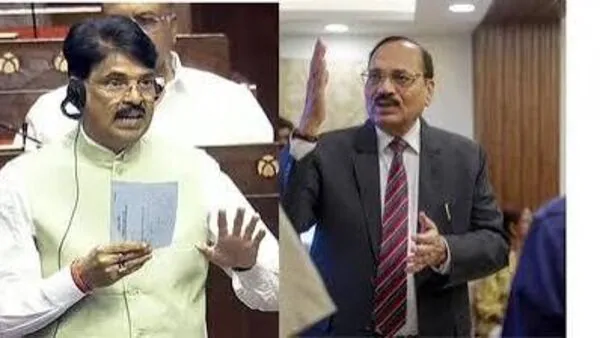
NALSAR Controversy: SC Says BCI Has No Statutory Power To Regulate Law Students' Conduct, Quashes Two Notifications


The apex court struck down two notifications issued by the BCI in connection with the NALSAR controversy, despite the council withdrawing both orders within hours following widespread criticism.
A bench comprising Chief Justice Surya Kant and Justices Joymalya Bagchi and V Mohana issued the ruling while hearing a dispute stemming from the BCI's action against students of Hyderabad's NALSAR University of Law.
"The BCI does not have jurisdiction...after someone passes out...once a law graduate gets registered as an advocate, then BCI is statutory authority to regulate conduct. But not of students," Kant stated.
The controversy arose after the students objected to the proposed participation of Kant in the university's convocation ceremony.
“We are of the opinion that the Advocates Act, 1961, whereunder the BCI has been statutorily created, does not confer any express or implied power upon the BCI or any State Bar Council to take any disciplinary action against the students of law,” it stated.
Also Read | Who is Manan Kumar Mishra? BCI chairman at the centre of NALSAR convocation row"Such a power is preceded by registration of a law graduate as an advocate under the said Act. So far as students are concerned, it is their parent institution or the authority prescribed under the regulations/byelaws of such institution which alone are competent to take disciplinary action," the bench mentioned in its order.
NALSAR row: What did court say on BCI's notifications?While disposing of a pleas filed by NALSAR alumni Mihira Sood and Abhishek Tiwari, the bench held that the BCI's communications issued on August 13, including subsequent modifications, had no legal authority and confirmed its earlier interim directions.
Also Read | 'BCI's interests same as theirs': Manan Mishra to CJP's Dipke, Saurav Das"We declare all communications dated August 13 or subsequent modified communication to be without any authority of law. Interim directions made absolute," the bench observed.
'Everything has already been closed': BCI headThey had contested BCI Chairman Manan Kumar Mishra 's August 13 directives that temporarily prevented NALSAR students from being enrolled as advocates and called for an inquiry into the matter.
Following public criticism, the BCI chairperson withdrew the communications within hours of issuing them.
Also Read | NALSAR students urge university not to invite CJI as convocation chief guestDuring the hearing, senior advocate K Parameshwar, representing the law students, argued that the withdrawal did not eliminate the need to examine how the directions were issued. He maintained that the petition therefore remained relevant.
Parameshwar said the matter concerned the freedom of speech and expression within a university and had implications beyond an individual student, as the action could affect free expression across the institution.
Appearing for the BCI, senior advocate and its chairperson Manan Kumar Mishra said the communications had been withdrawn within an hour of being issued and argued that the matter should now be brought to an end.
"We want to know the circumstances in which these orders came to be passed and whether meetings were held. This is, after all, a statutory authority responsible for legal education and for regulating the legal profession," PTI quoted Parameshwar as saying.
Mishra said,“Everything has already been closed. The (Bar) Council, in its meeting, has said that there is nothing further and that everything has been resolved. The letter was immediately withdrawn."
The row began on August 14 after the BCI instructed state bar councils to withhold the enrolment of NALSAR's 2026 graduates as advocates until further orders. The directive followed allegations surrounding a campaign by students opposing Chief Justice Surya Kant's proposed visit to the university.
When the issue was previously brought before the Supreme Court, CJI Kant strongly objected to the BCI's intervention, questioning its authority to interfere in what he described as a matter of dialogue between students and himself.

Legal Disclaimer:
MENAFN provides the
information “as is” without warranty of any kind. We do not accept any
responsibility or liability for the accuracy, content, images, videos,
licenses, completeness, legality, or reliability of the information
contained in this article. If you have any complaints or copyright issues
related to this article, kindly contact the provider above.
Comments
No comment