

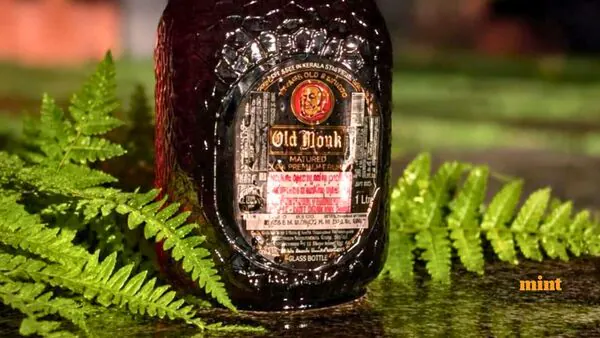
Old Monk Can't Be Sold As Rum, FSSAI Tells Bombay High Court, As Company Submits Revised Labels


FSSAI's counsel told the court that the regulator's main objection was not about the labelling but about the nature of the product itself.“What is not permitted is to sell this product as rum,” the counsel said, adding that the product could instead be described as a“rum-flavoured spirit”.
Old Monk submitted revised labels to the court, and FSSAI requested additional time to review and consider them for approval. The matter will be heard next on 11 September.
Label modificationsDuring a prior hearing on Monday, the company informed the court it was prepared to modify its product labels to remove the phrase '7 years old blended'.
A division bench comprising acting Chief Justice Ravindra V. Ghuge and Justice Gautam A. Ankhad directed the company to present a revised label by Thursday. The court also instructed the food regulator to outline the specific details and requirements needed on the packaging to ensure the product is clearly distinguished. Additionally, the bench asked the state excise department to review the modified label and expedite the approval process on an urgent basis.
Also Read | Why food labelling is under the FSSAI scannerThe bench observed that consumers could be misled into believing the rum was aged for seven years. The court further questioned the alcoholic beverage manufacturer over certain text on the label, noting that it was "so small that nobody can read [it]."
Senior counsel Navroz H. Seervai, representing the company, said it has suffered a loss of ₹1 crore per day for the 120 days that the ban has been in force.
United Spirits, which faced a similar ban, withdrew its case on 24 August. Its parent company, Diageo, along with other liquor manufacturers, agreed to comply with FSSAI directives by either removing disputed flavoring agents or modifying product labels, Mint reported on 18 August. People aware of the matter said the label changes will be made without altering the beverage's original formulation.
FSSAI's objectionThe dispute stems from laboratory tests conducted by the FSSAI, which found external artificial or nature-identical flavouring substances in the products. According to the regulator, these additives masked the beverages' natural characteristics.
Also Read | FSSAI plans centralized food surveillance system, reducing state officers' roleBased on these findings, the FSSAI prohibited the sale of specific variants of McDowell's No. 1 Rum, Antiquity Blue Whisky, and Royal Challenge Whisky manufactured by United Spirits; select Old Monk rum variants produced by Mohan Rocky Springwater; and Bagpiper Deluxe Whisky and Old Cask Deluxe XXX Rum made by Inbrew Beverages.
Citing the Food Safety and Standards (Alcoholic Beverages) Regulations, 2018, which mandate that standardized alcoholic beverages like rum and whisky retain their characteristic taste and aroma, the regulator argued that adding "rum flavour" to rum or "whisky flavour" to whisky misrepresents these standardized products.
Also Read | Quick commerce, alcohol moderation fuel India's zero-proof drinks market
Legal Disclaimer:
MENAFN provides the
information “as is” without warranty of any kind. We do not accept any
responsibility or liability for the accuracy, content, images, videos,
licenses, completeness, legality, or reliability of the information
contained in this article. If you have any complaints or copyright issues
related to this article, kindly contact the provider above.
Comments
No comment