

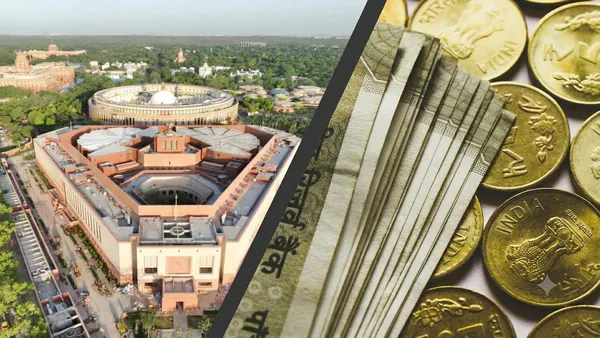
Parliament Cost To Taxpayers: Govt Refuses To Reveal Details In RTI Reply. Here's What It Said Mint Special


An RTI filed by Mint on August 13 with the Ministry of Parliamentary Affairs asked: "What was the total money lost/wasted due to disruption/loss of sitting time in each of the last 10 Rajya Sabha sessions?"
Also Read | CJP to BJP: 'Why not hold special Parliament session to fix govt schools?'The Rajya Sabha Secretariat replied on September 2, saying, "The information sought does not constitute 'information' under Section 2(f) of the RTI Act, 2005."
A response from the Lok Sabha Secretariat is awaited.
What is considered 'information' under RTI Act?Section 2(f) of the Right to Information Act, 2005 defines "information" as“any material in any form, including records, documents, memos, e-mails, opinions, advices, press releases, circulars, orders, logbooks, contracts, reports, papers, samples, models, data material held in any electronic form and information relating to any private body which can be accessed by a public authority under any other law for the time being in force.”
Why does money matter?The RTI reply came days after Lok Sabha witnessed sloganeering, uproar and repeated disruption during the Monsoon Session 2026 of Parliament held from July 20, 2026 to August 13, 2026
The session saw the Opposition seeking the government's response to the alleged police atrocities against NEET protesters at Jantar Mantar, Delhi, during the July 20 violence. Several Bills were passed without any members participating in the discussion. Disruptions also affected Question Hour.
Also Read | 'US regulates foreign funding too': India on Republican lawmaker's remarksOverall, the Lok Sabha recorded a productivity of 19 per cent, while the Rajya Sabha recorded 39 per cent productivity during the Monsoon Session 2026, Union Minister for Parliamentary Affairs Kiren Rijiju had said. Blaming the Opposition for avoiding debates in the House, Rijiju said that 11 of the 12 bills were passed without discussion.
According to the data available on the Lok Sabha website, a total of "79 Hour 34 Minutes" of the time was lost due to interruptions/forced adjournments. The total number of sitting hours - recorded at 17 Hours 32 Minutes - was the lowest among all eight sessions of the 18th Lok Sabha.
Does parliament cost taxpayers ₹2.5 lakh every minute?Amid the chaos, many raised questions over the money lost due to these repeated disruptions and loss of sitting time in Parliament. "By old conservative estimate, Parliament costs taxpayers ₹2.5 lakh every minute," Supreme Court advocate
Mahesh Jethmalani had said. But he is not the only one to cite this number.
In 2024, Rajya Sabha MP Vikramjit Sahney had said that crores of rupees is spent on the functioning of Parliament. He also claimed,“Each minute of Parliament costs ₹2.5 lakh of taxpayer money.”
Where does this ' ₹2.5 lakh every minute' figure come from?There's no official source of this figure, which has been widely cited by many over the years.
The first known mention of data pertaining to the money that goes into the functioning of a Parliament Session, according to think tank PRS, was in a 2008 discussion paper of the Lok Sabha, which estimated that each minute of Parliament costs ₹29,000 to the public exchequer.
Four years later, the then Parliamentary Affairs Minister Pawan Bansal reportedly said that the cost of parliamentary disruption is ₹2.5 lakh per minute, according to PRS. The report, however, clarified that "there is no information about the calculation behind these numbers, but assigning a rupee value to the working of Parliament is inherently problematic."

Legal Disclaimer:
MENAFN provides the
information “as is” without warranty of any kind. We do not accept any
responsibility or liability for the accuracy, content, images, videos,
licenses, completeness, legality, or reliability of the information
contained in this article. If you have any complaints or copyright issues
related to this article, kindly contact the provider above.
Comments
No comment