

China's Pressure Campaign Against Japan Is Backfiring Badly


A delegation of Japanese lawmakers representing the ruling Liberal Democratic Party and the opposition parties Komeito and Centrist Reform Alliance met with Lu Kang, deputy head of the Chinese Communist Party's (CCP) International Department.
Lu rebuffed their appeal for reconciliation, demanding that Tokyo first“honestly and earnestly handle the Taiwan issue in accordance with the one-China principle.”
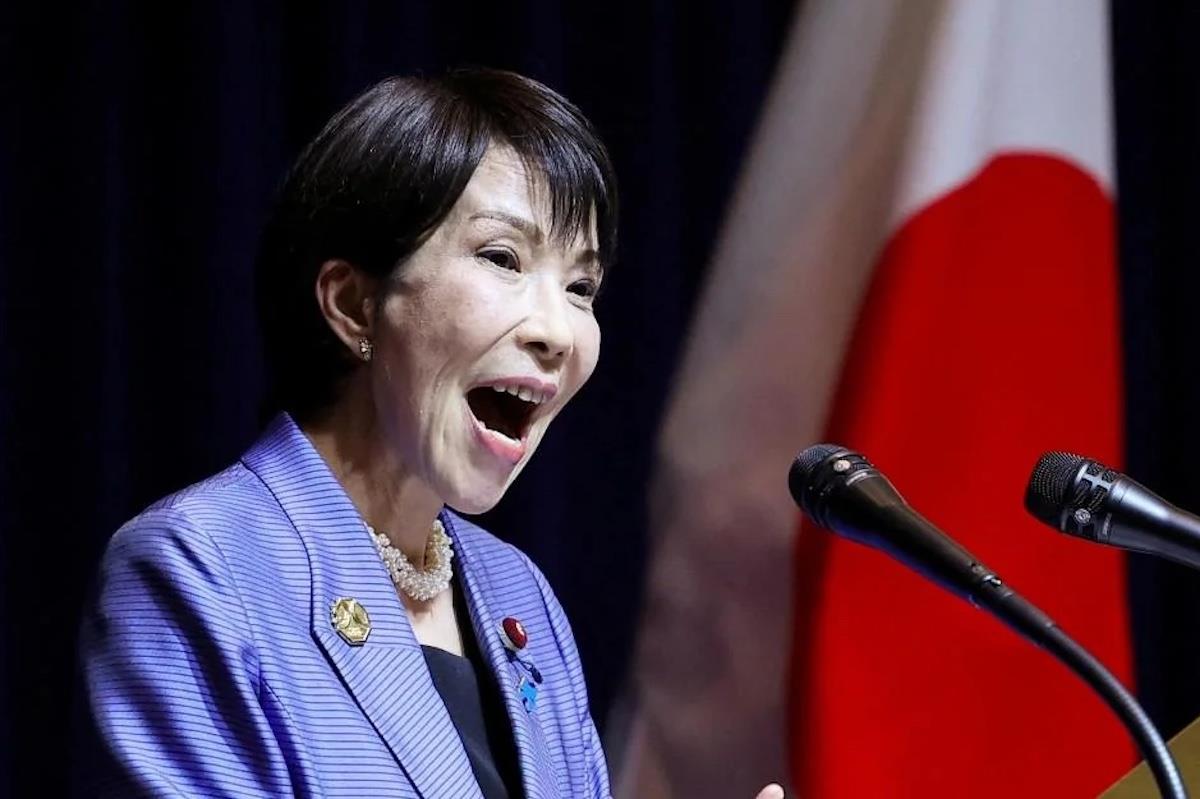
What Lu meant is that China intends to maintain its package of punishments against Japan until Prime Minister Sanae Takaichi fulfills the Chinese demand that she withdraw her remarks about Taiwan made in November 2025.
After 10 months of a policy that is largely ineffective and in important ways counterproductive, Beijing is hunkering down. While some bilateral crises have passed after a decent interval, China-Japan relations today appear trapped in a persistent negative spiral, with each side refusing to accommodate what it sees as unreasonable and aggressive action by the other side.
This all started when, under pointed questioning from a Diet member, Takaichi said a Chinese military attack against Taiwan might“constitute a survival-threatening situation” for Japan, and therefore could lead to intervention by Japanese forces.
This assessment by Tokyo was already well-known to the Chinese and everyone else. Japanese prime ministers before Takaichi, however, had avoided publicly specifying a Taiwan scenario as a possible cause of Japan going to war.
Beijing seized on the opportunity to overreact with a collection of responses that included a Japan-based Chinese diplomat threatening to cut off Takaichi's“filthy head”; cancellation by the PRC of cultural exchanges with Japan and restrictions on Chinese tourism to Japan; reduced Chinese imports of Japanese seafood; and a Chinese ban on the supply of dual-use exports to Japan, including rare earth elements.
China also stepped up its military activity near Japan - patrols by PRC ships and aircraft, including within Japan's EEZ; Chinese research ships conducting an underwater survey off the coast of Okinawa; and in July, a Chinese live-fire exercise inside what Japan claims is a Japanese EEZ in the vicinity of Okinotori Island.
Beijing played on Japan's fears by exercising jointly with Russia, such as when Chinese and Russian bombers flew together over the Sea of Japan in June 2026. Japan's perception of Russia as a potential security threat has greatly increased since Vladimir Putin invaded Ukraine in February 2022.
Diplomacy has mostly dried up, with few meetings between high-level officials. That made Lu's cold reception of the visiting Japanese lawmakers an authoritative statement of the state of play.
The effect of the Chinese punishment on Japan has been minor. Most importantly, Takaichi has refused to retract her remarks about Taiwan, and there is little to no chance she will do so. It would run counter to her own ideology, destroy her political career and tarnish her legacy.
Latest stories Bond markets are repricing Fed independence, not just inflation Two bond bombs, one fuse: US, Japan hurtling toward a reckoning Vietnam's Doi Moi turns 40 as To Lam riskily renovates the compactNevertheless, China maintains its pressure on Japan despite Beijing not getting its desired outcome. There are several possible reasons why.
The Taiwan issue is unparalleled in importance in Chinese domestic politics. Given the history of Japan occupying Taiwan for 50 years after defeating China in the Sino-Japan War of 1894-95, and of Japanese attempts to make the Taiwanese think of themselves as Japanese subjects rather than Chinese, the idea of Japan now trying to obstruct the PRC's annexation of Taiwan outrages Chinese nationals whose worldview is based on CCP historiography.
For the more nationalistic segment of PRC public opinion, pressuring Japan until it disavows Takaichi's words is an appropriate stance, and anything less would subject the PRC leadership to criticism for insufficient patriotism.
Meanwhile, Beijing has a reasonable hope that Takaichi will not enjoy a long tenure as prime minister. Her mandate is far from overwhelming, and achieving the agenda she has laid out - addressing affordability issues by allowing higher budget deficits to stimulate growth, while at the same time strengthening Japan's military capabilities - will be challenging, to say the least.
Takaichi losing popularity and giving way early to a new prime minister would allow Beijing to claim victory and start fresh (including dropping the sanctions) with Takaichi's successor. Even if Takaichi refuses to accommodate Beijing, the Chinese pressure on Japan serves as a warning to other countries that might express support for Taiwan, such as South Korea, the Philippines, Australia or NATO member states.
Beijing can tolerate the downturn in relations with Japan. Some Chinese companies are losing business, and Chinese tourists who want to visit Japan are making other plans. But crowds of PRC citizens will not riot in the streets over their government sticking it to Japan on the Taiwan issue.
A final possible reason Beijing has stayed with a seemingly ineffective policy is the lack of US backing for Japan. Washington initially declined to make a public statement of support for Japan against China's economic coercion campaign.
During the week in which a house editorial in China's government-controlled People's Daily called on Washington to“firmly oppose.... Japan's dangerous strategic trajectory,” US President Donald Trump reportedly told Takaichi to avoid further antagonizing China.
Washington's interest in making a bilateral economic deal with China in 2026 incentivizes the US to minimize possible obstacles. For example, when US Treasury Secretary Scott Bessant announced in August a US policy of levying secondary sanctions against the banks of Iran's trading partners, he immediately indicated that China, which buys up to 90% of Iran's exported oil, would be spared. Relatively good relations with the US have given China an opening to press Japan harder.
Beijing's decision to plunge the relationship into permanent crisis has consequences that are mostly bad for China. Chinese pressure on Japan - especially military pressure in the form of greater numbers of PLA vessels and aircraft operating close to Japanese territory - increases the risk of an incident that could escalate into an unintended conflict.
In December, two Chinese fighter aircraft locked their fire-control radar onto Japanese aircraft that were monitoring the PRC aircraft carrier Liaoning. In June, the Chinese government accused Japanese aircraft surveilling the Liaoning of simulating attack runs.
China already accepted a permanently elevated level of risk in 2012 when it began frequent patrols near the disputed Senkaku Islands, which continue up to this day. Now the dial is turned up even higher.
Beijing exhibits a dangerous expectation that military units of other countries will back down when confronted with aggressive Chinese behavior. The Chinese have a well-documented history of using dangerous maneuvers and other actions to intimidate foreign aircraft and ships into vacating areas - including international waters and airspace - where China decides they are not welcome.
Yet China apparently aims to normalize military activity in areas near Japanese territory. As a Chinese Defense Ministry spokesman said in 2017, Japan should“get used to it.”
The increased tensions with China are pushing Japan toward deeper defense cooperation with other countries in the region. Since Takaichi's remarks, Japan has expanded its participation in military exercises with the Philippines, Australia, India and Indonesia; loosened the restrictions on exporting Japanese-made weaponry; discussed co-production of weapons systems with Australia, India and the US; reached a Framework for Strategic Defense Coordination with Australia; and finalized the sale of Japanese-built frigates to Australia.
These are further steps toward a regional anti-China military coalition, a nightmare for the PRC. Meanwhile, Tokyo's desire to cooperate with Taiwan has, if anything, increased, even if the Japanese are now more careful to keep it quiet.
Tokyo is now thinking more seriously about optimizing Japan's armed forces for a potential armed conflict against China. Japan's 2026 white paper,“Defense of Japan”, noted dramatically that Japan is“entering a new period of crisis” and“facing its greatest trial since World War II.”
Sign up for one of our free newsletters-
The Daily Report
Start your day right with Asia Times' top stories
AT Weekly Report
A weekly roundup of Asia Times' most-read stories
The Japanese Defense Ministry announced on August 31 that it would“drastically strengthen its deterrence and response capability” by mass-producing drones, developing submarine-launched hypersonic missiles, and implementing an AI-powered combat management system.
China's punishment has spurred more determined Japanese efforts to reduce Japan's dependence on China for critically important supplies, including reaching agreements with other countries to establish supply chains that bypass China and building domestic capacity to extract and refine rare earth elements.
To a large extent, China's exploitation of its economic leverage is a one-shot weapon. In this case, Beijing seems to have squandered its temporary leverage.
The new crisis with China has forced Japanese society to confront and think through the possibility of Japan entering a war to defend Taiwan and to question whether it is acceptable for Beijing to have a veto over Japanese security policy. Consequently, ordinary Japanese are more psychologically prepared for war.
China is linking the issue of Japan's possible involvement in a Taiwan scenario with the broader accusation of revived Japanese militarism. This narrative already lacks credibility with most countries. Certainly, it falls flat with Americans, who have wanted a militarily stronger Japan for decades.
In Southeast Asia, victimized last century when Japan actually was a militarist aggressor, Japan is now the most trusted outside major power, ahead of the US, the European Union, and, of course, China. Beijing's attempt to paint Japan as the aggressor in a Taiwan scenario doesn't resonate either within or outside the region.
Forcing the Takaichi government to apologize would be a big win for Beijing, possibly deterring future Japanese governments from expressing support for Taiwan. Unfortunately for Beijing, however, there is no realistic hope of this happening.
In the meantime, Beijing's punishment policy stokes bilateral resentment and heightens tensions in the region between the authoritarian and democratic blocs.
Denny Roy is a senior fellow, East-West Center, Honolulu.
Sign up here to comment on Asia Times stories OrThank you for registering!
-
Share on X (Opens in new window)
Share on LinkedIn (Opens in new window)
LinkedI
Share on Facebook (Opens in new window)
Faceboo
Share on WhatsApp (Opens in new window)
WhatsAp
Share on Reddit (Opens in new window)
Reddi
Email a link to a friend (Opens in new window)
Emai
Print (Opens in new window)
Prin

Legal Disclaimer:
MENAFN provides the
information “as is” without warranty of any kind. We do not accept any
responsibility or liability for the accuracy, content, images, videos,
licenses, completeness, legality, or reliability of the information
contained in this article. If you have any complaints or copyright issues
related to this article, kindly contact the provider above.
Comments
No comment