

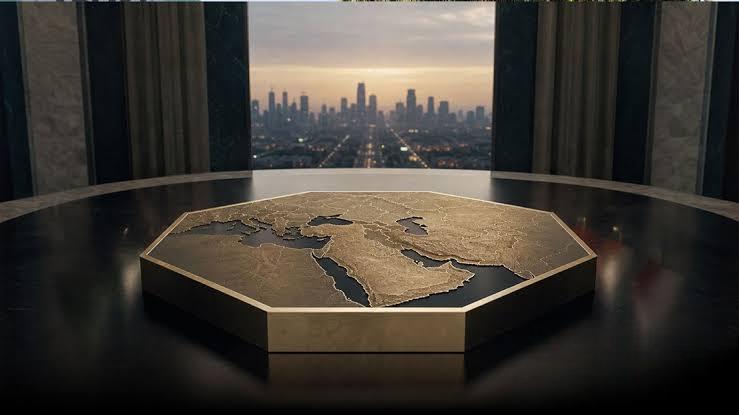
Can Mecca Defense Alliance Reshape Security From Middle East To Caucasus?


The newly established defense partnership between Türkiye, Saudi Arabia and Pakistan is already showing signs of evolving beyond its original three-member format, raising questions over what kind of security architecture could emerge across the Muslim world, and whether Azerbaijan could eventually become part of it.
Pakistan has said that six or seven Muslim-majority countries have expressed interest in joining the Mecca Defense Agreement, signed by Pakistan, Saudi Arabia and Türkiye on August 7. Turkish Foreign Minister Hakan Fidan has similarly indicated that the pact, officially referred to as the Mecca Defense Alliance, is open to expansion.
Speaking after the first meeting of the Strategic Political and Defense Committee under the agreement in Istanbul, Fidan said Türkiye was working on a roadmap for additional members. He also stressed that the alliance "does not nullify or replace our country's obligations arising from NATO, as well as from other alliances and agreements," while arguing that the mechanism could bring "greater stability and reduce uncertainty" to the region.
Bangladesh has publicly expressed interest, while Türkiye has also suggested that Egypt could potentially become part of the emerging structure.
The alliance's potential expansion raises a particularly important question for Azerbaijan. Baku already maintains close defense ties with all three founding members, while its domestic defense industry has developed rapidly in recent years, particularly in unmanned systems, ammunition, electronic warfare and military modernization.
Could that make Azerbaijan more than simply another potential member, and instead a contributor to the alliance's emerging defense-industrial architecture?
Speaking to AzerNEWS, former military attaché and retired General Yücel Karauz believes Azerbaijan is among the strongest candidates for closer integration, although he sees full membership as a longer-term possibility.
Asked how likely Azerbaijan is to join the Mecca Defense Alliance, Karauz said:
"I consider Azerbaijan to be one of the strongest candidates among potential members. However, in the short term, a close partnership, defense industry cooperation, or a phased integration model before full membership seems more realistic. Azerbaijan's developing defense relations with both Türkiye, Pakistan, and Saudi Arabia create a favorable environment for this. In particular, Turkish-Azerbaijani defense industry cooperation is already expanding to UAVs, electronic warfare, artificial intelligence, communications, and other high-tech areas. If Azerbaijan joins this alliance, its role should not be limited to being only an arms buyer. Baku could become one of the production and technology centers of the new defense industry supply chain. Such a model could be formed: Türkiye's engineering and systems integration + Saudi Arabia's financial and investment capabilities + Pakistan's military production and aviation experience + Azerbaijan's UAVs, ammunition, electronic systems, modernization, and Caucasus-Central Asia connectivity. This could create new markets, joint production opportunities, and technology transfer for Azerbaijan's rapidly developing domestic defense industry."
Yet Karauz cautioned that Baku's decision would not be determined by industrial considerations alone.
"However, the key issue in Baku's decision will not only be the defense industry, but also geopolitical balance. Azerbaijan, while maintaining its strategic alliance with Türkiye, must also take into account its room for maneuver in its relations with Russia, Iran, Israel, and the countries of Central Asia. Therefore, in my assessment, the likelihood of Azerbaijan's integration into the defense industry and military cooperation mechanisms of the alliance is high, and full collective defense membership in the short term is moderate."
Can the alliance expand without losing cohesion?
Karauz argues that the answer is not necessarily to impose identical responsibilities on every member.
"One of the greatest challenges for the Mecca Alliance will be expansion. The accession of Bangladesh, Egypt and other Muslim countries will increase the political and strategic weight of the alliance. However, as the number of members increases, differences in military standards, threat perceptions and national interests will also increase. Therefore, the most correct model is not to give all members the same military function, but to create a phased military integration within the framework of a single collective defense. The Türkiye-Saudi Arabia-Pakistan triad should remain the main core of the alliance. This triad can play a leading role in: command and control, intelligence exchange, air and missile defense, joint military exercises, logistics and the formation of defense industry standards. New members should be gradually included in the system based on their levels of military readiness and technical compatibility. The most important issue is to determine in advance and precisely under what conditions the collective defense mechanism will be activated. The permanent secretariat planned for Riyadh could play a major role in determining whether the alliance remains primarily political or develops into a functional military structure."
Karauz also believes its institutional role should extend beyond diplomacy.
"The permanent secretariat to be established in Riyadh is of great importance in this regard. If this structure functions not only as a diplomatic coordination body, but also as a political, military and defense industry coordination center, the enlargement could strengthen the alliance rather than weaken it. This could be particularly important as prospective members bring different capabilities and strategic priorities to the table. A larger alliance would have greater political weight, but without common standards and mechanisms for coordination, expansion could equally make collective decision-making more difficult.
Is this an alternative to NATO?
Karauz believes such a characterization would be premature.
"An important distinction needs to be made here. It is more correct to evaluate the Mecca Pact not as a project of separation from the West, but as a project of strategic autonomy and sharing of responsibility for regional security. Türkiye is a NATO member, and Ankara clearly states that the Mecca Agreement does not change the obligations arising from NATO and other international agreements. Therefore, from Türkiye's perspective, the issue is not a choice of 'NATO or Mecca Alliance?' The goal is to continue relations with NATO, but also to create an additional regional security mechanism on the Middle East-South Asia line. Saudi Arabia's military infrastructure is still largely dependent on US and Western-made systems. Pakistan, on the other hand, is implementing a more diversified model that combines China, Türkiye, the West and its own national defense industry. Therefore, the creation of an independent military system that would completely replace the US security system in the short term does not seem realistic. However, in a 10-15 year perspective, a major change may occur in the defense industry. If the member states begin to jointly produce UAVs, missiles, air defense systems, electronic warfare means, ammunition, and artificial intelligence-based military technologies, the dependence on the West for weapons and technology will gradually decrease."
He concluded, saying it would be inaccurate to label the Mecca Defense Alliance as an“Islamic NATO” or an“anti-US military bloc” at this time:
"A more accurate characterization is that it represents a multilayered regional security architecture, combining Türkiye's military and technological strength, Pakistan's military experience and nuclear deterrence, and Saudi Arabia's financial resources. This alliance could potentially expand to include countries like Azerbaijan, Egypt, Bangladesh, and others in the future. Incorporating Azerbaijan into this framework would be a strategic move, broadening the alliance's reach from the Middle East and South Asia to the Caucasus and Central Asia. If the Mecca Alliance succeeds, its primary outcome will not be the removal of the US and the West from the region. Instead, it will enhance the defense capabilities of regional states, increase their strategic autonomy, and improve their ability to negotiate and maneuver with major powers."
However, not all experts are convinced that the Mecca Defense Alliance has reached a stage where its potential expansion or Azerbaijan's participation can be assessed with confidence.
Military expert Ramil Mammadli told AzerNEWS that the alliance remains at an early stage and that its members still lack a sufficiently unified strategic agenda:
“First of all, I would like to note that since the Mecca Defense Alliance is still a nascent and incomplete format, it is too early to voice optimistic assessments about this alliance. Each of these countries has its own interests in regional issues and needs a common threat in order to act from a single interest. At the moment, there is no such situation, and in this regard, I do not think that Azerbaijani arms manufacturers or the defense industry complex will integrate into the Mecca Defense Alliance as a single structure. Of course, Azerbaijan's defense industry already cooperates with Türkiye and Pakistan, while certain negotiations are underway with Saudi Arabia. If the alliance develops into a genuine unified structure in the future, Azerbaijan, as a defense-industry country, could cooperate with it in specific sectors. But for now, it is too early to determine in what form Azerbaijan will participate in this process.”
Mammadli also believes that the eventual structure of the alliance will depend heavily on which countries decide to join:
“The format of the alliance's defense obligations will largely depend on the participation of other Muslim countries. How the Gulf states react, whether they join the alliance, and even what position Iran eventually takes could fundamentally change the process. Türkiye, Saudi Arabia, and Pakistan currently have different capabilities and interests, while Türkiye has also made clear that it does not intend to withdraw from NATO. Therefore, the future form of this alliance remains uncertain. Mutual defense obligations will become clearer only after we see which other Muslim countries join the process. What form this process will take in the future is among the possibilities. I note once again that mutual defense obligations are only and only related to the participation of other Muslim countries in the process. Of course, we will witness this after a certain period of time."
Another interesting element of his assessment concerns the reaction or lack thereof, from major global powers:
"The possibilities indicate that so far the US is not an obstacle to this process, which means that it also has certain interests. That is, it will support defense issues and other issues. Also, other major states that are members of NATO do not see any problems in this process. It is interesting that Russia and Iran are not taking any steps to hinder this process. They are simply following these developments in order to obtain information. I believe that this process is aimed at neutralizing Israel at some stage. These are, of course, my personal observations. The opinions expressed by Hakan Fidan at the last meeting of the Foreign Ministers and the harsh statements made towards Israel give reason to say this. Let us take into account that both Saudi Arabia, Pakistan and Türkiye have very bad relations with Israel and do not accept Israel as a world state at all. In other words, they do not accept it as a normal, civilized world state and have very tense relations. From this point of view, if other Arab countries are to join this alliance, they must participate in the anti-Israel campaign or the anti-Netanyahu campaign. This is one of the main reasons."
Mammadli further argued that the emergence of a stronger collective defense mechanism among Muslim-majority countries could challenge existing geopolitical structures:
"Of course, fundamentally, the West does not want Islamic countries, especially those with strong foundations and resources located in close proximity, to unite, develop, and be in a single, unified defense format. But it is not in a position to prevent it at this time. Because the West itself is currently in a state of severe confrontation with Russia. I believe that this alliance, this unity in a military format of the Eastern countries, that is, the Islamic, Muslim Eastern countries, is the need of the hour. And the West can take advantage of America's being in a state of severe confrontation with Russia and, taking as a basis the ideas voiced by Israel against Muslim countries, against the Muslim region, against Muslim countries, to represent themselves on a single platform, a military defense platform. In other words, I believe that the West does not intend to take steps to confront this Mecca Defense Alliance on the basis of the current situation. Because if this pressure, such steps are taken, then those countries, Saudi Arabia, Pakistan, and even Türkiye, may break away from the West, and as a result, those countries may deepen their relations with Russia and China. This may lead to the formation of the next anti-American, anti-Western coalition in the region after Iran."

Legal Disclaimer:
MENAFN provides the
information “as is” without warranty of any kind. We do not accept any
responsibility or liability for the accuracy, content, images, videos,
licenses, completeness, legality, or reliability of the information
contained in this article. If you have any complaints or copyright issues
related to this article, kindly contact the provider above.
Comments
No comment