

Nepal's Fragile Himalayas: Flash Floods Highlight Growing Dangers


The latest incident of flash floods in Nepal has drawn the attention of the world towards the geologically fragile Himalayan region, which has been warming rapidly, experiencing glacier retreat, snowmelt and degradation of permafrost, which can remove the cement covering on the mountain slopes.
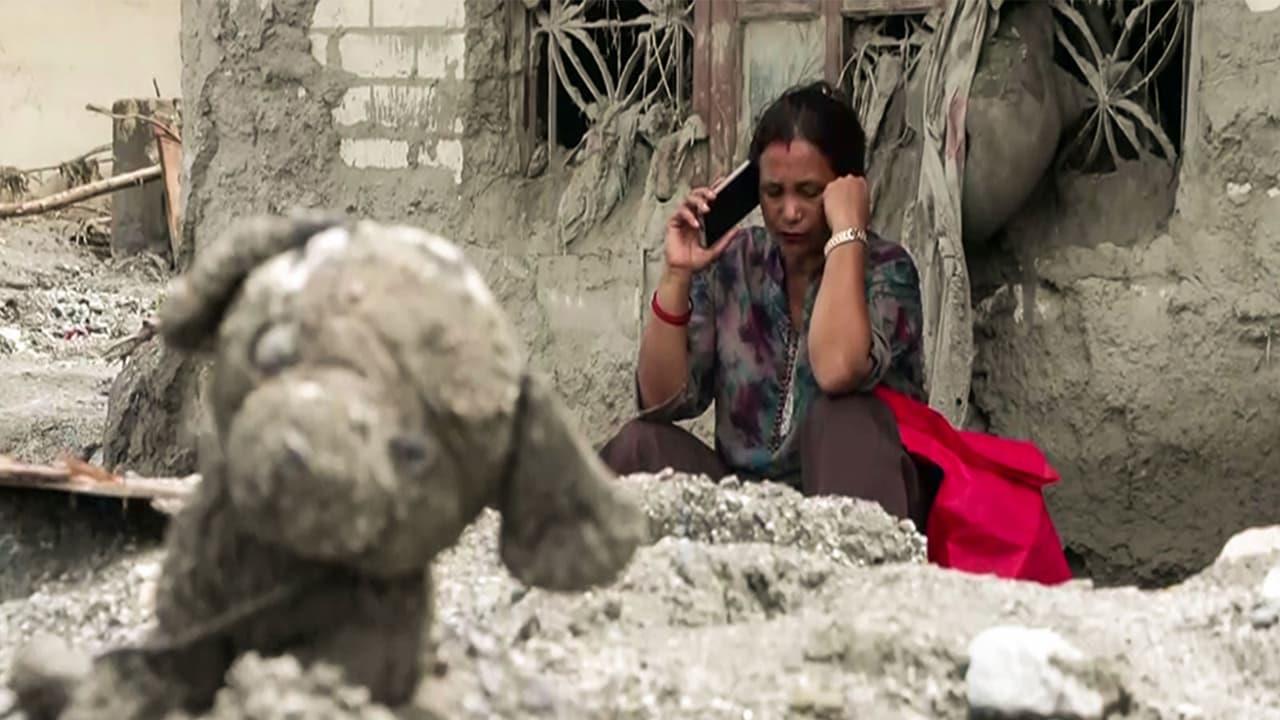
In the 26 August 2026 incident, the evidence available so far points to a glacier/rock collapse and massive debris avalanche, rather than an ordinary monsoon flood. The glacier/rock mass destabilisation led to an ice-rock avalanche which in turn caused a temporary blockage/surge in the Bhote Koshi river. With the enormous debris flowing along the Bhote Koshi/Trishuli river, there was large-scale destruction in the lower reaches. The avalanche, which occurred in the high Himalaya near the Nepal-Tibet frontier, travelled downwards at the rate of 50 metres per second.
Nepal's Overlapping Vulnerabilities
Nepal is today sitting on a“geological precipice”. The Himalayas are among the youngest and most tectonically active major mountain systems on Earth. Nepal sits directly on the collision zone between the Indian and Eurasian plates which produces four overlapping vulnerabilities - Active tectonics, very steep topography, monsoon rainfall and rapidly changing glaciers.
Active tectonics is a constant feature based on the push northward by the Indian plate beneath Eurasia, thus producing earthquakes, fractured rocks, fault zones, extremely steep slopes and frequent landslides and rockfalls. The 2015 earthquake in Nepal demonstrated the interaction dramatically. Research following the 2015 earthquake found that earthquake-triggered landslides were the principal mechanism damaging hydropower infrastructure, and estimated that about 25% of existing, constructed and planned Himalayan hydropower projects had high probabilities of moderate-to-severe earthquake damage.
Chinese Construction and Geological Damage
This brings into question the viability of various projects, including hydro projects being undertaken in the region with the help of Chinese companies. The Rasuwa border region is marked by the presence of large number of Chinese construction companies which are involved in numerous projects turning the green belt into a maze of white rock and cement feature, without any consideration for the surrounding flora and fauna and the geological damage these can cause.
Moreover, the extremely steep topography in the region has led to enormous elevation differences over very short horizontal distances. A river can descend thousands of metres through a narrow valley, and once a large volume of water, ice and rock enters such a valley, it becomes an extremely efficient natural chute. There are several river pathways in the region, that pass through very high mountain walls that are virtually hugging each other. Any glacial outburst in the region can thus lead to a massive rush of mud, ice and stones causing severe destruction to nature and any physical features on the way.
The heavy monsoon rainfall further saturates already-fractured slopes and weakens the soil at certain locations thereby enhancing the threat level of landslides and downward flow of water, rocks and soil. Therefore, Nepal's landslides identify a combination of steep slopes, geological weakness, intense rainfall, river erosion and land-use changes as major drivers.
The rapidly changing glaciers is the new and increasingly important variable. Glaciers are retreating and the high-altitude environment is becoming less stable. Nepal has thousands of glacial lakes, some of which have the potential to produce catastrophic Glacial Lake Outburst Floods (GLOF). A tracking of the incidents of glacial outbursts and flash floods in the region indicates that the August 26 incident should not be a surprise. On the contrary, more such instances could be anticipated in the coming times.
A look at the number of such incidents that have taken place indicates that their frequency has gone up several folds in recent times as climate change and heating of the high mountains increasingly become a regular feature. There have actually been more than 100 documented flood-related events in Nepal since 1954, according to a reconstruction of Nepal's flood history published recently. These include GLOFs, cloudbursts, landslides and major river floods.
Geologists have warned about the vulnerability of the Rasuwa/Bhote Koshi access since the 2025 floods in the region. They had accordingly suggested that enough preparations need to be made to deal with any such eventualities. The region has also seen large-scale construction by Chinese companies. As one drives towards the Rasuwa crossing on the Nepali side, one can see a change in the landscape from the lush green forest and pine trees to a wide patch of rocks and quarries with heavy construction equipment spread across. Most of these construction projects are undertaken by Chinese companies who operate freely in the area using Chinese heavy vehicles without registration plates. The local offices of these Chinese companies are clearly marked on the rock walls alongside the road and one can see Chinese engineers and senior company officials moving about in their facilities 5 to 10 kms inside Nepal.
While construction of bridges, roads, tunnels and hydro projects is a necessity, at the same time construction of any kind in these areas leads to cutting mountain slopes, removing vegetation, blasting rock, excavating tunnels, dumping spoil, altering drainage and narrowing river corridors besides creating large concrete structures in the valleys. Research on Nepal has found that construction related cut slopes account for a substantial proportion of landslides, and that poorly planned roads can dramatically increase landslide risk.
Cross-Border Projects of Concern
China has been constructing several projects in Tibet which would cause significant change in the geological matrix of the Tibetan plateau. Some of the projects which are along the Nepal-China border in the high Himalayas, which could cause serious damage to nature and the geological features are: --Girong-Rasuwagadi corridor - on the Chinese side, the project involves logistics and highway infrastructure, while on the Nepal side the project is marked by the Syaphrubeshi-Rasiwagadi highway and Timure border facilities; --Zhangmu-Tatopani project - the traditional China- Nepal highway project connecting Kathmandu to Tatopani and includes port facilities; -- Korala-Mustang project - border infrastructure along Lomangthang/Burang which aims to open western Nepal to Tibet; -- Burang - Hilsa road and border facilities - This involves Burang border facilities on the Chinese side and Hilsa-Simikot road and Hilsa bridge on the Nepal side. The project aims to open western Nepal to Tibet; --Kerung/Rasuwa- Kathmandu project - involves construction of highway and logistic network connecting Nepal with Tibet and involves significant tunnelling, such as the Tokha-Chhahre tunnel; --Kamathanka project - a network of road structure on the Tibetan side which will form the Kimathanka-Khandbari/Koshi corridor aiming to connect Eastern Nepal with Tibet -- Power connectivity - Several power connectivity projects being considered including the Ratmate-Rasuwagadhi-Kerung 400-kv transmission proposal; -- Railway - Shigatse-Gyirong railway project under development – Nature's challenges being confronted and hence moving slow. -- Gyirong - Kathmandu railway project – this is a proposed China- Nepal cross border railway with the aim of having a direct Tibet-Kathmandu connection;
Impact of Projects on Tibetan Plateau
Besides the above projects, which have a direct cross border connect between Tibet and Nepal and involve mass scale construction work causing serious ecological damages in the high Himalayas, China is also undertaking several projects along the Tibetan lower plateau which would have an impact on the mountain ranges with a ripple effect on Nepal over a period of time. Some of these projects are: Yarling tsangpo/Medog hydropower, Sichuan- Tibet railway project, Xinjiang – Tibet Railway project, G 219 Western highway, G 318 and associated Himalayan tunnels, Medog-Zayu connectivity, Yadong/Sikkim connectivity and the Chinese border settlements along Arunachal Pradesh, Bhutan and Sikkim.
Tunneling and Corridor Risks
All of these projects require cutting into mountains, blasting, removing vegetation, dumping excavation rock, alerting natural drainage, constructing bridges and retaining structures, drilling through unstable geological formations etc. A major landslide high above in the mountains can cause landslides and river blockage. This in turn will cause temporary lake formations at very high altitudes, which when breached can cause flash floods.
China's massive railway and highway projects have increasingly caused serious damage to nature in the mountains, especially due to the long kilometres of tunnelling which cause intersecting geological faults, change ground water movement, destabilise rock masses, drain or redirect underground water and weaken slopes above tunnel portals.
On the Tibet-Nepal axis, the scale and importance of the Gyirong (Tibet) - Rasuwagadhi (Nepal) corridor is the most consequential, and its scale of importance became particularly obvious during the August 2026 disaster as the flood devastated the Gyirong/Rasuwagadhi corridor and temporarily cut the principal China–Nepal land connection. The Gyirong–Rasuwagadhi corridor is particularly ecologically sensitive, not because the road automatically causes floods or glacier collapses, but because construction takes place in an exceptionally steep, seismically active and hydrologically unstable Himalayan environment.
There is already a strong warning from Nepal's Langtang National Park management plan that the Syaphrubesi–Rasuwagadhi road passes along the Bhote Koshi within the park, and the plan specifically identifies risks of habitat fragmentation and impacts during construction. Animal conservationists mention of rare animals such as the red panda, Himalayan black bear, snow leopard, Assamese macaque and other forest and high altitude species being endangered as a result of these projects.
The Yarlung Tsangpo Mega Project
One of the major potential ecological interventions by China in Tibet is the Yarlung Tsangpo mega project. China has already started the construction process in the great bend of the Yarlung Tsangpo in Medog. The site is marked by an extraordinarily deep gorge, enormous elevation gradient, active tectonic environment, very steep slopes, glaciers and unstable rocks and having exceptionally heavy rainfall in the region. The geological concerns are particularly serious as the area is seismically active.
Hydropower Expansion and Cascading Disasters
While climate change is bound to destabilise high altitude rock and ice and increase the potential for floods, landslides and avalanches, construction of tunnels, roads, dams, hydro projects, settlements only act as risk multipliers. Another important issue is that of hydropower projects which are potentially more consequential than the roads. Nepal is undergoing an enormous hydropower build-out. Chinese capital as well as Nepali investment are involved.
The problem is that hydropower development as well as construction of roads and tunnels naturally tends to take away the crucial space meant for nature in its own surroundings, and further narrows down the path of water flow making the impact piercing and damaging. Infrastructures in narrow valleys, steep slopes and along major rivers are indeed geological fault zones. That is almost the perfect combination for cascading disaster.
A Call for International Action and Climate Justice
While these projects would have to be implemented looking at the larger issue of energy generation and potential for Nepal to emerge as a major energy producer and supplier, there is need for a combined effort by the international community to assess the prevailing challenges that the Himalayas face. This would require mandatory cumulative environmental-impact assessments for entire river basins, geological assessment before road/tunnel construction, much stricter controls on mountain - slope cutting, comprehensive glacier and permafrost monitoring.
There should also be real-time GLOF warning systems in place and cross border sharing of satellite, hydrological and seismic information. There is also need to ensure that there is no major infrastructure in identified avalanche/debris - flow corridors and independent safety audits of existing hydropower projects should be carried out. Nepal should take the lead in assessing the projects in a cumulative manner to examine their viability at a particular location given the fragile play of nature.
The Kathmandu based International Centre for Integrated Mountain Development (ICIMOD) could be involved in setting up an advanced Himalayan disaster-warning mechanism, while India can work closely with Nepal in this sphere considering India lies downstream from all these Himalayan rivers and would inevitably get affected by the ecological disasters that occur in these mountains.
The world cannot let Nepal deal with these challenges alone and this has been brought out clearly by the Prime Minister of Nepal Balendra Shah, who declared on 2 September 2026 that“climate change is the world's shared responsibility, and that Nepal must forcefully campaign for climate justice and international financial compensation rather than simple post-disaster aid”. During his address to the House of Representatives, he linked the recent catastrophic flash floods in Rasuwa directly to warming climate, framing it as a warning for the entire Himalayan region and global civilisation.
Disclaimer: Dr. Portia B. Conrad has 12 years of experience in the government & public policy industry and holds a PhD in International Relations. Her core interests include security dynamics in South Asia, geopolitical implications of soft-power diplomacy and strategic culture. The views expressed in this article are her own.
(Except for the headline, this story has not been edited by Asianet Newsable English staff and is published from a syndicated feed.)
Legal Disclaimer:
MENAFN provides the
information “as is” without warranty of any kind. We do not accept any
responsibility or liability for the accuracy, content, images, videos,
licenses, completeness, legality, or reliability of the information
contained in this article. If you have any complaints or copyright issues
related to this article, kindly contact the provider above.
Comments
No comment