

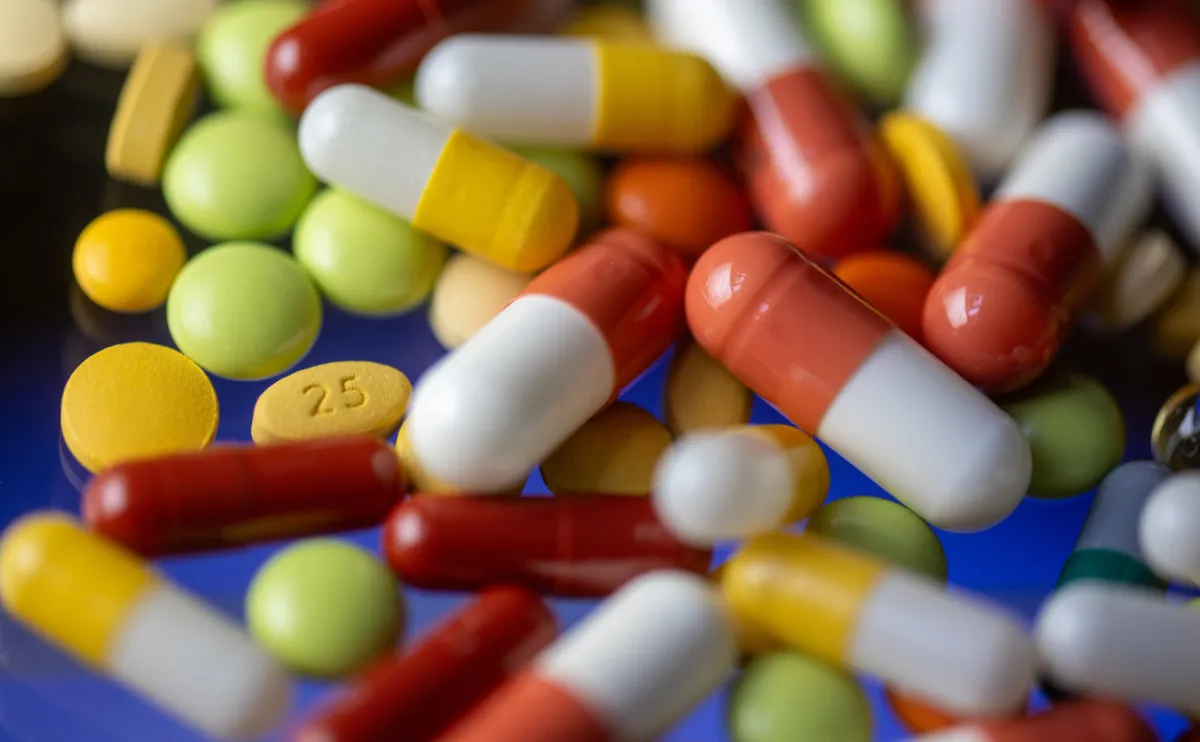
Is There Still A Future For Vitamin Production In Switzerland?


The world's largest vitamin E factory is located in Sisseln, in the canton of Aargau in northern Switzerland. Vitamins have been produced there since the 1970s, and around a third of the world's vitamin E comes from the site.
Silvia Sonneveld, head of the vitamins division at the flavour and fragrence firm DSM Firmenich, proudly shows us around the factory. Nowhere else in the world is production as efficient as it is here. However, this confidence is tempered by concerns.
+ Swiss seek China business boost as old trade links unravel
A new vitamin E factory is currently being built in China.“There are lots of rumours about when it's due to be completed. Perhaps by the end of this year,” says Sonneveld. The fear is that the additional factory in China is likely to lead to a global oversupply of vitamin E. Already, around 60% of the world's vitamin E comes from China.
Vitamins have been chemically identified and characterised since 1906. In 1934, Swiss pharmaceutical firm Roche began the world's first industrial production of a vitamin. Roche subsequently expanded its vitamins division further and sold it to the Dutch company DSM in 2003.
In early 2026, it was announced that the private equity firm CVC would acquire a majority stake in DSM's vitamins division, Firmenich. The transaction is due to be completed by the end of the year, subject to regulatory approval.
The future independent company, which will specialise in the production of vitamins, carotenoids and flavourings, will generate turnover of around €1.8 billion (CHF1.7 billion) and employ around 3,600 staff. Once the transaction is complete, the company will also be given a new name.
By building ever-larger production capacities, Chinese manufacturers have already dominated the global market for other vitamins. Of the thirteen vitamins classified as essential for humans, over 80% of eight of them are now produced in China. China now produces over 90% of global output of vitamins B6, B9, B12, vitamin H and vitamin C.
European manufacturers can now only maintain a marginal presence. Meanwhile, in the US there is no longer any industrial production of vitamins at all.
+ Nestle to sell vitamins business for $1 billion
For some products, production capacity is now twice as high as demand, according to Sonneveld.“This creates a dynamic of oversupply, which leads to falling prices. The result: all manufacturers are selling their products at a loss.”
How the 'China Playbook' worksThe methods China has employed in vitamin production are familiar from other sectors – such as solar panels or electric cars, according to Swiss public television SRF's China correspondent Lukas Messmer.
First, the leadership in Beijing decides to focus on a particular sector; this objective is then supported at all levels of government, right down to the provinces.“Through subsidies, cheap electricity, research or even special regulations,” explains Messmer.
This results in a ruinous price war among local Chinese companies, in which foreign firms are often unable to compete.“They have to cede their market share to their Chinese competitors, who then export their products globally,” he says, summarising the situation.
Risk of dependence on ChinaVarious vitamins are produced in Sisseln, which end up, for example, in food, dietary supplements, cosmetics and the feed for millions of farm and pet animals. Around a thousand people are employed here. Another important production site for the company is Grenzach in southern Germany.
They are working hard to be as efficient as possible at every level. However, according to Sonneveld, the market situation for some products is precarious.
“At a certain point, it becomes an economic decision for the company as to whether to discontinue the manufacture of a product,” says Sonneveld. Vitamin B1, which the company produces in Grenzach, is one example.“If we have to decide to shut down this production for economic reasons, the world would be completely dependent on supplies from China.”
The example of baby food earlier this year demonstrated just how vulnerable a globalised and highly concentrated supply chain in the food industry can be. Food giants Nestlé and Danone, as well as the Swiss manufacturer Hochdorf, had to recall batches of their products across Europe.
More More Food safety Infant formula recall: Is trying to copy breastmilk increasing risk of contamination?This content was published on Feb 25, 2026 A contaminated additive found naturally in breastmilk is responsible for the recent recall of infant formula worldwide.
Read more: Infant formula recall: Is trying to copy breastmilk increasing risk of contamina
Legal Disclaimer:
MENAFN provides the
information “as is” without warranty of any kind. We do not accept any
responsibility or liability for the accuracy, content, images, videos,
licenses, completeness, legality, or reliability of the information
contained in this article. If you have any complaints or copyright issues
related to this article, kindly contact the provider above.
Comments
No comment